


 Pусский
 中文
中文


When we talk with customers about agricultural transportation equipment, one question usually comes first: how can we move materials around the working area in a practical and reliable way?
In farming, transportation is not a small part of the job. Seeds, crops, tools, fertilizer, equipment, and other materials all need to be moved from one place to another. Sometimes the distance is short, but the work is repeated many times. If transportation depends only on manual labor, the workload can quickly become heavy.
Our 600+700 Dual-Wheel Traction Machine for Agricultural Transportation is designed for this type of practical requirement. We focus on stable traction, flexible movement, easy operation, and dependable performance under suitable working conditions.
We do not treat a traction machine as a simple vehicle. We look at the complete working process. The machine needs to move properly, maintain useful contact with the ground, handle the intended transportation task, and remain convenient for the operator to use and maintain.
The “600+700” designation is part of the product name. Unless otherwise stated in the confirmed technical documentation, we do not interpret these numbers as a specific wheel diaMeter, engine power, load capacity, track width, or another technical parameter. The exact specifications depend on the final model and configuration.
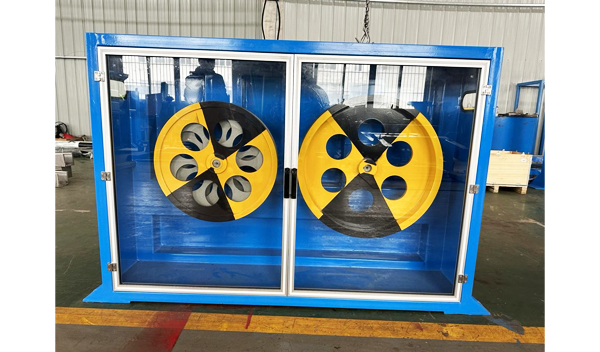
1. Understanding the 600+700 Dual-Wheel Traction Machine
A traction machine is mainly designed to provide controlled pulling and movement. In agricultural transportation, that basic function becomes useful because many daily jobs involve moving materials through outdoor working areas.
Our 600+700 Dual-Wheel Traction Machine uses a dual-wheel arrangement to support its movement and traction function. The actual machine configuration determines how it performs in a specific working environment.
We see this type of equipment as a practical working tool rather than something that needs complicated operation. The basic idea is easy to understand: the power system produces driving force, the transmission system transfers the available power, and the wheel system transfers useful force to the ground.
When the machine moves with a load or performs a traction task, the interaction between the wheels and the ground becomes important. Ground condition, load, tire condition, operating speed, slope, and working method can all affect actual traction.
This is why we do not recommend choosing equipment only by looking at one number.
A customer transporting agricultural materials on a firm farm road may have different requirements from a customer moving equipment across loose soil. A customer working in a large open field may also have different maneuverability needs from someone working in a smaller agricultural area.
Before we confirm the final configuration, we prefer to understand these real conditions.
According to the Food and Agriculture Organization of the United Nations, agricultural mechanization can support activities such as land preparation, crop production, harvesting, transportation, and other agricultural operations. FAO also points out that suitable mechanization can help reduce hard labor and improve the timeliness of farm work.
2. How the Dual-Wheel Traction System Works
The working principle of our traction machine is not difficult to understand.
The power unit provides the mechanical energy needed for movement. The transmission system transfers this power to the driving system. The wheels then create contact with the ground and generate traction. Through the steering and control systems, the operator can guide the machine according to the working requirements.
For transportation work, the machine needs to maintain controlled movement while carrying or pulling the intended load. The actual performance depends on the complete combination of machine configuration and working conditions.
Power Generation
The power system provides the force required for movement. The selected power configuration should match the intended application rather than being selected simply because a larger number looks better.
Power Transmission
The transmission system transfers power from the power source to the driving system. A properly matched transmission arrangement helps the machine deliver useful movement for its intended work.
Wheel and Ground Contact
The wheels are the direct connection between the machine and the ground. Their condition and the ground surface both influence traction.
On firm ground, the machine may behave differently from the same machine operating on soft or wet soil. This is normal for wheeled equipment.
Steering and Control
Transportation is not only about moving forward. Operators often need to stop, turn, reverse, change direction, or move through different areas. Good control is therefore an important part of practical operation.
Traction and Wheel Slip
Wheel slip is another factor that matters when discussing traction. Excessive slip can reduce useful movement and increase energy loss. However, acceptable slip depends on the working surface and test conditions.
The OECD Tractor Codes include specific testing methods for tractor drawbar performance. For Wheeled Tractors, OECD testing considers drawbar power and fuel consumption under defined test conditions. This provides a standardized way to compare tractor performance rather than relying only on simple product descriptions.
| System | Main Function | Practical Consideration |
|---|---|---|
| Power System | Produces mechanical power | Should match the intended work |
| Transmission System | Transfers available power | Should match the working requirement |
| Dual-Wheel System | Provides ground contact and traction | Ground condition and load affect performance |
| Steering System | Controls direction | Important for maneuverability |
| Braking System | Controls stopping and slowing | Should suit the operating environment |
Source: OECD Tractor Codes and general tractor performance testing information. The table summarizes general working principles and is not a model-specific test result.
3. Main Features for Agricultural Transportation
When we develop or configure equipment for practical use, we pay attention to the things operators actually experience during daily work.
Stable Traction
The first requirement for a traction machine is useful traction. Without enough ground contact and suitable operating conditions, the machine cannot efficiently perform its transportation or pulling task.
Our dual-wheel design is intended to provide a practical traction arrangement for suitable Agricultural Applications. The final traction performance depends on the selected configuration and actual ground conditions.
Flexible Movement
Agricultural transportation often involves more than a straight road. Operators may need to move between fields, storage areas, working yards, crop areas, or other locations.
Flexible movement makes these repeated transportation tasks easier to manage.
Practical Agricultural Use
We design the machine around real agricultural work. It can be considered for moving agricultural materials, supporting farm transportation, field operations, material handling, landscaping, and other suitable outdoor applications.
Simple Daily Operation
Farm equipment is often used for repeated tasks. Operators do not want every basic movement to become a complicated process.
We therefore focus on practical controls and a straightforward machine structure. Exact control arrangements depend on the confirmed model and configuration.
Adaptability to Different Working Areas
Farms are not all the same. Some have open fields. Others have smaller working areas, farm roads, storage yards, or mixed surfaces.
A wheeled traction machine can provide useful mobility across suitable outdoor areas. However, we always recommend checking the actual terrain, slope, surface, and load before confirming whether a specific configuration is appropriate.
Transportation-Friendly Design
For customers purchasing from overseas, the machine itself is only one part of the project. We also need to think about shipping dimensions, loading, packaging, destination, and transportation method.
Our packaging can use protective film, steel frames, wooden cases, or other suitable materials according to the machine structure and shipping conditions.
4. Applications of the 600+700 Dual-Wheel Traction Machine
The main purpose of this product is agricultural transportation and traction-related work, but its practical application can cover several connected areas.
Agricultural Material Transportation
Farm work involves many materials. Seeds, tools, harvested crops, fertilizer, equipment, and other supplies may need to be moved between different working locations.
Using powered transportation equipment can reduce repeated manual carrying and make material movement more manageable.
Crop Production
Crop cultivation involves a series of operations rather than one single task. Materials and equipment need to reach the right location at the right time.
FAO describes agricultural mechanization as covering a wide range of operations across the production cycle, including land preparation, planting, crop management, harvesting, and transportation.
Field Preparation
Field preparation can involve moving tools, equipment, materials, or other loads. Whether this traction machine is suitable for a particular field preparation task depends on the actual configuration and required load.
Farm Transportation
This is one of the most direct applications.
The 600+700 Dual-Wheel Traction Machine for Agricultural Transportation can support suitable transportation operations around agricultural facilities. The exact load and transportation method should be confirmed before use.
Material Handling
Material handling is another practical area. Farms, agricultural processing areas, nurseries, landscaping sites, and outdoor facilities may all need equipment for moving materials.
Landscaping and Outdoor Work
Some customers may also consider the machine for landscaping or outdoor maintenance work where a suitable traction and transportation function is needed.
Again, we recommend matching the equipment to the actual working conditions instead of assuming that every configuration can perform every task.
| Application | Typical Work | Key Requirement |
|---|---|---|
| Farm Transportation | Moving agricultural materials | Stable movement and suitable load handling |
| Crop Production | Moving tools and supplies | Flexible transportation between work areas |
| Field Operations | Equipment and material movement | Suitable traction for ground conditions |
| Material Handling | Moving goods or equipment | Correct machine and load configuration |
| Landscaping | Outdoor maintenance work | Maneuverability and practical operation |
| Municipal Outdoor Work | Suitable maintenance tasks | Configuration matched to the task |
Source: Application categories are based on the product information supplied by us and general agricultural mechanization applications described by FAO. They should not be understood as confirmation that every configuration is suitable for every listed task.
5. Single-Wheel and Dual-Wheel Traction: What Is the Difference?
Customers sometimes ask us why they should consider a dual-wheel traction machine instead of a simpler wheel arrangement.
There is no universal answer. The correct choice depends on the machine design and working conditions.
A dual-wheel arrangement can be useful when the application calls for a particular traction or stability arrangement. But adding wheels does not automatically mean that a machine is suitable for every ground condition or every load.
We therefore prefer to compare the working requirements rather than make a simple claim that one arrangement is always better.
| Consideration | Single-Wheel Arrangement | Dual-Wheel Arrangement |
|---|---|---|
| Basic Movement | Suitable for applications matching its configuration | Suitable for applications matching its configuration |
| Traction Requirement | Depends on wheel, load and ground condition | Depends on wheel, load and ground condition |
| Working Space | May suit certain operating areas | May suit applications requiring a different wheel arrangement |
| Stability Consideration | Depends on overall machine design | Depends on overall machine design and wheel layout |
| Selection Method | Choose according to application | Choose according to application |
Source: This is a general engineering comparison, not a performance test between a specific single-wheel and 600+700 dual-wheel model. Actual performance must be evaluated from the final machine design and operating conditions.
The main lesson is simple: we should choose the wheel arrangement based on the actual job.
6. Manufacturing, Inspection and Delivery
Manufacturing quality is important to us because transportation equipment needs to work outside the showroom. Customers use it in real working environments, often repeatedly and for long periods.
Our company integrates R&D, manufacturing, and sales. We have obtained more than ten utility model patent certificates and have passed ISO 19001 quality management system certification according to our company information.
Technical Confirmation
Before production, we first confirm the product model and technical requirements. We also discuss the intended application, working environment, customization requirements, and delivery conditions.
This step may sound ordinary, but it prevents many problems.
For example, if a customer tells us only “I need an agricultural traction machine,” we still need to know what the machine will transport, where it will operate, how frequently it will work, and where it will be delivered.
Manufacturing and Assembly
After the technical requirements are confirmed, we arrange production and assembly according to the agreed configuration.
During assembly, we pay attention to the connection and overall condition of the major systems. The aim is not simply to complete assembly, but to produce a machine that matches the confirmed requirements.
Inspection and Testing
Before shipment, each tractor or traction machine is assembled, inspected, tested, and checked according to the agreed technical requirements.
Where customers have specific inspection requirements, we can discuss them before production and include the confirmed requirements in the order process.
Production Schedule
For our wheeled tractor products, the typical production and delivery cycle is generally 30–90 days after the technical specifications and order details are confirmed.
The actual delivery schedule can change according to the product model, configuration, customization requirements, production planning, and order conditions.
We believe giving a realistic production period is better than giving a short promise that cannot be maintained.
Packaging
Before shipment, we select packaging according to the equipment structure and transportation conditions.
Protective film can help reduce exposure to moisture and dust. Steel frames can provide additional support where appropriate. Wooden cases may be used where suitable for the machine and shipping method.
The exact packaging method is confirmed according to the actual shipment.
Transportation
Depending on the destination, machine dimensions, and delivery requirements, we can arrange transportation by sea, rail, or another suitable method.
For international orders, transportation planning should begin before final packaging. This helps us consider loading, protection, dimensions, and destination requirements together.
7. Why Choose Wuxi Shuochuan?
We know that buying machinery from an overseas manufacturer involves more than comparing product names.
Customers need clear technical communication. They need to know how the machine will be produced, how it will be checked, how it will be packed, and how the delivery will be arranged.
Wuxi Shuochuan Electromechanical Equipment Manufacturing Co., Ltd. is an innovative technology enterprise integrating R&D, manufacturing, and sales.
Our company has obtained more than ten utility model patent certificates. We have also passed ISO 19001 quality management system certification according to the company information supplied to us.
Our product range includes high-speed extruders, three-in-one BV extrusion automatic Production Lines, three-in-one plus one BVVB automated production lines, photovoltaic wire and Cable Production lines, automotive Wire Production lines, electronic Wire Production Lines, network communication wire production lines, Cable Production Lines, charging pile cable production lines, take-up and unwinding equipment, Auxiliary Equipment, and related raw materials.
Our experience with automated equipment has taught us something important: a machine needs to be understood as part of a real production or working process.
That is also how we approach the 600+700 Dual-Wheel Traction Machine.
We do not want to sell a machine simply because the product name sounds good. We want to understand what the customer needs to move, where the machine will work, what kind of environment it will face, and what transportation conditions apply.
Our corporate spirit is “Quality First, Continuous Improvement, and Honest Service.”
We keep this principle practical. Quality means checking the machine against the agreed requirements. Continuous improvement means learning from actual applications and production experience. Honest service means communicating clearly about specifications, delivery schedules, packaging, and transportation.
8. FAQ About the 600+700 Dual-Wheel Traction Machine
What is the 600+700 Dual-Wheel Traction Machine?
It is a dual-wheel traction machine designed for agricultural transportation and other suitable outdoor applications. It can support traction, material movement, farm transportation, and related operations according to the final configuration.
What does “600+700” mean?
“600+700” is used as part of the product name. Unless confirmed by the technical documentation, it should not automatically be interpreted as wheel diameter, engine power, load capacity, track width, or another exact specification.
What can this traction machine transport?
It can be considered for agricultural materials, tools, equipment, crops, and other suitable loads. The actual load and transportation method must be confirmed according to the specific machine configuration.
Can it be used on farmland?
Yes, the machine is designed for suitable agricultural and outdoor applications. However, soil condition, terrain, slope, load, working frequency, and machine configuration should be checked before operation.
Is it suitable for crop cultivation?
It can support transportation and material-handling tasks connected with crop cultivation. Whether it can perform a particular cultivation operation depends on the required attachment and final machine configuration.
Can you customize the machine?
We can discuss customization according to the customer's application, working conditions, technical requirements, and transportation requirements. The final configuration should be confirmed before production.
How long does production take?
The typical production and delivery cycle is generally 30–90 days after technical specifications and order details are confirmed. The actual schedule depends on the model, configuration, customization requirements, and production planning.
How do you inspect the machine?
Before delivery, we assemble, inspect, test, and check the machine according to the agreed technical requirements. Additional customer inspection requirements can be discussed before production.
What payment terms are available?
Payment terms can be arranged according to the contract. A common arrangement includes a deposit with the balance paid before shipment. Other mutually agreed payment arrangements can also be discussed.
How do you ship the machine?
Depending on the destination and machine dimensions, we can consider sea, rail, or other suitable transportation methods.
How is the machine packaged?
We may use protective film, steel frames, wooden cases, or other suitable packaging materials depending on the machine structure and shipping conditions. The packaging is intended to reduce the risk of moisture, dust, impact, and movement during transportation.
What information should I provide before requesting a quotation?
We recommend providing the intended application, working environment, expected load, transportation method, operating area, destination, customization requirements, and any required attachments. The more clearly we understand the actual work, the easier it is for us to discuss a suitable configuration.
Conclusion: Built Around Real Agricultural Transportation Needs
We believe agricultural equipment should solve a real problem.
For transportation work, that problem is often simple: materials need to move from one place to another, again and again, without creating unnecessary manual work.
Our 600+700 Dual-Wheel Traction Machine for Agricultural Transportation is designed around this practical requirement. It provides a traction and movement solution for suitable agricultural, material-handling, landscaping, and outdoor applications.
We focus on flexible operation, useful traction, maneuverability, practical maintenance, inspection before shipment, and suitable transportation preparation.
At the same time, we do not believe one machine configuration can solve every transportation problem. Ground conditions, load, terrain, working frequency, operating space, attachments, and destination all need to be considered.
That is why our approach starts with the application.
If you are looking for a 600+700 Dual-Wheel Traction Machine for Agricultural Transportation, tell us what you need to transport, where the machine will work, what type of ground it will operate on, and where it needs to be delivered.
We can then work from those actual requirements to discuss the appropriate machine configuration, production arrangement, inspection requirements, packaging method, and delivery plan.
For us, good equipment is not about making the product description sound complicated. It is about making the machine practical, understandable, and suitable for the work it is expected to perform.



 WhatsApp
 Phone
Phone