


 Pусский
 中文
中文


When I discuss Rewinding Machines with customers, I usually start with one simple question: What material are you going to rewind? It sounds basic, but this question can tell me a lot about the machine configuration we should consider.
Film, paper, aluminum foil, nonwoven materials, labels, and other roll-based products may all look similar from a distance, but they do not behave in the same way during rewinding. Some materials stretch easily. Some are sensitive to pressure. Some need very smooth tension control. Others are more concerned with roll hardness, edge alignment, or finished-roll diaMeter.
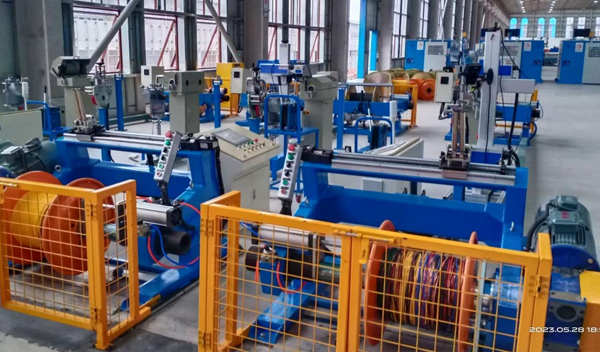
That is why I developed the 630-1000 Rewinding Machine around practical production needs rather than one fixed application. The machine is designed for efficient, stable, and controlled rewinding of flexible web materials. Depending on the customer's material and production requirements, the configuration can be adjusted to provide suitable tension control, winding performance, operating parameters, and roll handling.
At Wuxi Shuochuan Electromechanical Equipment Manufacturing Co., Ltd., we integrate R&D, manufacturing, and sales. Our company has obtained more than ten utility model patent certificates, and we have built our equipment business around automation, practical engineering, and continuous improvement. Our product range also includes high-speed extruders, BV and BVVB extrusion Production Lines, photovoltaic wire and Cable Production lines, automotive Wire Production lines, electronic Wire Production Lines, communication wire production lines, Cable Production Lines, charging pile cable production lines, take-up and unwinding equipment, and Auxiliary Equipment.
For us, a rewinding machine is not just a machine that rotates a roll. It is part of a Production Process. My goal is to make that process stable enough for operators to work with confidence every day.
1. What Is the 630-1000 Rewinding Machine?
The 630-1000 Rewinding Machine is an industrial roll-to-roll machine used to unwind material from one roll and rewind it onto another core or roll position. It is suitable for a range of flexible web materials, including plastic films, paper, aluminum foil, nonwoven materials, labels, and related roll products.
The 630-1000 designation represents a machine series or configuration range. I do not treat the name alone as a complete technical specification because the final machine needs to match the customer's actual production conditions.
For example, two customers may both ask for a rewinding machine for plastic film. One may need to process a thin film with a relatively light parent roll, while another may handle thicker laminated film with a much heavier roll. Their tension requirements, shaft arrangement, finished-roll size, and production targets may be completely different.
So, when we receive an inquiry for a 630-1000 rewinding machine supplier, I normally want to confirm several basic details first:
What material will be rewound?
What is the material width?
What is the material thickness?
What is the parent-roll diameter?
What is the maximum parent-roll weight?
What core diameter is required?
What finished-roll diameter is required?
What winding quality is expected?
What production speed is required?
Does the machine need to connect with another production line?
These details are much more useful than simply asking whether a machine is “fast.” In actual production, a machine that runs at a reasonable speed with stable tension and fewer interruptions can be more useful than a machine with a high theoretical speed but poor roll quality.
What can the machine rewind?
The Rewinding Machine Series is intended for flexible roll materials. Typical applications include:
Plastic film
Flexible packaging film
Paper
Aluminum foil
Nonwoven materials
Label materials
Laminated web materials
Other roll-based flexible materials
The actual material compatibility should always be confirmed before an order is placed. Material thickness, flexibility, surface condition, coefficient of friction, roll weight, and other factors can influence the final configuration.
What does “630-1000” mean for buyers?
I recommend treating “630-1000” as the starting point for a technical discussion rather than assuming it means the same exact specification for every manufacturer. Different manufacturers may use different naming systems.
For this reason, we provide the final technical parameters according to the confirmed customer order and technical agreement. This avoids a common problem in machinery purchasing: comparing two machines only by their model names when their actual configurations are different.
2. How Does a 630-1000 Rewinding Machine Work?
The working principle is quite easy to understand. The machine takes material from an existing roll, guides it through the web-handling section, controls the material tension, and winds it onto a new core or finished-roll position.
A typical process looks like this:
Parent Roll → Unwinding → Web Guiding → Tension Control → Rewinding → Finished Roll
Each step has a job, and problems in one area can affect the final roll.
Step 1: Unwinding
The parent roll is installed on the unwinding section. The material is gradually released as the machine runs. The unwinding system must provide controlled material feeding instead of allowing the web to move freely.
As the parent roll becomes smaller, its operating condition changes. This is one reason why the control system needs to respond to changing roll conditions.
Step 2: Web guiding
Next, the material passes through the web path. Guiding components help keep the material in the intended position.
This sounds like a small detail, but it is important. If the material moves sideways during rewinding, the finished roll may have uneven edges. In some applications, that unevenness can affect the next process.
Step 3: Tension control
This is one of the most important parts of the machine.
The material needs enough tension to remain stable, but excessive tension can stretch or damage some materials. Too little tension can result in loose winding, wrinkles, or poor roll formation.
The suitable tension range depends on the material. A thin plastic film should not necessarily be handled in the same way as paper or aluminum foil.
Step 4: Rewinding
The material reaches the rewinding section and is wound onto the selected core. During this process, the finished roll gradually becomes larger.
The machine needs to maintain stable operation while the roll diameter changes. The drive system and control parameters work together to keep the winding process under control.
Step 5: Finished-roll handling
When the required roll size is reached, the finished roll can be removed and prepared for storage, transportation, or the next production process.
In my view, good rewinding is about making these five steps work together. A powerful motor alone does not create a good roll. A good control system alone cannot solve every mechanical problem. The machine needs balanced mechanical construction, electrical control, material handling, and proper operating settings.
3. Main Features I Focus on in the 630-1000 Rewinding Machine
When we design or configure a 630-1000 Industrial Rewinding Machine, I pay particular attention to the areas that directly affect everyday production.
Stable tension control
Stable web tension is essential for producing uniform rolls. The tension-control system is designed to help operators maintain a suitable material condition during unwinding and rewinding.
Of course, “stable” does not mean that one tension setting works for everything. The machine should be adjusted according to the material. This is why our technical team confirms material information before final configuration.
Consistent winding
The purpose of rewinding is not merely to put material onto a core. The finished roll needs to be usable.
A good finished roll should have appropriate tightness, acceptable edge alignment, and a surface condition suitable for its next application. Consistency from roll to roll is also important because production operators do not want to inspect every roll manually.
Adjustable operating parameters
Different production jobs require different settings. A flexible control system allows operators to make suitable adjustments when the material or production target changes.
This is especially useful for factories that process several types of material instead of running one product continuously.
Practical operation
I prefer controls that operators can understand quickly. Industrial equipment does not need to look complicated just to appear advanced. The important thing is that operators can see the operating condition and make normal adjustments efficiently.
Flexible configuration
The machine can be discussed and configured around the customer's actual needs. This can include the material handling system, core requirements, roll dimensions, control functions, tension-control arrangement, and auxiliary equipment.
That flexibility is particularly useful for customers who are building a new production line or replacing older equipment.
| Material Factor | Possible Production Concern | Machine Area to Consider |
|---|---|---|
| Material Thickness | Different stretching and winding behavior | Tension and winding settings |
| Material Width | Influences working width and web alignment | Roller and guiding configuration |
| Roll Weight | Changes loading and drive requirements | Unwinding and rewinding structure |
| Surface Condition | Can affect slipping, wrinkles, and roll formation | Web path and winding settings |
| Core Diameter | Determines core-holding requirements | Rewinding shaft or core arrangement |
| Finished Roll Diameter | Influences winding capacity and handling | Rewinding section and roll handling |
Source: Wuxi Shuochuan Electromechanical Equipment Manufacturing Co., Ltd., internal product configuration and application guidance. The table identifies engineering factors rather than fixed universal specifications. Final requirements are confirmed according to the customer's actual material and production conditions.
4. Technical Advantages: Why Tension, Alignment, and Mechanical Stability Matter
In rewinding equipment, some technical points are easy to explain but harder to get right. Tension control is one of them.
Imagine pulling a sheet of paper across a table. If you pull it too loosely, it moves around. If you pull it too hard, you can deform or tear it. A flexible web moving through a rewinding machine behaves in a similar way, although the production conditions are much more complex.
Web tension is a balancing act
The machine needs to control the force acting on the web. The correct value depends on the material and production conditions.
For film applications, poor tension can lead to wrinkles or stretching. For paper, winding too loosely can affect roll firmness. For aluminum foil, careful handling is important because the material can be sensitive to mechanical stress and surface damage.
That is why I do not recommend using a fixed “best tension” number across different materials. The right setting must be established from the material and production process.
Roll diameter changes during operation
During rewinding, the finished roll gets larger. The machine therefore does not operate under exactly the same mechanical condition from the first layer to the final layer.
The control system needs to account for this changing condition. Stable speed and tension management become more important as the roll builds up.
Mechanical alignment matters too
Sometimes customers focus heavily on electrical controls and forget about mechanical alignment. I see these as two halves of the same machine.
Rollers, shafts, bearings, frames, transmission components, and other mechanical parts need to work together properly. If mechanical vibration or alignment problems appear, the effect may eventually show up as poor winding quality.
Control and mechanical systems must work together
Motors, sensors, controllers, tension-control devices, and mechanical transmission components need to respond as one system.
This is also why I recommend testing the machine as a complete unit instead of checking individual components only. A component can work perfectly by itself but still produce poor results if the complete system is not correctly matched.
| Application | Main Priority | Typical Production Focus |
|---|---|---|
| Plastic Film | Stable tension and web alignment | Reduce wrinkles and unwanted stretching |
| Paper Converting | Roll firmness and edge quality | Maintain consistent finished rolls |
| Aluminum Foil | Careful web handling | Reduce tension-related deformation and surface problems |
| Nonwoven Materials | Stable guiding and winding | Adapt settings to variable web structure |
| Labels | Alignment and roll consistency | Prepare rolls for downstream processing |
Source: Wuxi Shuochuan Electromechanical Equipment Manufacturing Co., Ltd., application engineering guidance. This comparison is intended for equipment selection discussion and does not establish material-specific processing limits.
For customers comparing 630-1000 rewinding machine technology, I suggest looking at the whole production chain instead of comparing rated speed alone. Machine stability, tension control, finished-roll quality, ease of operation, maintenance access, and compatibility with the existing line can all have a direct effect on the real production result.
5. Applications of the 630-1000 Rewinding Machine
The 630-1000 rewinding machine can be used in many industries because roll-based materials are found almost everywhere in converting and flexible-material production.
Flexible packaging
Flexible packaging manufacturers often work with plastic film and laminated materials. Large parent rolls may need to be converted into smaller rolls suitable for printing, packaging, or further processing.
A stable rewinding process helps prepare material for the next stage without introducing unnecessary wrinkles, loose winding, or poor edge alignment.
Printing industry
Printing operations can use paper, plastic film, label stock, and other web materials. The quality of the incoming roll can affect downstream printing performance.
If the roll is not wound properly, operators may face problems when feeding the material into printing equipment. A consistent rewinding process can make material handling easier.
Paper converting
Paper converting plants may need to change roll size according to customer requirements or downstream equipment. Rewinding provides a practical way to prepare the required roll format.
Aluminum foil processing
Aluminum foil requires careful web handling. Its thin structure means that tension and winding conditions need to be selected with care.
For these applications, I recommend discussing the actual foil thickness, width, roll weight, core, surface requirements, and finished-roll dimensions before selecting the final machine configuration.
Nonwoven production
Nonwoven materials are used in many products, including filtration materials, hygiene products, packaging, construction materials, and industrial products.
Because nonwoven materials can have different structures and strengths, the rewinding conditions need to be matched to the actual material.
Label production
Labels and label stock often require accurate alignment because the finished rolls may later enter printing, coating, die-cutting, or automatic labeling processes.
In these cases, web guiding and consistent winding become particularly useful.
| Industry | Typical Material | Typical Rewinding Purpose |
|---|---|---|
| Flexible Packaging | Plastic film, laminated film | Roll conversion and production preparation |
| Printing | Paper, film, label stock | Preparing web material for printing |
| Paper Converting | Paper and specialty paper | Changing roll dimensions and formats |
| Aluminum Foil | Aluminum foil | Controlled roll formation |
| Nonwoven | Nonwoven web | Roll conversion and handling |
| Label Manufacturing | Label materials | Accurate roll preparation |
Source: Wuxi Shuochuan Electromechanical Equipment Manufacturing Co., Ltd., product application information supplied for the Rewinding Machine Series. The actual application depends on the material and final machine configuration.
6. How We Build, Inspect, and Prepare the Machine for Shipment
When a customer purchases an industrial machine from overseas, I think manufacturing and delivery should be treated as one complete project.
The first step is technical communication. Before production, we confirm the machine model, configuration, material requirements, operating conditions, delivery requirements, and other important details with the customer.
This step prevents a surprisingly common problem: a machine being manufactured according to a general configuration when the customer actually needs something different.
Engineering and preparation
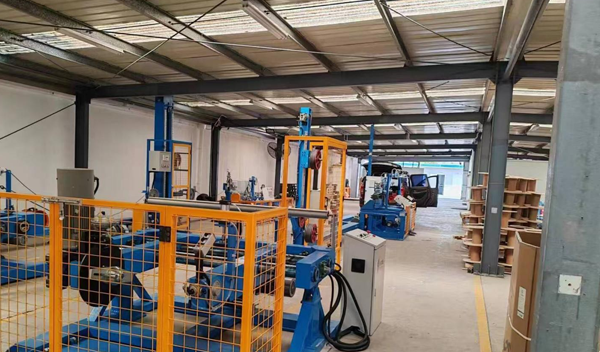
After the specifications are confirmed, the machine is prepared according to the agreed design. Mechanical components, electrical components, control systems, shafts, rollers, frames, and other parts are assembled as required by the configuration.
Our R&D and manufacturing experience comes from a wider range of automated equipment. We manufacture extrusion equipment and wire and cable production equipment in addition to take-up and unwinding-related machinery. This gives our engineers practical experience with continuous material movement and automated production processes.
Assembly and inspection
After assembly, the machine is checked before shipment. We pay attention to mechanical operation, electrical connections, control functions, machine movement, and other agreed inspection items.
The purpose of testing is not simply to produce a checklist. It is to find problems while the machine is still in our factory, where corrections are easier and faster.
Documentation
Standard delivery includes the complete machine, necessary components, technical documents, and accessories according to the confirmed order.
For overseas customers, clear documentation is particularly important because the installation team may not be located near the manufacturer.
Export packaging
Industrial equipment can travel thousands of kilometers before reaching its final destination. During transportation, machines may experience vibration, handling, changes in humidity, and loading or unloading operations.
We therefore normally use moisture-resistant protection, cushioning, and strong export wooden cases or pallets according to the machine size and transportation conditions.
Transportation can be arranged by sea, air, or land depending on the destination, urgency, and machine dimensions.
Production lead time
I do not give customers an unrealistic fixed lead time before knowing the machine configuration. Production time normally depends on the model, technical configuration, customization requirements, and order quantity.
Once the specifications are confirmed, we discuss the delivery schedule with the customer so that both sides have the same understanding before production begins.
7. Why Choose Wuxi Shuochuan for a 630-1000 Rewinding Machine?
There are many Rewinding Machine Manufacturers in the market. So, when a customer asks me why they should work with Shuochuan, I do not think the answer should simply be “because our machine is good.” That kind of statement does not help a technical buyer make a decision.
I would rather explain how we work.
We combine R&D, manufacturing, and sales
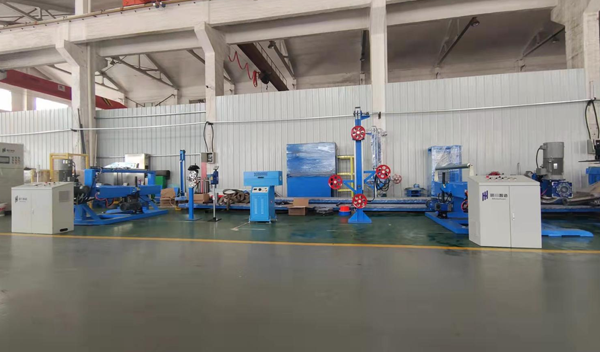
Wuxi Shuochuan Electromechanical Equipment Manufacturing Co., Ltd. is an innovative technology enterprise integrating R&D, manufacturing, and sales.
Our engineers and production team work around actual equipment requirements rather than treating sales and manufacturing as completely separate activities. This makes technical communication easier when a customer needs a customized configuration.
We have experience with automated production equipment
Our main products include high-speed extruders, three-in-one BV extrusion automatic production lines, three-in-one plus one BVVB automated production lines, photovoltaic wire and cable production lines, automotive wire production lines, electronic wire production lines, network communication wire production lines, cable production lines, charging pile cable production lines, take-up and unwinding series, auxiliary equipment, and raw materials.
This product background is important because many factories do not purchase a rewinding machine as a completely isolated unit. It may need to fit into an existing automated process or work alongside other equipment.
Our technical development is supported by patents
According to our company information, we have obtained more than ten utility model patent certificates. These patents reflect our continuing work on practical equipment structures and technical improvements.
For us, innovation is not about adding complicated functions simply to make a machine look modern. A useful improvement should make the machine easier to operate, more stable, more efficient, or better suited to a real production problem.
We pay attention to process management
The company has also provided information regarding its ISO 19001 quality management system certification. Because certification details can depend on the applicable certification scope and documentation, we recommend that customers request the current certificate and scope directly from us when certification verification is required.
More importantly from a production point of view, our working approach emphasizes specification confirmation, manufacturing inspection, machine testing, and delivery preparation.
We believe in honest technical communication
Our corporate spirit is “Quality First, Continuous Improvement, and Honest Service.”
I think this is especially important for industrial equipment. If a material is outside the normal operating range, we should discuss it. If a special configuration is needed, we should explain it. If the delivery schedule depends on customization, we should say so clearly.
The goal is not to win an order by making the biggest promise. The goal is to deliver a machine that makes sense for the customer's production line.
Our approach to international orders
For overseas customers, we normally confirm the technical specifications and delivery requirements before production. Payment terms are arranged according to the contract, commonly involving a deposit before production and the balance before shipment, subject to the agreed commercial terms.
Before shipment, the machine is tested and inspected according to the confirmed requirements. The standard delivery package includes the machine, necessary components, technical documents, and accessories according to the order.
8. 630-1000 Rewinding Machine FAQ
Q1. What materials can the 630-1000 Rewinding Machine process?
It is designed for roll-based flexible materials such as plastic film, paper, aluminum foil, nonwoven materials, labels, laminated materials, and related web products. The exact material range depends on material thickness, width, weight, surface characteristics, roll size, and the final machine configuration.
Q2. Can I use one machine for different materials?
In many cases, a suitably configured machine can handle different materials, but the operating settings may need to change. Material thickness, tension requirements, roll dimensions, and other conditions should be considered before deciding whether one configuration can meet all applications.
Q3. How do I choose between a 630 and 1000 rewinding configuration?
The choice should be based on the actual working width and production requirements rather than the model number alone. Please provide your material width, thickness, parent-roll size, finished-roll size, core diameter, roll weight, and target production requirements. We can then recommend a suitable configuration.
Q4. Is high speed the most important feature?
No. Speed matters, but it is only one part of production performance. Stable tension, consistent winding, web alignment, changeover time, machine stops, operator efficiency, and finished-roll quality also affect actual output.
Q5. Why is tension control so important?
Because the material needs to move through the machine under controlled conditions. Excessive tension may stretch or damage sensitive materials, while insufficient tension may create loose winding or wrinkles. The correct setting depends on the material and production process.
Q6. Can the machine be customized for my factory?
Yes. We can discuss customized configurations according to the material, roll dimensions, core requirements, production target, control requirements, and other technical conditions. The final configuration is confirmed before manufacturing.
Q7. What information do you need for a quotation?
I recommend providing material type, material width, thickness, parent-roll diameter, maximum roll weight, finished-roll diameter, core diameter, required output, power supply information, and any special automation requirements. Photos, drawings, or material samples can also be useful when available.
Q8. How long does it take to manufacture the machine?
Production lead time depends on the machine model, configuration, customization, and order quantity. We confirm the technical specifications and delivery requirements before production and then provide the applicable delivery schedule.
Q9. How do you test the rewinding machine before shipment?
Each machine is tested and inspected before shipment according to the agreed specifications. Inspection can cover mechanical operation, electrical functions, control operation, machine movement, and other applicable requirements.
Q10. How is the machine packaged for international transportation?
Machines are generally protected with moisture-resistant materials and cushioning and packed in strong export wooden cases or on pallets according to the machine size and transportation requirements. The exact packaging method is confirmed according to the shipment.
Q11. What transportation methods are available?
Sea, air, and land transportation can be considered. The most suitable method depends on the destination, urgency, machine dimensions, shipment weight, and logistics requirements.
Q12. What are the normal payment terms?
Payment terms are arranged according to the contract. A common structure is a deposit before production and the balance before shipment, but the exact terms depend on the final commercial agreement.
Q13. Can the rewinding machine be used with other production equipment?
Yes, depending on the machine configuration and interface requirements. Because Shuochuan also manufactures extrusion lines, take-up and unwinding equipment, wire and cable production equipment, and related automation systems, we can discuss how the rewinding equipment may fit into a wider production process.
Q14. What makes a good rewinding machine supplier?
In my opinion, a reliable supplier should be able to understand the material, explain the machine configuration clearly, provide realistic technical information, inspect the machine before shipment, prepare suitable documentation, and communicate honestly when a customer's requirements need special consideration.
Conclusion: Choosing a Rewinding Machine Based on Real Production Needs
When I look at a 630-1000 Rewinding Machine, I do not see only a frame, rollers, motors, and a control cabinet. I see a machine that needs to work with a real material, a real operator, and a real production schedule.
That is why I put practical details first: stable web tension, controlled material movement, consistent winding, suitable roll formation, adjustable operating parameters, and a configuration that matches the customer's material.
The machine can be used for plastic film, paper, aluminum foil, nonwoven materials, labels, flexible packaging materials, and other roll-based products. It can also be discussed as part of a larger automated production system when the application requires it.
At Wuxi Shuochuan Electromechanical Equipment Manufacturing Co., Ltd., we combine equipment R&D, manufacturing, testing, and technical communication. Our experience in automated extrusion and wire and cable production equipment also gives us a broader understanding of continuous material handling and production-line integration.
If you are looking for a 630-1000 rewinding machine manufacturer, a 630-1000 rewinding machine supplier, or a customized industrial rewinding machine for film, paper, foil, nonwoven materials, or labels, I recommend starting with your material specifications instead of starting with the machine price.
Send us the material type, width, thickness, parent-roll dimensions, finished-roll dimensions, core size, roll weight, and target output. With these details, we can discuss the suitable machine configuration and determine which technical options make sense for your production.
For us, the final objective is straightforward: build a practical machine, control the manufacturing process carefully, communicate clearly with the customer, and keep improving the equipment after every project.
Technical Source Notes
Primary source: Wuxi Shuochuan Electromechanical Equipment Manufacturing Co., Ltd., company-provided product information, manufacturing information, application scope, delivery process, inspection process, packaging information, and corporate information supplied for this product page.
Table sources: Tables 1, 2, and 3 are based on Wuxi Shuochuan's supplied product and application information and are intended as practical engineering comparison tables. They are not presented as independent laboratory test results or universal material-processing standards.
Important specification note: The name “630-1000 Rewinding Machine” should not be treated as a complete technical specification. Working width, rewinding speed, roll diameter, core dimensions, maximum roll weight, tension range, motor configuration, control system, and other parameters should be confirmed according to the customer's material and final technical agreement.
Certification note: The company information supplied for this page states that Wuxi Shuochuan has passed ISO 19001 quality management system certification. Customers requiring certification verification should request the current certificate, issuing organization, validity period, and applicable certification scope directly from the company before relying on certification details for procurement decisions.



 WhatsApp
 Phone
Phone