


 Pусский
 中文
中文


When we talk about cable manufacturing equipment, we pay close attention to one simple point: the machine must match the actual cable structure. A Cable Production line is not just a collection of machines. Every step, from conductor processing and insulation to wrapping, armoring, and final take-up, needs to work together.
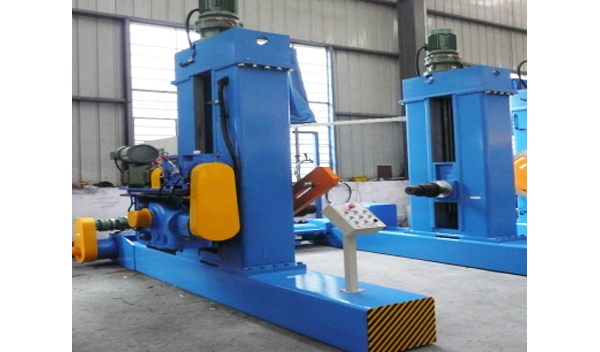
Our 800mm Steel Belt Armoring Machine for Motors + 600/2 Non-metallic Wrapping Production Line is designed for continuous wrapping and armoring applications in wire and cable production. This equipment combination focuses on stable material feeding, controlled tension, accurate wrapping, and smooth cable movement.
The 800mm steel belt armoring machine is used for steel belt armoring applications, while the 600/2 non-metallic wrapping production line is designed for non-metallic wrapping processes. The actual configuration can be adjusted according to the cable structure, wrapping material, production speed, and working conditions.
We do not believe that one standard machine configuration can solve every customer's production problem. That is why we discuss the cable structure and process requirements with the customer before confirming the final equipment configuration.
Our company, Wuxi Shuochuan Electromechanical Equipment Manufacturing Co., Ltd., integrates R&D, manufacturing, and sales. We have obtained more than ten utility model patent certificates and have passed ISO 19001 quality management system certification according to the company information provided for this product. Our work covers cable extrusion, Wire Production lines, take-up and unwinding equipment, wrapping equipment, and related Auxiliary Equipment.
1. What Is the 800mm Steel Belt Armoring Machine and 600/2 Wrapping Line?
Steel belt armoring is a process used to place a metal belt around a cable. The belt is guided around the cable in a controlled way, forming a protective layer around the cable structure. During this process, stable feeding and controlled tension are very important.
Our 800mm steel belt armoring machine for motors is intended for cable manufacturing applications where steel belt armoring is required. The machine is designed to keep the belt path stable and help maintain a consistent wrapping condition during continuous production.
The second part of this equipment combination is the 600/2 non-metallic wrapping production line. Non-metallic wrapping can be used with suitable insulating, shielding, separation, or protective materials depending on the cable design. Different materials have different handling characteristics, so the machine configuration should be selected based on the actual production material.
In simple terms, the two processes have different jobs. The non-metallic wrapping process handles a non-metallic wrapping layer, while steel belt armoring provides a metal protection or structural layer where required by the cable design.
The final machine arrangement depends on the customer's cable construction. We normally review the following information before preparing a technical proposal:
Cable structure and number of cores
Target cable diaMeter
Conductor material and construction
Insulation and sheath materials
Steel belt specifications
Non-metallic wrapping material
Required wrapping structure
Production speed
Take-up and pay-off requirements
Factory working conditions and available space
This approach may sound basic, but it prevents many problems later. A wrapping machine should be designed around the cable, not the other way around.
2. How Does the Wrapping and Armoring Process Work?
The basic working principle is easy to understand. The cable moves through the production line at a controlled speed. At the same time, the wrapping material is supplied from the corresponding material holder or wrapping mechanism. The material is guided toward the cable and wrapped around its surface according to the selected process.
For non-metallic wrapping, the material needs to move smoothly without excessive tension or sudden changes in feeding speed. Depending on the material, the operator may need to control material tension, alignment, wrapping angle, overlap, and cable speed.
For steel belt armoring, the steel belt is guided toward the cable and formed around the cable structure. The belt needs to follow a stable path. If the belt tension is not properly controlled, the finished armoring condition may become uneven.
We therefore pay attention to the relationship between cable speed and material feeding. The goal is not simply to make the machine run quickly. The real goal is to keep the wrapping condition stable while maintaining continuous production.
A simplified production sequence can be described as follows:
The cable core or cable body enters the wrapping section.
The required non-metallic material is supplied and guided.
The wrapping material is applied around the cable according to the selected configuration.
The cable moves toward the following processing stage.
Where steel belt armoring is required, the steel belt is supplied and guided around the cable.
The armored cable continues toward the next production stage.
The final cable is collected by the take-up system.
The actual line layout can be different from one project to another. We configure the equipment according to the Production Process instead of forcing every customer to use the same layout.
3. Main Features of Our Equipment
Stable Material Feeding
Wrapping quality starts with material feeding. If the material moves unevenly, the wrapping result can also change. Our equipment is designed with attention to material feeding and guiding so that the wrapping process can remain stable during continuous operation.
Controlled Tension
Tension is one of the most important factors in wrapping and armoring. Too much tension can affect the material or cable structure, while too little tension may result in loose wrapping. We therefore consider the required tension control when configuring the equipment.
Accurate Wrapping
The purpose of a wrapping machine is not simply to place material around a cable. The material must be positioned in a controlled way. Depending on the product design, wrapping angle, overlap, material width, and cable speed may all need to be considered.
Continuous Production
Wire and cable manufacturers usually prefer continuous production because frequent stops can reduce Production Efficiency and make process control more difficult. Our equipment is designed for continuous cable wrapping and armoring applications.
Flexible Configuration
Different cables have different structures. A power cable, control cable, industrial cable, and electrical wire may not use the same wrapping method. We can discuss the equipment configuration according to the customer's actual product requirements.
Practical Operation
We also pay attention to the operator's daily work. A machine may have advanced functions, but if the operator finds it difficult to understand or adjust, the equipment becomes harder to use. We prefer a practical design that makes routine operation easier to manage.
| Process Factor | Why It Matters | Our Configuration Focus |
|---|---|---|
| Material Feeding | Helps maintain continuous material supply | Stable guiding and controlled feeding |
| Tension | Affects wrapping tightness and material behavior | Suitable tension control according to material |
| Cable Speed | Influences production stability and wrapping condition | Coordinate cable movement with wrapping process |
| Material Alignment | Helps maintain consistent wrapping position | Guide and adjust material path |
| Take-up | Affects final cable handling | Match take-up requirements with the production line |
4. Technical Advantages and Process Considerations
We prefer to talk about technical advantages in practical terms. For a Cable Wrapping Machine, the most important question is often not how many functions the machine has, but whether it can keep the process stable for long periods.
One important point is tension. Steel belt and non-metallic materials behave differently. A metal belt has its own stiffness and forming characteristics, while non-metallic tapes and films can respond differently to pulling force, temperature, and handling conditions.
For this reason, the material itself must be considered when designing the process. We can discuss the required material path and tension control according to the customer's selected wrapping material.
Another important point is cable movement. The cable should move through the line in a controlled way. If the cable path changes too much, it can affect the wrapping position. This is why guiding, traction, and take-up systems need to work together.
There is also a quality-control side to the process. International cable standards use dimensional and material tests to check different parts of cable construction. For example, IEC 60811-201 covers methods for measuring insulation thickness for common insulating compounds such as cross-linked materials, PVC, PE, and PP. IEC 60811-202 covers measurement of non-metallic sheath thickness. These standards do not define our machine configuration, but they show why controlled cable construction and dimensional consistency matter in cable manufacturing.
IEC 60228:2023 also specifies nominal conductor cross-sectional areas and requirements relating to conductor wire sizes and resistance values for a wide range of electric power cables and cords. This is another reason why cable production equipment should be selected according to the complete cable structure rather than only one machine parameter.
| Reference Standard | Main Technical Area | Relevance to Cable Production |
|---|---|---|
| IEC 60228:2023 | Conductors of insulated cables | Defines conductor cross-sectional areas, wire sizes, and resistance-related requirements |
| IEC 60811-201:2012 + amendments | Insulation thickness measurement | Provides test methods for common cable insulation compounds |
| IEC 60811-202:2012 + amendments | Non-metallic sheath thickness | Provides methods for measuring non-metallic cable sheath thickness |
Source: International Electrotechnical Commission (IEC). The standards listed above are reference standards for cable construction and testing. The exact standard applicable to a finished cable depends on its product type and application.
From our manufacturing experience, we also know that a machine should not be evaluated only by its nameplate. The complete production process matters. Material feeding, cable guiding, tension, wrapping, traction, take-up, operator adjustment, and inspection all have an effect on the final result.
5. What Industries Can Use This Equipment?
The 800mm steel belt armoring machine and 600/2 non-metallic wrapping production line are mainly intended for wire and cable manufacturing. Their final application depends on the cable design and the required protective or wrapping structure.
Power Cable Production
Power cables may require different layers for insulation, shielding, protection, and mechanical strength. Where the cable design calls for metal armoring or suitable wrapping layers, our equipment can be configured as part of the cable production process.
Industrial Cable
Industrial cables are used in many working environments. Some cable designs require additional protection against mechanical stress or other working conditions. A controlled armoring and wrapping process can be part of the overall manufacturing solution.
Control Cable
Control cables are commonly used for electrical control and signal-related applications. Depending on the design, wrapping and shielding layers may be included between the inner cable structure and the outer sheath.
Electrical Wire
Electrical wire production often focuses on stable insulation and consistent dimensions. Non-metallic wrapping equipment can be used where the selected wire structure requires a suitable wrapping process.
Communication Cable
Communication cable production has its own construction requirements. Not every communication cable needs steel belt armoring, so the final equipment configuration should always be based on the customer's actual cable structure.
Motor and Electrical Equipment Applications
The phrase steel belt armoring machine for motors refers to an application-oriented equipment description. For motor-related cable or electrical equipment production, the exact cable construction determines whether steel belt armoring or non-metallic wrapping is required.
| Industry | Possible Cable Application | Typical Production Consideration |
|---|---|---|
| Power | Power cables | Insulation, protection, wrapping, and armoring structure |
| Industrial | Industrial cables | Mechanical protection and stable cable construction |
| Automation | Control cables | Controlled wrapping and cable structure consistency |
| Electrical Equipment | Electrical wires and cables | Stable insulation and wrapping process |
| Communication | Communication-related cables | Configuration based on cable design |
| Motor Applications | Motor-related cables | Armoring or wrapping according to product requirements |
We always recommend confirming the final application before ordering. A cable name alone does not tell us enough. The material, construction, finished diameter, required wrapping, production speed, and installation conditions should all be considered.
6. Manufacturing, Testing, Delivery, and Packaging
We treat machine manufacturing as a process rather than simply assembling parts. After the customer's technical requirements are confirmed, we organize the equipment design and manufacturing according to the agreed configuration.
Technical Confirmation
We first confirm the cable application, material, production requirements, and machine configuration. This stage is important because it helps avoid changes after manufacturing has already started.
Component and Mechanical Manufacturing
The mechanical parts are processed according to the equipment design. Important areas include the frame, material guiding structure, wrapping mechanism, transmission parts, control-related components, and other supporting assemblies.
Assembly
After the required parts are prepared, the machine is assembled. During assembly, we pay attention to alignment, material paths, moving parts, electrical connections, and operator access.
Inspection and Testing
Before delivery, the equipment is assembled, inspected, and tested according to the agreed technical requirements. We check the machine's basic operation and production-related functions before shipment.
Where the customer has special requirements, the inspection items can be discussed during technical confirmation. This makes the acceptance process clearer for both sides.
Typical Production and Delivery Cycle
Our typical production and delivery cycle is around 30–90 days after technical specifications and order details are confirmed. The actual schedule can vary depending on machine configuration, production workload, component availability, inspection requirements, and project complexity.
| Stage | Main Work | Typical Customer Confirmation |
|---|---|---|
| 1. Technical Discussion | Confirm cable structure and machine requirements | Product and process information |
| 2. Configuration | Prepare equipment configuration | Technical specifications |
| 3. Manufacturing | Mechanical and electrical assembly | Production progress when required |
| 4. Inspection | Assembly inspection and machine testing | Agreed inspection requirements |
| 5. Packaging | Protection and preparation for shipment | Shipping details |
| 6. Delivery | Arrange transportation | Destination and shipping method |
Packaging
Packaging depends on equipment size, structure, transportation method, and destination. We normally use protective film, steel frames, wooden cases, or other suitable packaging materials.
The purpose is straightforward: reduce the risk of moisture, dust, impact, and movement during transportation. For larger equipment, we also consider how the machine will be loaded, unloaded, and moved at the customer's factory.
Transportation
We can arrange sea transportation, rail transportation, or other suitable methods according to the destination and equipment dimensions. For international orders, the shipping plan is discussed according to the customer's location and project requirements.
Payment
Payment terms can be arranged according to the contract. A common arrangement is a deposit followed by the balance before shipment, but the final payment method depends on the agreed commercial terms between the customer and our company.
7. Why Work With Wuxi Shuochuan?
There are many cable machinery suppliers in the market. From our point of view, the important question is not simply who can provide a machine, but who can understand the customer's production process and stay involved when the project moves from an idea to an actual machine.
Wuxi Shuochuan Electromechanical Equipment Manufacturing Co., Ltd. integrates R&D, manufacturing, and sales. Our product range covers high-speed extruders, three-in-one BV extrusion automatic production lines, three-in-one plus one BVVB automated production lines, photovoltaic wire and Cable Production Lines, automotive Wire Production Lines, electronic wire production lines, network communication wire production lines, cable production lines, charging pile cable production lines, take-up and unwinding equipment, and related auxiliary equipment.
This product range gives us a broader view of cable production. A wrapping machine is rarely used alone. It normally needs to connect with other processes in the production line. Understanding this connection helps us discuss equipment configuration more realistically.
We have also obtained more than ten utility model patent certificates according to the company information supplied for this product. The company has passed ISO 19001 quality management system certification, with process management covering R&D and production according to the supplied company profile.
Our working philosophy is simple: Quality First, Continuous Improvement, and Honest Service. We would rather spend more time confirming a technical detail before production than create unnecessary changes after the machine has been completed.
What We Can Discuss Before an Order
Target cable type and application
Steel belt armoring requirements
Non-metallic wrapping requirements
Material specifications
Cable size and structure
Production speed requirements
Machine layout
Take-up and pay-off configuration
Electrical and control requirements
Inspection and acceptance requirements
Delivery schedule
Transportation and packaging requirements
For us, these discussions are part of the machine project. They are not just paperwork.
8. Frequently Asked Questions
What is an 800mm steel belt armoring machine?
It is a cable production machine designed for steel belt armoring applications. The 800mm designation is part of the supplied product name and should not be interpreted as a specific cable diameter or another technical parameter unless confirmed in the final technical specification.
What is the 600/2 non-metallic wrapping production line used for?
It is designed for continuous non-metallic wrapping applications in wire and cable production. The exact wrapping material and process depend on the cable structure and customer requirements.
Can this equipment be used for power cables?
Yes, it can be configured for suitable power cable manufacturing applications where the cable design requires the corresponding wrapping or armoring process. The final configuration should be confirmed according to the cable construction.
Can the machine be used for industrial cables?
Yes. Industrial cables can have different construction requirements, and the equipment can be discussed according to the required wrapping and armoring structure.
Can you configure the machine for different wrapping materials?
Yes. We can discuss the configuration according to the selected wrapping material, cable structure, production speed, and working conditions. Different materials may require different feeding and tension arrangements.
What information should I provide before asking for a quotation?
We recommend providing the cable type, cable structure, finished cable size, wrapping material, steel belt information if applicable, target production speed, take-up requirements, and destination. Drawings or product specifications are also helpful.
How long does production usually take?
Our typical production and delivery cycle is around 30–90 days after technical specifications and order details are confirmed. The actual schedule depends on the final equipment configuration and project requirements.
How do you inspect the equipment before shipment?
Before shipment, the equipment is assembled, inspected, and tested according to the agreed technical requirements. Specific inspection and acceptance items can be confirmed during the technical discussion stage.
How is the equipment packaged?
We normally use protective film, steel frames, wooden cases, or other suitable packaging materials. The final packaging method depends on the equipment structure, size, transportation method, and destination.
How can the equipment be transported?
We can arrange sea transportation, rail transportation, or other suitable transportation methods according to the destination, equipment dimensions, and project requirements.
What are the payment terms?
Payment terms are arranged according to the contract. A common arrangement is a deposit and the remaining balance before shipment, but the final terms are confirmed with the customer before the order is placed.
Conclusion: A Practical Wrapping and Armoring Solution for Cable Production
The 800mm Steel Belt Armoring Machine for Motors + 600/2 Non-metallic Wrapping Production Line is designed around a simple production goal: keep cable wrapping and armoring stable, continuous, and practical.
The steel belt armoring section focuses on controlled metal belt application, while the non-metallic wrapping section is designed for suitable non-metallic materials and cable structures. Together, these processes can form part of a complete cable production solution for power cables, industrial cables, control cables, electrical wires, motor-related cable applications, and other suitable products.
We do not treat the product name as the complete technical specification. Before manufacturing, we confirm the actual cable structure, material, production requirements, machine configuration, inspection requirements, and delivery conditions with the customer. This helps us build equipment that is closer to the real production needs.
For customers looking for an 800mm steel belt armoring machine, steel belt armoring machine for motors, 600/2 non-metallic wrapping production line, or a customized cable wrapping and armoring machine, we can discuss the application first and then prepare the appropriate equipment configuration.
Our goal is not simply to deliver a machine. We want the equipment to fit into the customer's production process, run steadily, and remain practical for everyday manufacturing.
Technical References
IEC 60228:2023, Conductors of insulated cables, International Electrotechnical Commission. The standard covers nominal conductor cross-sectional areas and requirements related to conductor wire sizes and resistance values for a wide range of electric power cables and cords.
IEC 60811-201:2012+AMD1:2017+AMD2:2023, Electric and optical fibre cables – Test methods for non-metallic materials – Measurement of insulation thickness. The standard provides methods for measuring insulation thickness for common insulating compounds including cross-linked materials, PVC, PE, and PP.
IEC 60811-202:2012+AMD1:2017+AMD2:2023, Electric and optical fibre cables – Test methods for non-metallic materials – Measurement of thickness of non-metallic sheath. The standard provides methods for measuring non-metallic sheath thickness for common sheathing compounds.
Note: These standards are provided as technical references for cable construction and testing. They do not mean that every cable produced with this equipment must comply with every listed standard. The applicable requirements depend on the final cable type, destination market, customer specification, and relevant product standard.



 WhatsApp
 Phone
Phone