


 Pусский
 中文
中文


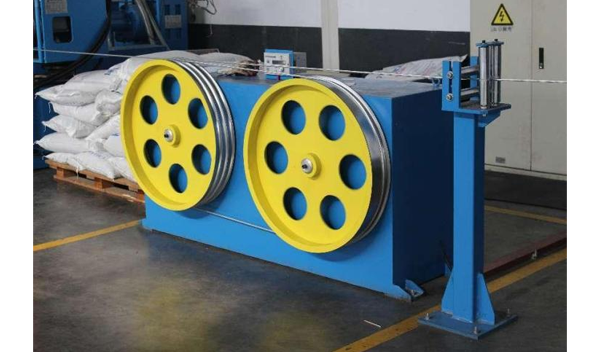
When a wire, cable, plastic strip, rubber material, textile, or other continuous material moves through a Production Line, stable tension is not a small detail. It affects material guidance, line movement, surface condition, winding quality, and the overall stability of the process. This is exactly where our Dual-wheel tension frame (500+600 wheels) comes into the picture.
At Wuxi Shuochuan Electromechanical Equipment Manufacturing Co., Ltd., we design and manufacture Auxiliary Equipment for continuous production lines. Our tension frame is built around a simple idea: guide the moving material properly, keep the material path stable, and make the equipment easy to connect with the rest of the production line.
The 500+600 wheel configuration is the specified configuration of this product. We do not treat this number as a universal load, speed, or tension rating. The final setup should always be matched with the customer's material, line layout, operating conditions, and technical requirements.
1. What Is a Dual-Wheel Tension Frame?
A tension frame is an auxiliary device used in continuous manufacturing to help guide moving material and manage material tension. It is normally installed at a suitable point in the production line, depending on the process and material path. The exact position can be different from one production line to another.
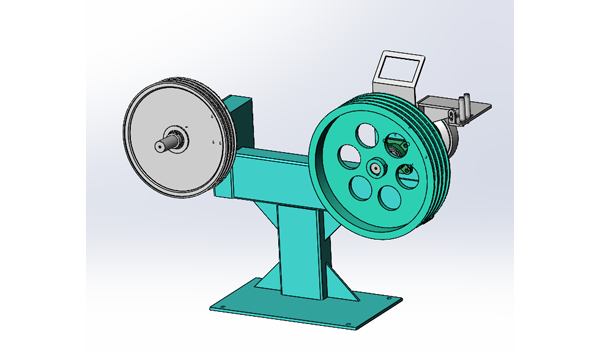
Our Dual-wheel tension frame (500+600 wheels) uses a dual-wheel arrangement. In simple terms, the material passes through a controlled path supported by the wheel structure. The wheels provide contact and guidance while the frame keeps the working arrangement stable.
This sounds straightforward, and in many ways it is. But anyone who has worked with continuous production knows that a simple material path can become complicated when the line runs for long periods. Small changes in alignment, material tension, wheel condition, or upstream and downstream equipment can affect the final result.
That is why we do not design the tension frame as an isolated piece of equipment. We look at how it will work with the complete production line. The material type, incoming direction, outgoing direction, available installation space, connection position, operating speed, and tension requirements all matter.
The Dual-Wheel Tension Frame can be used as part of wire and Cable Production equipment, extrusion lines, take-up and unwinding systems, and other continuous manufacturing systems. It can also be combined with other auxiliary equipment where controlled material movement is required.
| Item | Description |
|---|---|
| Product | Dual-wheel tension frame |
| Specified configuration | 500+600 wheels |
| Main function | Material guidance and tension management |
| Installation | Integrated into a suitable continuous production line |
| Typical materials | Wire, cable, plastic, rubber, textile and other continuous materials |
| Configuration basis | Material type, line layout, tension requirements and operating conditions |
One point is worth making clearly: the term “500+600 wheels” describes the configuration provided for this product. It should not automatically be interpreted as a 500 mm + 600 mm wheel diaMeter, a 500 kg + 600 kg load rating, or any other technical parameter unless such information is specifically confirmed in the customer's technical specification.
2. How Does the Dual-Wheel Tension Frame Work?
The working principle is easier to understand if we follow the material path. Continuous material enters the tension frame from one side, moves through the wheel arrangement, and then continues toward the next part of the production line.
During this movement, the wheel structure helps guide the material and maintain a controlled path. The frame itself provides the supporting structure. Depending on the complete machine design, the tension frame may work together with unwinding equipment, extrusion equipment, cooling equipment, take-up equipment, or other line components.
Material Entry
The material first enters the frame from the direction defined by the production line. At this point, correct alignment is important. If the incoming material does not enter the wheel path properly, the operator may see unnecessary movement, uneven contact, or unstable material tracking.
Wheel Guidance
The dual-wheel structure creates a controlled material path. The actual contact condition depends on the product being processed and the final configuration. Different materials have different surface characteristics, flexibility, stiffness, and tension behavior, so the wheel arrangement must be considered together with the application.
Tension Management
A tension frame does not work alone to create every condition in a production line. Actual line tension can also be affected by the unwinder, extruder, pulling equipment, take-up system, material properties, friction, line speed, and other equipment.
For this reason, we prefer to discuss tension as a complete system issue. If a customer tells us that the material has unstable tension, we do not simply look at the frame. We also want to understand what comes before and after it.
Material Exit
After passing through the tension frame, the material continues to the next production stage. A good material path should be smooth and predictable. The purpose is not to make the system complicated. It is to make the material movement easier to control.
| Factor | Possible Influence | What We Check |
|---|---|---|
| Material type | Flexibility, surface behavior and movement | Material structure and production condition |
| Line alignment | Material tracking and wheel contact | Entry and exit direction |
| Material tension | Movement stability and product condition | Upstream and downstream equipment |
| Wheel condition | Contact and material guidance | Wear, cleanliness and mechanical condition |
| Installation | Overall equipment stability | Frame position and fixing method |
This approach is especially useful when the tension frame is installed into an existing production line. Instead of asking only “Can the frame be installed?”, we ask a more useful question: “Will the frame work properly with the complete material path?”
3. Main Features and Practical Advantages
We focus on practical features rather than adding functions that customers may never use. For an industrial auxiliary machine, reliability and easy integration often matter more than a long list of complicated functions.
Dual-Wheel Structure
The dual-wheel arrangement provides a defined material guidance path. The 500+600 configuration is designed according to the specified product arrangement and can be considered during the layout of the complete production line.
Stable Material Guidance
Continuous materials should not move randomly through a production line. A stable path helps operators manage the process and makes it easier to identify problems when they occur.
Flexible Configuration
We can discuss the frame configuration according to the customer's material, line direction, installation space, tension requirements, and Production Process. This is particularly useful for manufacturers that have their own production equipment and need an auxiliary frame to fit an existing system.
Easy Line Integration
The tension frame can be used together with take-up and unwinding equipment and other auxiliary systems. The actual connection and installation design depends on the complete production line.
Practical Maintenance
A production machine should be reasonably easy to inspect. Operators normally need to check the wheel condition, frame condition, fasteners, material path, and other working parts during routine maintenance.
Built for Continuous Production
Our target applications are not occasional workshop operations. We mainly consider continuous industrial production, where the material may move through several processes before reaching the final take-up or storage stage.
From our experience, the best equipment is usually the equipment that operators can understand quickly. Clear structure, sensible material routing, and practical maintenance are small things, but they make a difference after the machine has been running for months or years.
4. Technical Considerations: Alignment, Tension and Safety
When customers ask us about a Dual-wheel tension frame for cable production or a tension frame for continuous extrusion, we normally start with the working conditions instead of immediately discussing a standard configuration.
Three areas are particularly important: alignment, tension, and safety.
Alignment Comes First
If the frame is not correctly aligned with the material path, the wheel arrangement may not perform as expected. The incoming and outgoing directions should be considered during installation. The frame should also be properly secured according to the equipment design and site conditions.
OSHA's general machine requirements state that fixed machinery should be securely anchored to prevent unwanted movement. OSHA also addresses guarding requirements for hazards such as ingoing nip points and rotating parts. These are useful reference points when planning an industrial installation.
Tension Is a System Condition
It is tempting to think that a tension frame alone controls all tension. In real production, the situation is more complicated. Tension can be influenced by material properties, unwinding resistance, pulling force, line speed, friction, take-up conditions, and other equipment.
Therefore, we normally recommend that customers provide information about the complete line. Even a simple line drawing can help us understand the material direction and equipment relationship.
Safety Around Moving Parts
Wheels and moving materials create areas that require attention during operation. Operators should not place hands near moving contact points during production. Appropriate guarding, access control, emergency procedures, and maintenance practices should be designed according to the complete machine and local safety requirements.
ISO 12100 provides a general framework for machinery risk assessment and risk reduction, including hazard identification and evaluation across relevant stages of the machine life cycle. We use this type of safety thinking when discussing equipment design and integration.
Measurement and Verification
Where a production line uses measurement equipment to monitor material length, diameter, speed, or other values, the measurement system should also be considered as part of the process. ISO 10012:2026 focuses on measurement management systems and confidence in the validity and reliability of measurement results.
| Checkpoint | Customer Information | Our Design Consideration |
|---|---|---|
| Material | Material type and basic structure | Suitable material path and contact arrangement |
| Line direction | Incoming and outgoing direction | Frame orientation and installation position |
| Production process | Equipment before and after the frame | Integration with the complete line |
| Working condition | Production environment and operating requirements | Structure, protection and maintenance considerations |
| Site space | Available installation area | Equipment dimensions and access requirements |
We believe this practical approach is better than giving customers a standard number that may not match their actual production line.
5. Applications in Wire, Cable, Extrusion and Other Industries
The Dual-wheel tension frame (500+600 wheels) is mainly intended for continuous production environments where material needs controlled guidance and tension management. Its application is not limited to one single industry.
Wire and Cable Manufacturing
Wire and cable production often involves multiple continuous processes. Depending on the production line, the material may pass through extrusion, cooling, measuring, marking, take-up, or other stages. A suitable tension frame can be installed where controlled material movement is needed.
For cable manufacturers, the important point is not simply having a tension frame. The frame should match the cable path and work with the surrounding equipment. This is why we ask about the complete line before confirming the final configuration.
Extrusion Production
Extrusion lines process material continuously. After the extrusion stage, the product normally continues through other equipment before take-up. Stable material guidance can help keep the product moving through the intended route.
Our tension frame can be considered for plastic extrusion and wire and cable extrusion applications where the production line requires additional material guidance or tension management.
Plastic Processing
Plastic materials can behave differently depending on their structure and processing condition. Flexible strips, tubes, profiles, and other continuous plastic products may require different handling arrangements. The frame configuration should therefore be discussed according to the actual product.
Rubber Processing
Continuous rubber materials also require controlled movement through processing equipment. The material path, surface condition, and production process should be considered when choosing the position and configuration of a tension frame.
Textile and Metal Wire Processing
Textile production and metal wire processing are other possible application areas. The actual suitability depends on material characteristics and production requirements. We do not recommend using one identical configuration for every material simply because the material is continuous.
That is one reason we offer engineering discussion before production. A short conversation about the material and line layout can prevent a lot of trouble later.
| Industry | Typical Material | Potential Use |
|---|---|---|
| Wire manufacturing | Electrical wire and continuous wire products | Material guidance and tension management |
| Cable manufacturing | Insulated wires and cables | Continuous line material control |
| Plastic extrusion | Plastic profiles and continuous products | Guidance during continuous processing |
| Rubber processing | Continuous rubber materials | Material path management |
| Textile production | Continuous textile materials | Controlled material movement |
| Metal wire processing | Continuous metal wire | Guidance and tension-related applications |
OSHA also emphasizes safe handling and storage practices, including keeping aisles and passageways clear and ensuring stored materials remain stable. For a production workshop, these basic points matter when deciding the location and access around auxiliary equipment.
6. How We Manufacture and Deliver the Tension Frame
At Shuochuan, manufacturing starts with understanding the customer's technical requirements. We do not want the workshop to build a machine based on incomplete information and then discover an installation problem at the customer's factory.
Step 1: Technical Discussion
We first confirm the product application, material type, line layout, installation conditions, required configuration, and other technical details. Drawings, photographs, or simple line diagrams can be useful during this stage.
Step 2: Configuration Confirmation
After the technical requirements are clear, we confirm the structure and configuration. For the Dual-wheel Tension Frame 500+600 Wheels, the specified 500+600 arrangement is included as the product configuration. Other details should be confirmed according to the actual order.
Step 3: Manufacturing
We then move into fabrication and assembly. Structural parts are processed, prepared, assembled, and checked according to the agreed technical requirements. The exact manufacturing process can vary according to the final configuration.
Step 4: Assembly and Inspection
Before shipment, the tension frame is assembled and inspected. We check the structure, moving components, material path, connection points, and other agreed inspection items. If the equipment is part of a larger production line, the inspection focus is also matched to the integration requirements.
Step 5: Testing
The equipment is tested according to the technical requirements agreed with the customer. We believe testing before shipment is important because it gives both sides a clearer understanding of the equipment condition before transportation.
Step 6: Packaging and Shipment
Once inspection is completed, the equipment is prepared for shipment. Depending on the structure and destination, we can use protective film, steel frames, cartons, wooden cases, or other suitable packaging materials.
The normal production and delivery cycle is approximately 30–90 days after the technical specifications and order details are confirmed. The actual schedule depends on the configuration, order quantity, production arrangement, inspection requirements, and shipping conditions.
| Stage | Main Activity | Customer Focus |
|---|---|---|
| 1 | Technical discussion | Application and requirements |
| 2 | Configuration confirmation | Structure and installation conditions |
| 3 | Manufacturing | Production according to confirmed requirements |
| 4 | Assembly and inspection | Equipment condition and agreed inspection items |
| 5 | Testing | Performance according to agreed requirements |
| 6 | Packaging and delivery | Safe transportation and site delivery |
For payment, we commonly arrange a deposit and balance before shipment, although the final payment terms are based on the contract and mutual agreement.
For transportation, we can arrange sea freight, rail transportation, air freight, or another suitable method depending on the destination, equipment dimensions, delivery schedule, and customer requirements.
7. Why Choose Shuochuan for a Dual-Wheel Tension Frame?
We are Wuxi Shuochuan Electromechanical Equipment Manufacturing Co., Ltd., an enterprise integrating R&D, manufacturing, and sales. Our business is closely connected with automated equipment for wire and cable production and related industrial processes.
Our product range includes high-speed extruders, three-in-one BV extrusion automatic production lines, three-in-one plus one BVVB automated production lines, photovoltaic wire and Cable Production Lines, automotive Wire Production lines, electronic Wire Production Lines, network communication wire production lines, cable production lines, charging pile cable production lines, take-up and unwinding equipment, auxiliary equipment, and related raw materials.
This background matters when designing a tension frame because we understand that an auxiliary machine has to work with other equipment. A frame that looks good by itself is not enough. It needs to make sense inside the customer's production line.
We Start with the Application
We ask about the material, production process, line direction, installation area, and working requirements before confirming the final configuration. This helps us avoid making assumptions about parameters that have not been provided.
We Focus on Practical Equipment
Our design philosophy is straightforward: useful structure, reliable operation, convenient integration, and reasonable maintenance. We do not believe that adding unnecessary complexity automatically makes industrial equipment better.
We Follow a Complete Production Process
Our work covers technical communication, design and configuration, manufacturing, assembly, inspection, testing, packaging, and delivery. This gives customers a single manufacturing partner instead of having to coordinate several unrelated suppliers.
We Value Long-Term Cooperation
Our corporate spirit is “Quality First, Continuous Improvement, and Honest Service.” We also aim to create reliable products and support customer satisfaction. For industrial equipment, we believe honest communication is particularly important. If a technical requirement is unclear, we would rather ask than guess.
Our company has obtained more than ten utility model patent certificates and has developed a range of automated equipment around practical industrial production needs. We also operate under a quality management approach intended to cover the process from product development through manufacturing.
In short, when you choose us for a Dual-wheel tension frame for wire and cable production, we aim to provide more than a standalone frame. We want to provide equipment that fits the way your production line actually works.
8. FAQ About the Dual-Wheel Tension Frame (500+600 Wheels)
Q1: What does “500+600 wheels” mean?
It describes the specified wheel configuration of this product. It should not automatically be interpreted as wheel diameter, load capacity, speed, or tension rating. Those parameters should be confirmed separately according to the technical specification.
Q2: What materials can the Dual-Wheel Tension Frame handle?
The frame is intended for continuous materials such as wire, cable, plastic, rubber, textile, and metal wire. Actual suitability depends on the material structure, surface condition, tension requirements, and complete production process.
Q3: Can this tension frame be used in a cable production line?
Yes. It can be considered for wire and cable production lines where controlled material guidance and tension management are required. We recommend confirming the material path and equipment before and after the frame before final configuration.
Q4: Can it be integrated with take-up and unwinding equipment?
Yes. A tension frame can be used as part of a system with take-up, unwinding, extrusion, and other auxiliary equipment. The final integration depends on the customer's line layout and technical requirements.
Q5: Can you customize the tension frame?
We can discuss the configuration according to material type, line layout, installation space, tension requirements, production conditions, and other customer requirements. Customization should be confirmed through technical communication before production.
Q6: What information should I provide when asking for a quotation?
Useful information includes the material type, material dimensions where relevant, incoming and outgoing material direction, line layout, equipment before and after the frame, installation space, operating conditions, and any existing drawings or photographs. The more complete the information, the easier it is for us to confirm a suitable configuration.
Q7: How long is the production and delivery cycle?
The typical production and delivery cycle is around 30–90 days after technical specifications and order details are confirmed. The actual schedule depends on the final configuration, production plan, inspection requirements, and transportation arrangements.
Q8: How is the equipment inspected before shipment?
The tension frame is assembled, inspected, and tested according to the agreed technical requirements before shipment. The specific inspection items depend on the confirmed product configuration and customer requirements.
Q9: What payment terms do you accept?
Payment terms are arranged according to the contract. A common arrangement is a deposit followed by the balance before shipment. Other arrangements can be discussed according to the order and cooperation conditions.
Q10: How do you package the tension frame?
Packaging can include protective film, steel frames, cartons, wooden cases, or other suitable materials. The final packaging method depends on the equipment structure, quantity, transportation method, destination, and protection requirements.
Q11: Can you arrange international transportation?
Yes. We can arrange sea freight, rail transportation, air freight, or another suitable transportation method according to the destination, equipment dimensions, delivery requirements, and customer preference.
Q12: What is the main benefit of a tension frame?
Its main purpose is to help guide continuous material and support controlled material movement and tension management. The actual result depends on the complete production system, including upstream and downstream equipment, material properties, alignment, and operating conditions.
Technical Reference Notes
Our engineering discussions are based on practical production requirements, while general machinery safety and measurement considerations can also be referenced against recognized international and occupational safety guidance.
ISO 12100:2010 provides general principles and a methodology for machinery safety, including risk assessment and risk reduction.
ISO 10012:2026 addresses measurement management systems and confidence in the validity and reliability of measurement results.
OSHA 29 CFR 1910.212 addresses general machine guarding requirements, including hazards associated with point of operation, ingoing nip points, and rotating parts.
OSHA 29 CFR 1910.176 covers general requirements for material handling and storage, including clear aisles and stable storage.
These references provide general guidance. The final safety design, guarding, installation, electrical arrangement, operating procedures, and compliance requirements should always be determined according to the complete machine, local regulations, site conditions, and the customer's application.



 WhatsApp
 Phone
Phone