


 Pусский
 中文
中文

When we design equipment for wire and Cable Production, we always start with the cable itself. What material is being used? What kind of shielding structure is required? How fast does the customer need to produce? What kind of cable will be made after the wrapping process? These questions are more useful than simply choosing a machine by name.
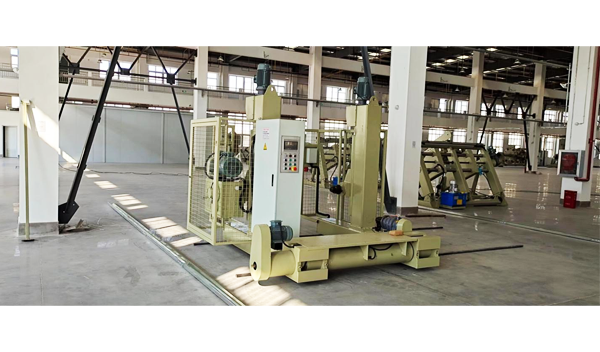
Our Motor-driven Concentric Copper Strip Shielding Wrapping Machine is designed for continuous copper strip wrapping and shielding applications in wire and cable manufacturing. The machine focuses on stable material feeding, controlled tension, accurate wrapping, and smooth cable movement.
Copper strip shielding is used in suitable cable designs to provide an electrical shielding layer around the cable structure. Depending on the cable type and design, the shielding layer can help control electromagnetic interference and provide additional protection to the cable structure.
Our machine is suitable for different wire and cable production applications, including power cables, control cables, industrial cables, communication-related cables, electrical wires, automotive cables, photovoltaic cables, and other suitable products.
We do not treat the machine as a simple wrapping device. The wrapping process is connected with cable diaMeter, material width, tension, wrapping method, production speed, cable guiding, and take-up. If one part is not well matched, the final result can be affected.
That is why we normally confirm the customer's cable structure and production requirements before preparing the final machine configuration.
1. What Is a Motor-driven Concentric Copper Strip Shielding Wrapping Machine?
In simple words, this machine wraps copper strip around a cable in a controlled and continuous way. The copper strip is supplied from a material reel, guided through the wrapping section, and formed around the cable according to the selected process.
The term motor-driven describes the drive method used by the machine. A motor provides the mechanical movement required for the wrapping process. Stable drive control is important because the cable and copper strip need to move together in a controlled manner.
The term concentric refers to the arrangement of the wrapping process around the cable center. The goal is to maintain a stable and organized wrapping path instead of allowing the copper strip to move randomly around the cable.
The word shielding describes the purpose of the copper strip layer in suitable cable constructions. The actual electrical function depends on the complete cable design, grounding method, shielding structure, and applicable cable specification.
So, the machine has several jobs at the same time:
Feed copper strip continuously.
Guide the copper strip toward the cable.
Control material movement and tension.
Keep the wrapping position stable.
Maintain coordinated cable movement.
Support continuous production.
Send the processed cable to the next production stage.
This sounds simple, but anyone who has worked with cable machinery knows that stable wrapping is not just about putting a strip around a cable. The material path, tension, speed, alignment, and cable movement all matter.
2. How Does Copper Strip Shielding Wrapping Work?
The working process begins with the cable entering the wrapping section. The copper strip is placed on the corresponding material reel and then guided toward the wrapping area.
As the cable moves forward, the motor-driven mechanism keeps the production movement stable. The copper strip follows a controlled path around the cable. Depending on the required product structure, the wrapping method and material position are adjusted according to the technical requirements.
One of the key points is the relationship between cable speed and copper strip feeding. If the cable moves faster, the material feeding condition must remain coordinated. If the material tension changes too much, the wrapping condition can also change.
We therefore pay attention to the complete movement path rather than looking at the wrapping head alone.
A Typical Process
The cable enters the machine through the cable guiding section.
The copper strip is supplied from the material reel.
The copper strip passes through the guiding and tension-control section.
The strip reaches the concentric wrapping area.
The copper strip is wrapped around the cable according to the selected configuration.
The wrapped cable continues through the cable guiding or traction section.
The finished cable moves toward the next process or take-up system.
The actual machine arrangement can change according to the customer's cable structure. For example, a cable with a simple shielding layer does not necessarily require the same configuration as a more complex multi-layer cable.
We prefer to confirm these details before production. This makes the equipment more useful in the customer's actual workshop.
3. Main Features of Our Copper Strip Shielding Wrapping Machine
Motor-driven Operation
The machine uses a motor-driven structure to provide controlled mechanical movement. Stable drive is important for continuous cable production because the wrapping process should not rely on sudden manual adjustments during normal operation.
We focus on smooth movement and practical control rather than adding unnecessary functions. The operator should be able to understand the basic working condition and make the required adjustments without making the process complicated.
Concentric Wrapping Structure
The concentric arrangement helps keep the copper strip around the cable in an organized way. This is especially important when the cable has a defined shielding structure and the wrapping position needs to remain consistent.
The final wrapping method depends on the customer's cable design. We can discuss the appropriate arrangement according to the cable diameter, copper strip specification, production speed, and required shielding structure.
Stable Copper Strip Feeding
Copper strip is a metal material with its own stiffness and forming behavior. If the feeding path is not stable, the strip may not follow the desired route.
For this reason, we pay attention to the material reel, guiding path, tension condition, and wrapping position when configuring the machine.
Controlled Tension
Tension is one of the most important parts of a continuous wrapping process. Too much tension may affect the material or cable structure. Too little tension may lead to loose or uneven wrapping.
There is no single tension value that is suitable for every copper strip. The correct setting depends on the strip specifications, cable structure, wrapping method, and production conditions.
Flexible Configuration
Different customers produce different cables. Some focus on power cables, some on control cables, and others on automotive or photovoltaic cable products.
We therefore configure the equipment around the customer's actual product rather than treating every project as exactly the same.
Continuous Production
The machine is designed for continuous cable wrapping. Continuous operation is useful for cable manufacturers because it helps reduce unnecessary stops and keeps the Production Process organized.
| Machine Feature | Practical Purpose | Customer Benefit |
|---|---|---|
| Motor-driven operation | Provides controlled mechanical movement | Stable continuous operation |
| Concentric wrapping | Guides copper strip around the cable | Consistent wrapping position |
| Tension control | Manages copper strip feeding condition | Helps maintain wrapping quality |
| Material guiding | Controls the copper strip path | Reduces unwanted material movement |
| Flexible configuration | Adapts equipment to cable requirements | Suitable for different projects |
4. Technical Advantages: Why Wrapping Control Matters
When we discuss a copper strip shielding wrapping machine, we do not only discuss the wrapping speed. We look at the entire process.
The cable needs to move forward at a stable rate. The copper strip needs to be supplied smoothly. The strip tension needs to stay within a suitable working range. The wrapping position needs to remain controlled. Finally, the finished cable needs to leave the machine without unnecessary disturbance.
These points are connected.
For example, if the cable movement changes suddenly while the copper strip feeding remains unchanged, the wrapping condition can change. If the material tension changes, the strip may behave differently around the cable. If the guiding position is not stable, the finished shielding layer may not look consistent.
That is why we pay attention to the complete process when designing and assembling the equipment.
Copper Strip and Cable Structure
Copper is widely used as a conductor material in electrical cables. IEC 60228:2023 covers conductor requirements for many types of electric power cables and cords, including solid and stranded copper conductors, and specifies nominal cross-sectional areas and related conductor requirements.
This standard does not define our wrapping machine. It is useful as a reference because it reminds us that cable production starts with a defined cable construction. Wrapping equipment should therefore be selected according to the finished cable design.
Power Cable Applications
IEC 60502-1:2021 specifies construction, dimensions, and test requirements for certain power cables with extruded solid insulation for rated AC voltages of 1 kV and 3 kV. IEC 60502-2 covers another range of power cable applications, including cables from 6 kV to 30 kV.
These standards are not machine specifications. Instead, they provide useful background for understanding why cable construction needs to be controlled at each production stage.
For our customers, the practical point is simple: if a finished cable needs a copper shielding layer, the wrapping process must be matched to that cable's structure and applicable product requirements.
| Reference | What It Covers | Why It Is Useful as a Reference |
|---|---|---|
| IEC 60228:2023 | Conductors of insulated cables | Defines conductor sizes and related conductor requirements |
| IEC 60502-1:2021 | Power cables from 1 kV to 3 kV | Provides construction, dimension, and test requirements for applicable power cables |
| IEC 60502-2:2014 + AMD1:2024 | Power cables from 6 kV to 30 kV | Provides construction, dimension, and test requirements for applicable higher-voltage power cables |
Source: International Electrotechnical Commission (IEC). The standards above are technical references only. The applicable standard depends on the final cable type, market, voltage level, and customer specification.
Stable Wrapping Is More Important Than Simply Running Fast
We often tell customers that a cable machine should not be judged only by maximum speed. A machine that runs quickly but produces unstable wrapping is not useful in real production.
For copper strip shielding, stable movement is especially important because the material must be guided correctly while the cable continues to move through the line.
Our design focus is therefore on practical continuous production: stable feeding, controlled movement, reasonable adjustment, and clear process control.
5. Applications and Suitable Industries
Our Motor-driven Concentric Copper Strip Shielding Wrapping Machine is mainly used in wire and cable manufacturing. The exact application depends on the customer's cable design.
Power Cable Manufacturing
Power cables may include several layers, such as conductor, insulation, shielding, bedding, armoring, and sheath, depending on the cable type.
Where copper strip shielding is required, our equipment can be used as part of the corresponding production process.
We do not assume that every power cable needs copper strip shielding. The final structure must be confirmed according to the cable specification.
Control Cable Production
Control cables are commonly used in electrical control systems and industrial equipment. Some designs require shielding to help manage electrical interference.
Our copper strip wrapping equipment can be considered where the cable design specifies a suitable copper shielding layer.
Industrial Cable
Industrial cables can be used in equipment, factories, automation systems, and other working environments. Cable construction varies greatly between applications.
This is one reason we offer flexible equipment configuration. The wrapping process should follow the actual cable rather than a generic product description.
Communication-related Cable Applications
Some communication-related cable designs use shielding materials to manage interference. However, cable construction differs between products, so the required shielding method must be confirmed before machine selection.
Automotive Cable
Automotive wire and cable products often have strict requirements for size, flexibility, insulation, and production consistency. Where copper strip shielding is part of the cable construction, a controlled wrapping process can be included in the manufacturing line.
Photovoltaic Cable
Photovoltaic cable production has its own material and construction requirements. Not every photovoltaic cable uses copper strip shielding, so we recommend checking the exact cable design first.
Electrical Wire and Special Cable
Our equipment can also be considered for other electrical wires and special cable products where copper strip shielding is part of the required structure.
| Industry | Possible Product | Wrapping Consideration |
|---|---|---|
| Power | Power cables | Copper shielding according to cable design |
| Industrial | Industrial cables | Stable material feeding and cable guiding |
| Automation | Control cables | Shielding structure and continuous wrapping |
| Automotive | Automotive cables | Controlled wrapping according to cable construction |
| Photovoltaic | PV cables | Configuration based on specified cable structure |
| Electrical | Electrical wires and cables | Flexible equipment configuration |
6. How We Manufacture and Test the Machine
We believe the quality of a cable machine is built during the manufacturing process, not added at the end.
Our company integrates R&D, manufacturing, and sales. We have obtained more than ten utility model patent certificates according to the company information provided for this product. We also operate under the company's stated ISO 19001 quality management system certification.
Step 1: Technical Discussion
Before manufacturing, we discuss the customer's cable product and wrapping requirements.
Useful information includes:
Cable type
Cable structure
Cable diameter
Copper strip specification
Required shielding structure
Wrapping method
Target production speed
Pay-off and take-up requirements
Workshop conditions
Destination country
The more complete the technical information is, the easier it is for us to prepare a suitable machine configuration.
Step 2: Equipment Design
After the technical requirements are confirmed, we prepare the machine configuration. We consider the material path, wrapping section, cable movement, drive system, operator access, and connection with other production equipment.
Step 3: Mechanical Manufacturing
The machine frame and mechanical components are manufactured according to the confirmed design. We pay attention to assembly accuracy and the movement of the main mechanical parts.
Step 4: Electrical and Mechanical Assembly
The mechanical and electrical systems are assembled into the complete machine. During this stage, we check the material path, moving parts, electrical connections, control-related components, and operator access.
Step 5: Inspection and Testing
Before shipment, each machine is assembled, inspected, and tested according to the agreed technical requirements.
We check the basic operating condition and relevant production functions before the machine leaves our factory. If the customer has specific inspection requirements, these can be confirmed during the technical discussion stage.
Production and Delivery Cycle
After the technical specifications and order details are confirmed, our typical production and delivery cycle is around 30–90 days.
The exact schedule depends on the final machine configuration, production workload, component availability, inspection requirements, and project complexity.
| Project Stage | Main Work | Customer Information Needed |
|---|---|---|
| Technical confirmation | Review cable and wrapping requirements | Cable structure and material information |
| Machine configuration | Confirm equipment arrangement | Production requirements |
| Manufacturing | Process and assemble equipment | Confirmed technical specification |
| Testing | Inspect and test the machine | Agreed acceptance requirements |
| Packaging | Prepare equipment for shipment | Destination and transport requirements |
| Delivery | Arrange transportation | Shipping information |
7. Delivery, Payment, Transportation, and Packaging
Delivery Standard
Our standard delivery process includes equipment assembly, inspection, and testing according to the agreed technical requirements before shipment.
We also confirm the packaging and transportation arrangements before the machine leaves the factory. This helps reduce unnecessary problems during international delivery.
Payment Method
Payment terms can be arranged according to the contract. A common arrangement is a deposit followed by the remaining balance before shipment.
The final payment structure depends on the agreed commercial terms. We confirm the payment conditions before the order enters production.
Transportation
We can arrange sea transportation, rail transportation, or other suitable methods depending on the destination, equipment size, and project requirements.
For international customers, transportation planning should be discussed early because machine dimensions and packaging requirements can affect the shipping method.
Packaging Method
We normally use protective film, steel frames, wooden cases, or other suitable packaging materials according to the equipment structure.
The main purpose is to help protect the equipment from moisture, dust, impact, and movement during transportation.
For larger machines, we also consider loading and unloading conditions. The equipment should not only arrive at the destination safely; it should also be practical to move into the customer's workshop.
8. Why Choose Wuxi Shuochuan for Copper Strip Shielding Equipment?
There is no shortage of cable machinery suppliers. So why work with us?
Our answer is simple: we focus on the complete cable production process rather than selling a machine in isolation.
Wuxi Shuochuan Electromechanical Equipment Manufacturing Co., Ltd. is an innovative technology enterprise integrating R&D, manufacturing, and sales. Our product range includes high-speed extruders, BV extrusion automatic Production Lines, BVVB automated production lines, photovoltaic wire and Cable Production Lines, automotive Wire Production lines, electronic Wire Production Lines, network communication wire production lines, cable production lines, charging pile cable production lines, take-up and unwinding equipment, Auxiliary Equipment, and raw materials.
This broader product range is useful because copper strip shielding is usually only one step in a much larger cable production process.
We understand that a wrapping machine needs to connect with the equipment before and after it. Cable movement, pay-off, wrapping, traction, and take-up need to be considered as a complete process.
Our Working Approach
Understand the customer's cable first.
Confirm the required wrapping material.
Discuss the shielding structure.
Confirm production requirements.
Prepare the appropriate machine configuration.
Manufacture according to the confirmed requirements.
Inspect and test before shipment.
Arrange suitable packaging and transportation.
Our corporate spirit is Quality First, Continuous Improvement, and Honest Service. We believe this is especially important for industrial machinery because the relationship does not end when the machine is shipped.
A good machine project starts with clear communication and ends with equipment that can be used in real production.
9. Frequently Asked Questions
What is a Motor-driven Concentric Copper Strip Shielding Wrapping Machine?
It is a machine designed for continuous copper strip wrapping and shielding applications in wire and cable production. It uses a motor-driven system and a concentric wrapping arrangement to guide copper strip around the cable according to the required production configuration.
What is copper strip shielding used for?
Copper strip shielding can be used as an electrical shielding layer in suitable cable designs. Its actual electrical performance depends on the complete cable construction, shielding arrangement, grounding method, and applicable product requirements.
Can this machine produce power cables?
Yes, it can be configured for suitable power cable production applications where copper strip shielding is required by the cable design.
Can it be used for automotive cables?
Yes. Where copper strip shielding is part of the automotive cable structure, the machine can be considered as part of the production process. The final configuration should be confirmed according to the actual cable specifications.
Can the machine handle different copper strip specifications?
The equipment can be configured according to the customer's copper strip and cable requirements. The specific material width, thickness, reel arrangement, and process conditions should be confirmed during technical discussions.
Does the machine use motor-driven operation?
Yes. Motor-driven operation is part of the product design and provides controlled movement for the wrapping process.
Can the wrapping machine be integrated into a complete cable production line?
Yes. We can discuss integration with suitable pay-off, take-up, traction, extrusion, and other cable production equipment according to the customer's production process.
How long is the production cycle?
Our typical production and delivery cycle is around 30–90 days after technical specifications and order details are confirmed. The actual schedule depends on the machine configuration and project requirements.
How do you test the machine before shipment?
We assemble, inspect, and test the machine according to the agreed technical requirements before shipment. Specific acceptance items can be discussed and confirmed before production.
How is the machine packaged?
We normally use protective film, steel frames, wooden cases, or other suitable packaging materials. The final method depends on equipment size, structure, transportation method, and destination.
How can you transport the equipment internationally?
We can arrange sea transportation, rail transportation, or other suitable transportation methods according to the destination and equipment dimensions.
What payment terms do you accept?
Payment terms can be arranged according to the contract. A common arrangement is a deposit and balance before shipment, with the final terms confirmed before production.
What information should I provide for a quotation?
We recommend providing the cable type, cable structure, cable diameter, copper strip information, required shielding structure, production speed, pay-off and take-up requirements, and destination. A cable drawing or technical specification is also helpful.
10. Conclusion
Our Motor-driven Concentric Copper Strip Shielding Wrapping Machine is built around a practical idea: keep copper strip shielding stable, controlled, and suitable for continuous cable production.
The machine combines motor-driven movement, concentric wrapping, controlled material feeding, and flexible configuration. It can be used for suitable power cables, control cables, industrial cables, automotive cables, photovoltaic cables, electrical wires, and other cable products where copper strip shielding is part of the required structure.
We do not assume that every customer needs exactly the same machine. Cable construction is different from project to project, and the machine should reflect those differences.
That is why we confirm the cable structure, copper strip specification, wrapping method, production speed, working conditions, and other technical details before finalizing the equipment.
For customers searching for a Motor-driven Concentric Copper Strip Shielding Wrapping Machine, copper strip shielding wrapping machine, concentric copper strip wrapping machine, or motor-driven Cable Wrapping Machine, we can discuss the actual production requirements first and then recommend a suitable configuration.
Our goal is straightforward: build practical equipment, keep the production process stable, and provide honest service throughout the project.
Technical References
IEC 60228:2023 – Conductors of insulated cables. This IEC standard specifies nominal cross-sectional areas and related conductor requirements for a wide range of electric power cables and cords.
IEC 60502-1:2021 – Power cables with extruded insulation and their accessories. This standard covers construction, dimensions, and test requirements for applicable power cables rated at 1 kV and 3 kV.
IEC 60502-2:2014 + AMD1:2024 – Power cables with extruded insulation. This standard covers applicable power cables rated from 6 kV up to 30 kV and includes requirements relating to construction, dimensions, and testing.
Important note: The standards above are provided as technical references for cable manufacturing. They do not mean that this machine itself is certified to every listed standard, nor that every cable produced with the equipment must comply with every standard. The applicable requirements depend on the final cable type, customer specification, destination market, and relevant product standard.



 WhatsApp
 Phone
Phone