


 Pусский
 中文
中文


When we talk about cable extrusion, we usually start with one simple question: what kind of cable are you going to produce? Different cables need different insulation and jacketing structures. Some products use PVC, some use nylon, and some require more than one material to form different layers around the conductor. This is where a PVC + Nylon Co-extrusion Production Line for Cable Manufacturing becomes useful.
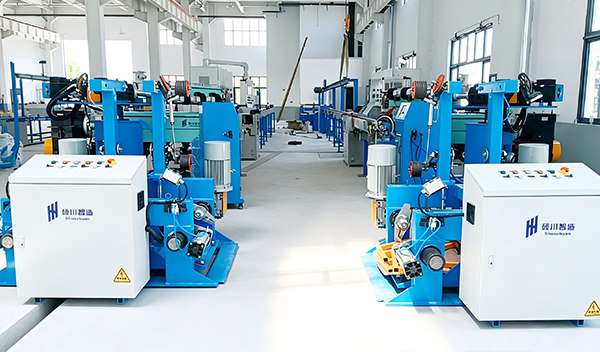
Our PVC + Nylon Co-extrusion Production Line is designed for continuous plastic extrusion and wire and Cable Production. It combines PVC and Nylon extrusion processes into one coordinated production system. Instead of treating each material as a completely separate production step, the line is designed to control the extrusion process so that different thermoplastic materials can be processed in the required sequence and structure.
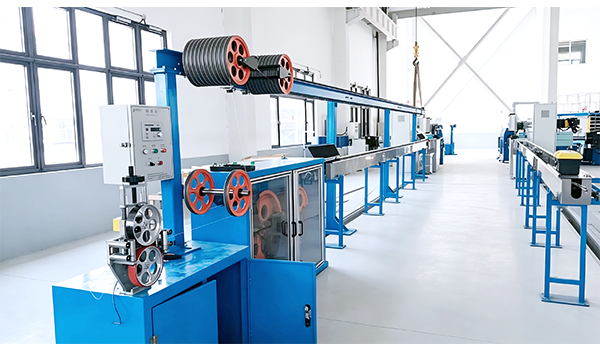
We manufacture extrusion equipment with practical production needs in mind. A Cable Production Line is not simply a collection of extruders, cooling equipment, pulling equipment, take-up equipment, and control systems. These parts have to work together. Material temperature, extrusion stability, line speed, cooling, tension, and winding all affect the final cable.
Our company, Wuxi Shuochuan Electromechanical Equipment Manufacturing Co., Ltd., integrates R&D, manufacturing, and sales. We have obtained more than ten utility model patent certificates and have passed ISO 19001 quality management system certification according to our company information. Our working principle is straightforward: understand the customer's production requirements, confirm the equipment configuration, manufacture carefully, inspect the finished line, and then arrange delivery.
This page explains what our PVC + Nylon Co-extrusion Production Line for Cable Manufacturing does, how the process works, where it can be used, what factors affect configuration, and how we handle production and delivery. We will keep the language simple because good industrial information should be easy to understand before it becomes technical.
1. What Is a PVC + Nylon Co-extrusion Production Line?
A co-extrusion production line is a manufacturing system that allows two or more polymer materials to be processed and formed as part of one continuous extrusion process. In cable manufacturing, this approach can be used when the finished product requires different material layers or material functions.
Our PVC + Nylon Co-extrusion Production Line is designed around PVC and nylon processing for wire and cable applications. PVC is widely used in electrical products because it can provide useful insulation and jacketing characteristics. Nylon is another engineering thermoplastic that can be selected when the cable design requires properties such as abrasion resistance or a different outer material structure.
The important point is that PVC and nylon are not simply poured together. Each material has its own processing behavior. The extrusion system must therefore be configured to suit the material, temperature range, material flow, cable structure, and production requirements.
We normally discuss these details with customers before confirming the equipment. This is especially important for a PVC and Nylon co-Extrusion Line for Cable Manufacturing, because the final cable structure determines much of the production-line design.
Why Use Two Materials?
There is no single material that is perfect for every cable application. Different layers can have different jobs.
One material may provide electrical insulation. Another may provide mechanical protection. One layer may be selected for cost and processing reasons, while another may be selected for a particular surface or environmental requirement.
By using co-extrusion, manufacturers can build a multi-material structure in a continuous Production Process. This can reduce the need for separate coating operations when the product design is suitable for co-extrusion.
We always recommend starting with the actual cable design. Before selecting an extruder or production line, the customer should know the conductor structure, required insulation or jacket structure, material grades, target cable dimensions, production requirements, and applicable product standards.
Typical Production-Line Sections
Material feeding system
PVC extrusion system
Nylon extrusion system
Crosshead or co-extrusion die system
Temperature control system
Cooling section
Haul-off or pulling system
DiaMeter or process monitoring equipment where required
Take-up system
Electrical control system
The exact equipment combination depends on the cable product and the customer's production requirements. We do not treat the above list as a fixed configuration for every project.
2. How Does PVC + Nylon Co-extrusion Work?
The working principle is easier to understand if we break the production process into several steps.
Step 1: Material Preparation
Before extrusion starts, PVC and nylon materials need to be prepared according to the production process. Different materials can have different storage, feeding, drying, and processing requirements.
Nylon in particular can be sensitive to moisture. If moisture control is required for the selected nylon material, the production process needs to include suitable material preparation and drying arrangements.
We discuss the actual material grade with the customer because “nylon” is a broad material category. Different grades can have different processing windows. The same principle applies to PVC compounds.
Step 2: Separate Extrusion
In a PVC + Nylon co-extrusion production line, the materials are normally processed through their respective extrusion systems. The screw rotates inside the heated barrel. The material is fed into the barrel, heated, softened, mixed, and moved forward by the screw.
This process is often called plasticization. The goal is to produce a stable molten polymer flow before the material reaches the die.
Step 3: Co-extrusion
The separate material flows are brought together through a suitable co-extrusion die or crosshead system. The die controls how the materials are positioned around the cable.
This is one of the most important parts of the line. If the material flows are not properly matched, the final layer thickness and cable surface can become unstable.
Step 4: Cooling
After the polymer is formed around the conductor, the hot cable passes through a cooling section. Cooling helps the extruded material become stable enough for the following pulling and winding stages.
Cooling is not simply about using cold water. The cooling process needs to match the extrusion speed, material behavior, cable structure, and production conditions.
Step 5: Haul-off and Take-up
Once the cable is sufficiently stable, the haul-off system pulls the cable through the line. The take-up system then winds the finished cable onto the required reel or spool.
We pay attention to coordination between extrusion and take-up. If pulling tension changes too much, the cable can be affected. If winding is unstable, the finished reel may also have quality problems.
| Process Stage | Main Function | Key Factors to Control |
|---|---|---|
| Material Feeding | Supply polymer materials | Material type, feeding stability, moisture control where required |
| Plasticization | Heat and soften polymer | Temperature, screw operation, material flow |
| Co-extrusion | Form the required multi-material structure | Flow balance, die design, layer position |
| Cooling | Stabilize the extruded cable | Cooling condition, cable speed, material behavior |
| Haul-off | Move cable through the production line | Speed and tension |
| Take-up | Wind finished cable | Winding tension, alignment, reel configuration |
Source basis: general polymer extrusion principles and cable-production process practice. The table describes process functions and control factors, not guaranteed specifications for a particular machine configuration.
3. Main Features of Our PVC + Nylon Co-extrusion Line
When we design a cable extrusion line, we care about stable production more than impressive-looking numbers. A line may have high theoretical speed, but if material flow is unstable or the take-up system cannot keep up, the real production result will not be good.
Continuous Extrusion
Our production line is designed for continuous wire and cable extrusion. Continuous processing is useful for cable manufacturers because the conductor can pass through the extrusion section while polymer material is applied around it in a controlled process.
This production method can help manufacturers organize long production runs and reduce unnecessary interruptions when the equipment and material are properly matched.
PVC and Nylon Material Processing
The line is designed to handle PVC and nylon in a coordinated extrusion process. Because these materials have different processing characteristics, temperature control and material-flow management are important.
We do not assume that every PVC compound or nylon grade can use exactly the same process settings. Before production, we confirm the customer's material information and cable requirements.
Flexible Line Configuration
Different cable products require different equipment arrangements. A production line for electrical wire may not have exactly the same requirements as a line for automotive wire, photovoltaic cable, or charging pile cable.
For this reason, our configuration discussion usually includes the material, conductor, cable structure, target production requirements, required line functions, and customer's factory conditions.
Integrated Production Process
A complete extrusion line has several sections that need to work together. Extrusion, cooling, pulling, monitoring, and take-up cannot be considered completely separate machines.
Good coordination helps the operator control the production process more easily. It also makes troubleshooting more straightforward because the process can be viewed as one production system.
Suitable for Different Cable Applications
The PVC + Nylon Co-extrusion Production Line can be considered for cable manufacturing applications where the product design calls for PVC and nylon materials. Typical target industries include electrical wire, automotive wire, electronic wire, photovoltaic wire and cable, network communication cable, charging pile cable, and other plastic-insulated cable products.
4. Technical Advantages and Material Considerations
For us, the technical side of co-extrusion starts with material behavior. PVC and nylon are both thermoplastics, but they should not be treated as if they behave exactly the same way.
PVC Processing
PVC is widely used in wire and cable applications. Its processing conditions depend on the specific compound, formulation, and product design. Temperature must be controlled carefully because excessive heat can affect PVC processing behavior.
For cable extrusion, the goal is to create a stable polymer melt that can flow through the die and form a consistent insulation or jacket layer around the conductor.
Nylon Processing
Nylon is commonly selected for applications where its mechanical and thermal characteristics are useful. However, nylon materials can be moisture-sensitive, so material preparation may be an important part of the extrusion process.
We therefore ask customers to provide the exact nylon material grade before final equipment configuration. This helps us avoid treating all nylon materials as the same.
Layer Control
In co-extrusion, the position and thickness of each material layer matter. The die system, material flow, temperature, pressure, line speed, and conductor position all influence the final structure.
For a cable manufacturer, this means the extrusion line should be treated as a complete process rather than simply an extruder with a die attached to it.
Temperature Control
Temperature control is one of the basic technical points in polymer extrusion. Each material has a suitable processing range. The actual temperature settings should be established according to the material supplier's recommendations, compound formulation, equipment design, and production trial.
We avoid publishing one universal temperature setting because it would not be technically responsible. PVC compound and nylon grade can vary significantly.
Process Stability
A stable extrusion process means the material flow remains reasonably consistent while the production line is running. Stable pressure, temperature, pulling speed, and take-up tension all contribute to a more controlled process.
This is also why commissioning matters. Even when the mechanical equipment is correctly assembled, the production team still needs to establish suitable process settings for the actual material and cable product.
| Material | Common Cable Role | Important Process Consideration | What We Confirm |
|---|---|---|---|
| PVC | Insulation or jacket applications | Processing temperature and melt stability | PVC compound and cable structure |
| Nylon | Selected insulation, jacket, or protective layer applications | Material preparation and moisture control where required | Nylon grade and processing requirements |
| PVC + Nylon | Multi-material cable structure | Flow balance and layer formation | Layer design, die structure, and production requirements |
Source basis: general thermoplastic extrusion practice and manufacturer material guidance. Exact processing conditions must be determined from the selected material grade and final production configuration.
Comparison With Single-Material Extrusion
Co-extrusion is not automatically better than single-material extrusion. The correct choice depends on the cable design.
If a cable only needs one polymer layer, a standard single-material extrusion line may be sufficient. If the cable needs two different material layers with different functions, co-extrusion can provide a more suitable production method.
| Item | Single-Material Extrusion | PVC + Nylon Co-extrusion |
|---|---|---|
| Material Structure | One main polymer material | Two polymer materials in a coordinated structure |
| Production System | Generally simpler | Requires coordinated material processing |
| Layer Functions | Usually based on one material | Different materials can provide different layer functions |
| Equipment Complexity | Relatively straightforward | Higher because material flows need coordination |
| Suitable Product Design | Single-material insulation or jacket | Selected multi-layer cable structures |
Source basis: general extrusion and co-extrusion manufacturing principles. This is a process comparison rather than a claim that co-extrusion is suitable for every cable product.
5. Industries and Cable Products We Can Support
Our extrusion equipment is closely connected with the wire and cable industry. The PVC + Nylon Co-extrusion Production Line for Cable Manufacturing is intended for applications where the cable structure requires these materials and a continuous co-extrusion process.
Electrical Wire Manufacturing
Electrical wires often require stable insulation around the conductor. Depending on the cable design, PVC can be used as an insulation or jacket material. Where another material layer is required, a co-extrusion process may be considered.
Automotive Wire
Automotive wires operate in a demanding environment. Cable designs may need to consider temperature, abrasion, chemical exposure, space limitations, and long-term mechanical movement. The actual material combination depends on the cable specification.
For automotive wire manufacturers, we recommend confirming the required material grade and product standard before choosing the extrusion configuration.
Photovoltaic Wire and Cable
Photovoltaic cable is used in solar power systems and is exposed to outdoor environmental conditions. The final cable structure and material selection need to follow the required product specification and applicable standards.
Our company also provides photovoltaic wire and cable production lines, so we understand that extrusion equipment needs to be considered together with conductor preparation, cooling, take-up, and testing processes.
Electronic Wire
Electronic wires can have relatively small dimensions and detailed insulation requirements. Stable material feeding, extrusion, cooling, and take-up are important for maintaining consistent production.
Network Communication Cable
Network communication cables require controlled dimensions and stable insulation structures. Depending on the cable type, the extrusion process needs to be matched with the material and cable construction.
Charging Pile Cable
Charging pile cables are used in electric vehicle charging systems. Their design can involve multiple conductors, insulation layers, protective layers, and jacket materials. The correct production line therefore depends on the specific cable construction.
General Cable Manufacturing
Beyond these industries, the PVC + Nylon Co-extrusion Production Line can be considered for other cable products that require compatible PVC and nylon extrusion structures.
We encourage customers to provide drawings, material information, conductor specifications, production targets, and applicable standards when available. The more clearly we understand the cable, the more accurately we can discuss the production-line configuration.
6. How We Manufacture and Deliver the Production Line
A complete extrusion line is a system made up of many parts. Manufacturing quality is therefore not only about one extruder. Assembly accuracy, electrical wiring, control-system integration, mechanical alignment, temperature control, and the coordination of individual sections all matter.
Requirement Confirmation
We first discuss the customer's cable product. We look at the material, cable structure, production requirements, working conditions, and planned factory arrangement.
For a PVC + Nylon Co-extrusion Production Line, we also need to understand how PVC and nylon are expected to appear in the final cable structure. This information affects the extrusion and die configuration.
Equipment Configuration
After the requirements are understood, we confirm the equipment configuration. The production line may include extruders, material feeding systems, co-extrusion components, cooling equipment, haul-off, take-up, control systems, and other Auxiliary Equipment.
We do not use one fixed configuration for every customer. A small-diameter electronic wire and a larger industrial cable can have very different requirements.
Mechanical Manufacturing and Assembly
After the technical details are confirmed, production is arranged. Individual mechanical and electrical components are manufactured or prepared, followed by assembly and system integration.
During assembly, we pay attention to the connection between the different production sections. The extruder must work with the die. The die must match the cable structure. The cooling section must follow the extrusion process. The haul-off and take-up systems must also coordinate with the line.
Inspection and Testing
Before delivery, the production line is assembled, inspected, and tested according to the agreed technical requirements. We check the basic operation and overall condition of the equipment.
For cable extrusion equipment, inspection may involve mechanical operation, electrical control, temperature-control functions, line coordination, and other agreed checks. The exact inspection scope depends on the confirmed order requirements.
Production Schedule
Our typical production and delivery cycle is around 30–90 days after the technical specifications, configuration, and order details are confirmed.
The actual schedule can vary. Equipment configuration, order quantity, production workload, customer requirements, and testing arrangements can all affect the final delivery date.
Packaging
Industrial extrusion equipment needs proper protection during transportation. Depending on the equipment structure and shipping conditions, we can use protective film, steel frames, wooden cases, or other suitable packaging methods.
The packaging is intended to reduce the risk of moisture, dust, impact, and unwanted movement during transportation.
Transportation
For international orders, transportation can be arranged by sea, rail, or another suitable method depending on the destination, equipment dimensions, and shipping requirements.
We discuss transportation conditions before shipment so that the equipment packaging and loading arrangement can be matched with the selected transport method.
Payment Terms
Payment terms can be arranged according to the contract. A common arrangement is a deposit followed by the balance before shipment. Other mutually agreed payment terms can also be discussed according to the order and project requirements.
7. Why Choose Shuochuan for Cable Extrusion Equipment?
We know there are many extrusion equipment suppliers in the market. For us, the important question is not simply how to sell an extruder. It is how to build a production line that makes sense for the customer's cable product.
R&D, Manufacturing, and Sales in One Company
Wuxi Shuochuan Electromechanical Equipment Manufacturing Co., Ltd. integrates R&D, manufacturing, and sales. This makes technical communication more direct because product development and manufacturing are connected within the same company.
Our product range includes high-speed extruders, three-in-one BV extrusion automatic production lines, three-in-one plus one BVVB automated production lines, photovoltaic wire and cable production lines, automotive Wire Production lines, electronic Wire Production Lines, network communication wire production lines, cable production lines, charging pile cable production lines, take-up and unwinding equipment, auxiliary equipment, and related raw materials.
Experience With Wire and Cable Production
Our equipment portfolio covers many parts of the wire and cable manufacturing process. This gives us a practical understanding of how extrusion equipment connects with upstream and downstream production stages.
For customers purchasing a PVC + Nylon Co-extrusion Production Line, this matters because the extrusion machine is only one part of the complete cable production process.
Patent and Quality Management Background
We have obtained more than ten utility model patent certificates. We have also passed ISO 19001 quality management system certification according to our company information.
Certification and patents are not a substitute for proper machine inspection, but they show that we have established a structured approach to product development and process management.
We Focus on Actual Requirements
We prefer technical conversations that start with the product rather than with a machine model. If a customer tells us, “I need a PVC and nylon extrusion line,” we still need to know what cable will be produced.
We may ask about the conductor, cable structure, material grade, production requirements, line arrangement, and destination. These questions are not meant to make the process complicated. They help avoid choosing equipment based on incomplete information.
Clear Delivery Process
From technical confirmation to production, inspection, packaging, and transportation, we keep the process as clear as possible. Our corporate spirit is “Quality First, Continuous Improvement, and Honest Service.” This is also how we approach long-term cooperation with customers.
8. PVC + Nylon Co-extrusion Production Line FAQ
What is a PVC + Nylon Co-extrusion Production Line?
It is a production system designed to process PVC and nylon through coordinated extrusion equipment to form a required multi-material structure for suitable wire and cable products. The exact line configuration depends on the cable design, materials, and production requirements.
What cables can be produced with this line?
The line can be considered for suitable electrical wires, automotive wires, electronic wires, photovoltaic wires and cables, network communication cables, charging pile cables, and other cable products requiring compatible PVC and nylon extrusion structures.
Why use PVC and nylon together?
Different materials can provide different functions in a cable structure. PVC and nylon may be selected when the cable design requires different material layers. The actual combination depends on the product specification and material requirements.
Can the production line process other materials?
Our Extruder Series can be configured for PVC, nylon, and other suitable thermoplastic materials. However, material compatibility and equipment configuration should be confirmed before production. We do not recommend assuming that every polymer can use the same configuration.
Does nylon need drying before extrusion?
Many nylon materials require moisture control because nylon can absorb moisture. Whether drying is required, and what drying conditions should be used, depends on the specific nylon grade and material supplier's instructions. We confirm the material information before finalizing the process.
Can the line be customized?
Yes. We can discuss the configuration according to the customer's cable structure, material, production requirements, working conditions, and other technical requirements. The final configuration is confirmed before production.
What information should I provide when asking for a quotation?
We recommend providing the cable drawing or structure, conductor information, PVC and nylon material grades, target cable dimensions, production requirements, preferred line arrangement, and destination if available. These details help us prepare a more suitable equipment proposal.
What is the normal production cycle?
Our typical production and delivery cycle is around 30–90 days after the technical specifications, configuration, and order details are confirmed. The actual schedule depends on the project and production conditions.
How do you inspect the production line before shipment?
We assemble, inspect, and test the equipment according to the agreed technical requirements. We check basic operation, overall equipment condition, and relevant system functions according to the confirmed inspection scope.
How is the production line packaged?
Depending on the equipment structure and transportation conditions, we can use protective film, steel frames, wooden cases, or other suitable packaging. The purpose is to protect the equipment from moisture, dust, impact, and movement during transportation.
How can the equipment be shipped internationally?
Transportation can be arranged by sea, rail, or another suitable method depending on the destination, equipment dimensions, and shipping requirements.
What payment terms do you accept?
Payment terms can be arranged according to the contract. A common arrangement is a deposit and balance before shipment. Other mutually agreed terms can also be discussed.
Can you provide other cable production equipment?
Yes. Our product range includes high-speed extruders, BV and BVVB Automatic Extrusion Production Lines, photovoltaic wire and cable production lines, automotive wire production lines, electronic wire production lines, network communication wire production lines, charging pile cable production lines, take-up and unwinding equipment, auxiliary equipment, and related products.
Conclusion
A PVC + Nylon Co-extrusion Production Line for Cable Manufacturing is not just an extruder with two material names attached to it. It is a complete production system in which material feeding, plasticization, co-extrusion, cooling, pulling, monitoring, and take-up need to work together.
For us, the most important starting point is the cable itself. Once we understand the conductor, material grades, cable structure, production requirements, and working conditions, we can discuss the right production-line configuration.
The PVC + Nylon Co-extrusion Production Line is suitable for selected cable manufacturing applications involving PVC and nylon materials. It can be considered for electrical wire, automotive wire, electronic wire, photovoltaic wire and cable, network communication cable, charging pile cable, and other suitable products.
We normally arrange production within 30–90 days after the technical specifications, configuration, and order details are confirmed. Before delivery, we assemble, inspect, and test the equipment according to the agreed technical requirements. For transportation, we can arrange sea, rail, or other suitable methods. Protective film, steel frames, wooden cases, or other packaging methods can be selected according to the equipment and shipping conditions.
If you are looking for a PVC + Nylon Co-extrusion Production Line, we suggest sending us your cable structure, material information, production requirements, and destination. We can then discuss the equipment configuration based on the actual product rather than making assumptions from the product name alone.
Our goal is simple: build practical equipment, keep the production process clear, and help customers operate a stable wire and cable manufacturing process. We follow our principle of “Quality First, Continuous Improvement, and Honest Service” throughout the project.
References and Technical Sources
International Organization for Standardization (ISO), ISO 9001 quality management systems framework and related quality-management guidance.
International Electrotechnical Commission (IEC), international standards covering electrical cables, wires, insulation, and cable testing. Applicable standards depend on the specific cable product.
Food and Agriculture Organization of the United Nations (FAO), general guidance on manufacturing, maintenance, and equipment management principles.
General polymer extrusion engineering principles covering plasticization, melt flow, die forming, cooling, haul-off, and take-up.
Technical note: The information on this page describes the product concept and typical application approach. Exact extruder specifications, screw dimensions, output, line speed, temperature settings, cable diameter range, die structure, motor configuration, and other technical parameters depend on the confirmed cable product, material grades, production requirements, and final equipment configuration.



 WhatsApp
 Phone
Phone