


 Pусский
 中文
中文


When I design an extrusion Production Line, I do not start by asking how many machines can be put together. I start with a much simpler question: what does the customer need to make, and how can the whole line run steadily every day?
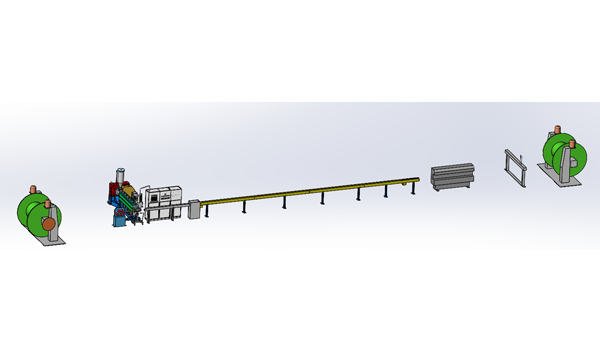
That is the thinking behind our 120 Standard Extrusion Production Line (End Shaft Retraction And Extension). We developed this type of extrusion production line for manufacturers that need a practical and stable solution for continuous extrusion processing. The line is designed around controlled material feeding, extrusion, product forming, cooling, traction, take-up and related auxiliary processes. Depending on the final cable or extrusion product, the exact equipment configuration can be adjusted to match the production requirements.
At Wuxi Shuochuan Electromechanical Equipment Manufacturing Co., Ltd., I work with a team that combines equipment research and development, manufacturing and sales. We have obtained more than ten utility model patent certificates and have passed ISO 19001 quality management system certification. For us, these are not simply certificates to place on a company wall. They represent a way of working: understand the production problem first, build the equipment around that problem, test the equipment carefully, and keep improving it after every project.
The 120 Standard Extrusion Production Line is especially suitable for wire and cable extrusion applications. Depending on the customer's material, product structure and process requirements, it can be considered for photovoltaic wire and cable, automotive wire, electronic wire, network communication cable, charging pile cable and other extrusion-related products.
```1. What Is the 120 Standard Extrusion Production Line?
```The name may sound technical, but the basic idea is quite easy to understand. An extrusion production line takes a material, usually in a prepared pellet, compound or other suitable form, feeds it into an extruder, melts or softens it under controlled conditions, and pushes it through a die to create a continuous shape.
For Cable Production, the shape being produced is normally a layer around a conductor. The process has to be steady because even a small change in material flow can affect the outside diaMeter, surface appearance, insulation thickness or final product consistency.
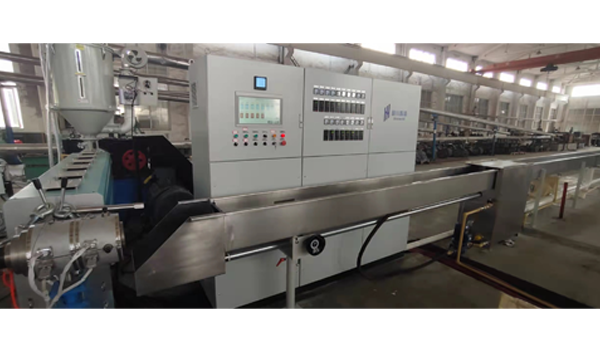
Our 120 Standard Extrusion Production Line is arranged as a complete production system rather than as an isolated extruder. The extruder is the central machine, but the machines around it are equally important. Material feeding, temperature control, die configuration, cooling, traction and take-up all have to work together.
The End Shaft Retraction And Extension design is an important part of the product configuration. In practical production, take-up and unwinding equipment must be convenient to operate because operators frequently need to install, remove or replace reels. A suitable shaft movement design can make reel handling more practical and can help reduce unnecessary manual work during changeover.
I always tell customers that an extrusion line should be treated as one system. If the extruder is excellent but the take-up is not suitable, the final result can still be poor. If the feeding system is unstable, the downstream equipment cannot fully correct the problem. That is why we pay attention to the complete line rather than focusing on one machine alone.
| Item | 120 Standard Extrusion Production Line | Why It Matters in Production |
|---|---|---|
| Core process | Continuous extrusion | Supports continuous and organized material processing |
| Main equipment | Extruder with related Auxiliary Equipment | Allows different stages to work as one production system |
| Material handling | Controlled feeding and extrusion | Helps maintain a stable material flow |
| Product forming | Die-based continuous forming | Creates the required cable or extrusion profile |
| Take-up configuration | End shaft retraction and extension | Designed to make reel handling and changeover more practical |
Source: Product configuration and application information provided by Wuxi Shuochuan Electromechanical Equipment Manufacturing Co., Ltd.
2. How Does an Extrusion Production Line Work?
From the operator's point of view, an extrusion line should not be difficult to understand. Material enters the feeding system, moves into the extruder, is processed under controlled temperature and screw movement, and then passes through the extrusion die. After forming, the product moves through cooling and traction equipment before being collected by the take-up system.
Material Feeding
The first step is getting the correct material into the extrusion system. The feeding process needs to match the material and the production design. If the material supply is irregular, the extrusion process can become unstable. That is why feeding is not a small detail; it is part of the foundation of the whole line.
Heating and Plasticizing
Inside the extruder, the material is heated and moved by the screw. The screw provides mechanical movement while the heating system helps bring the material to the required processing condition. The exact temperature profile depends on the material being processed and must be set according to the actual Production Process.
I prefer not to give customers a single temperature number and say that it applies to everything. PVC, PE, XLPE, low-smoke halogen-free compounds and other materials have different processing characteristics. A good extrusion line should give the operator the control needed for the selected material rather than forcing every product into the same process window.
Extrusion Through the Die
Once the material reaches the correct condition, it moves through the die. The die determines the basic shape of the extruded layer. In cable manufacturing, die design and adjustment are closely related to conductor size, insulation structure, material and target dimensions.
This is one reason why I always ask customers for detailed product information before confirming a line configuration. The same Extruder Production Line concept can be used for different cable products, but the tooling and auxiliary equipment may need to change.
Cooling and Traction
After the material leaves the die, it needs to become stable enough for the next production stage. Cooling equipment helps remove heat, while the traction system controls the movement of the product through the line.
The relationship between extrusion speed and traction speed matters. If the process is not properly matched, the finished product can show dimensional changes or other quality problems. In actual production, operators normally adjust several process parameters together rather than treating one setting as the only solution.
Take-Up
At the end of the line, the finished product is collected onto a reel. This is where the end shaft retraction and extension configuration becomes useful. Reel handling is a repeated job in a cable factory, so small improvements in loading and unloading can have a noticeable effect over time.
For us, automation does not mean adding complicated functions simply because they look modern. It means making repetitive work easier, keeping the process under better control, and helping operators focus on the parts of production that really require attention.
3. Main Features I Focus On During Line Design
When I discuss a 120 Standard Extrusion Production Line with a customer, I normally focus on several practical points. These points are more useful than simply looking at the appearance of the equipment.
Stable Continuous Operation
Extrusion is a continuous process. Stopping the line too often wastes time and material and can make production planning difficult. Our goal is therefore to build a line that can support stable continuous operation when it is correctly configured, installed and operated.
Coordinated Equipment
The extruder, feeding system, die, cooling section, traction unit and take-up system must cooperate. We pay attention to the connection between each section because production problems often appear at the connection points rather than inside a single machine.
Practical Reel Handling
The end shaft retraction and extension structure is intended to make reel-related operations more convenient. In a real factory, operators may repeat reel changes many times. Equipment that is easier to operate can reduce unnecessary handling and help improve the working rhythm of the line.
Flexible Configuration
Not every customer produces the same cable. Some manufacture automotive wires, while others focus on photovoltaic cable, electronic wire, communication cable or charging pile cable. We therefore confirm the product specification, material, capacity target, equipment arrangement and other requirements before production.
Human-Friendly Operation
I believe good automation should be understandable to the people who operate it. An operator should be able to see the important process information, understand the machine status and make normal adjustments without unnecessary complexity.
Complete Pre-Shipment Testing
Before shipment, the complete production line is assembled, tested and inspected according to the agreed requirements. This step is important because discovering a connection problem after the equipment arrives at the customer's factory is much more expensive than discovering it during our own inspection.
4. Technical Advantages: Why the Details Matter
In extrusion equipment, technical performance is not only about the extruder itself. The final product is affected by material feeding, heating, screw movement, die condition, cooling, traction and take-up. A small problem in one area can become a large production problem after thousands of meters of cable have passed through the line.
For this reason, we approach the 120 Standard Extrusion Production Line from the complete process.
Process Control
The operator needs to control the important production conditions. Temperature, extrusion movement and line speed are typical examples. The actual settings depend on the material and product, so we do not recommend copying one customer's process settings directly to another customer's production.
Material Compatibility
Different cable materials behave differently during extrusion. PVC, PE-based materials, halogen-free compounds and other materials can have different melting, flow and cooling characteristics. The correct screw, die and process configuration should therefore be selected according to the material rather than simply according to the product name.
Dimensional Stability
For cable insulation and sheathing, stable dimensions are important. International standards for certain cable categories specify construction, dimensions and test requirements. For example, IEC 60227-1:2024 covers PVC-insulated cables with rated voltages up to and including 450/750 V, while IEC 60502-1:2021 covers specified power cables with extruded solid insulation for rated AC voltages of 1 kV and 3 kV.
This does not mean that every cable made on our line automatically complies with a particular standard. The finished cable must be designed, manufactured and tested according to the applicable product standard and customer requirements. I consider this distinction very important because equipment capability and finished-product certification are not the same thing.
Efficient Production Management
A stable extrusion line helps production managers plan their work more easily. When feeding, extrusion, cooling, traction and take-up are properly matched, operators have a clearer production rhythm. This can be especially useful for factories handling multiple cable specifications.
| Production Concern | What We Check | Practical Goal |
|---|---|---|
| Material feeding | Material type and feeding arrangement | Keep material supply stable |
| Extrusion | Extruder model, screw and process requirements | Match processing conditions to the material |
| Tooling | Product size and extrusion structure | Support the required product geometry |
| Cooling | Cooling method and product requirements | Stabilize the extruded product before downstream handling |
| Traction | Product movement and line coordination | Maintain controlled product movement |
| Take-up | Reel specification and shaft configuration | Make collection and reel changeover practical |
Source: Wuxi Shuochuan product engineering and configuration information. Actual configuration is confirmed according to the customer's product and order requirements.
5. Which Industries Can Use This Extrusion Production Line?
The application range of an extrusion production line is broad, but I prefer to describe it in practical terms rather than claim that one line can make every possible cable.
Photovoltaic Wire and Cable
Photovoltaic systems require cables designed for their intended electrical and environmental conditions. Our company provides photovoltaic wire and Cable Production Line solutions, with the actual configuration determined by the cable structure, material and production requirements.
For photovoltaic cable manufacturers, consistent insulation or sheath forming is important because the cable must maintain its intended dimensions and physical properties throughout production. The extrusion line is one of the key production stages responsible for this result.
Automotive Wire
Automotive Wire Production places strong demands on process consistency. Wire sizes can be relatively small, and manufacturers often work with many product specifications. A properly configured wire extrusion production line can provide the controlled forming process needed for these applications.
Electronic Wire
Electronic wire is another important application. These products can have relatively small conductors and insulation structures, which means that process control becomes important. The correct die and process settings should be selected based on the actual wire construction.
Network Communication Cable
Communication cable manufacturing can involve tight dimensional requirements and multiple material layers. Depending on the product design, extrusion may be used for insulation, jacket or other protective layers. We evaluate the cable structure before recommending the equipment configuration.
Charging Pile Cable
As charging infrastructure develops, cable manufacturers need equipment for different charging cable designs and materials. Our product range includes charging pile cable production lines. The exact line arrangement depends on conductor structure, insulation and sheath materials, product dimensions and the customer's production plan.
Silicone Rubber and Other Extrusion Products
Our extrusion equipment experience also covers silicone rubber products and other extrusion-related applications. These products may require different process conditions from conventional thermoplastic cable materials, so we treat them as separate engineering requirements rather than simply changing a few numbers on the control panel.
| Application | Typical Extrusion Role | Key Configuration Consideration |
|---|---|---|
| Photovoltaic wire and cable | Insulation or sheath extrusion | Material, cable structure and dimensional requirements |
| Automotive wire | Wire insulation and related forming | Small wire dimensions and process stability |
| Electronic wire | Insulation extrusion | Conductor size, insulation material and tooling |
| Network communication cable | Insulation or outer jacket extrusion | Product structure and material selection |
| Charging pile cable | Insulation and sheath extrusion | Cable construction and material requirements |
| Silicone rubber products | Continuous rubber extrusion | Material behavior and dedicated process conditions |
Source: Wuxi Shuochuan Electromechanical Equipment Manufacturing Co., Ltd. product and application information. The final application range depends on the selected line configuration.
From the standards side, IEC 60502-1:2021 and IEC 60502-2:2014 with its 2024 amendment provide examples of international requirements for power cables with extruded insulation in defined voltage ranges. IEC 60502-2 specifically addresses cables from 6 kV up to 30 kV and includes construction, dimensions and testing requirements.
6. How We Manufacture and Prepare the Equipment
One of the questions customers often ask is, “What happens after I place the order?” I think this is a fair question. Buying an extrusion production line is not like buying a small standalone machine. The line may include several pieces of equipment, different components and customized arrangements, so preparation has to be organized from the beginning.
Step 1: Confirm the Product
Before production, we first confirm what the customer wants to manufacture. We look at the product specification, conductor structure, insulation or sheath material, target production requirements and other relevant information.
This step may seem slow, but it actually saves time later. If the product information is incomplete, equipment selection becomes guesswork. We would rather ask several clear questions at the beginning than discover an important requirement after manufacturing has already started.
Step 2: Confirm the Line Configuration
After understanding the product, we confirm the extruder model and the necessary auxiliary equipment. This can include material feeding equipment, die-related components, cooling equipment, traction equipment, take-up and unwinding systems, control components and other items required for the agreed production process.
Step 3: Equipment Manufacturing
Our company integrates R&D, manufacturing and sales. We use our accumulated equipment experience to manufacture the line according to the confirmed technical requirements. We also continue to improve equipment design based on practical production needs.
Step 4: Assembly
Once the necessary equipment and components are ready, the line is assembled according to the agreed arrangement. Mechanical connections, electrical connections and the relationship between upstream and downstream equipment are checked during this stage.
Step 5: Testing and Inspection
Before shipment, we assemble, test and inspect the complete production line according to the agreed requirements. We check whether the equipment operates correctly and whether the main functions work together as intended.
I consider this stage especially important for customized equipment. A factory test cannot reproduce every condition at the customer's site, but it can help identify obvious problems before shipment and gives both sides a clearer understanding of the equipment condition.
Step 6: Packaging and Delivery
For transportation, we normally use moisture-resistant materials, protective cushioning and strong export wooden cases or pallets. The purpose is simple: protect the equipment during loading, handling, storage and long-distance transportation.
Transportation can be arranged by sea, air or land depending on the destination, equipment size and delivery schedule. The normal delivery package includes the complete extrusion production line, necessary components, technical documents, accessories and other items specified in the order.
7. Why Work With Wuxi Shuochuan?
There are many extrusion equipment suppliers in the market, so I do not think a customer should choose a supplier simply because a machine looks good in a photograph. The more useful question is whether the supplier can understand the production process and take responsibility for the complete equipment solution.
At Wuxi Shuochuan, our business covers high-speed extruders, three-in-one BV extrusion automatic production lines, three-in-one plus one BVVB automated production lines, photovoltaic wire and cable production lines, automotive Wire Production Lines, electronic wire production lines, network communication wire production lines, cable production lines, charging pile cable production lines, take-up and unwinding equipment, auxiliary equipment and related raw materials.
This product range gives us a wider view of wire and cable production. We do not only look at the extruder. We also look at how the extruder connects with the other equipment in the line.
R&D and Manufacturing Experience
We have obtained more than ten utility model patent certificates. These patents reflect our continuing work on equipment structure and practical improvements. More importantly, we try to turn engineering ideas into equipment that operators can actually use.
Quality Management
Our company has passed ISO 19001 quality management system certification. We use a structured management approach across the process from product development to production. For customers, the important point is that quality should not depend only on the final inspection. It should be considered throughout the manufacturing process.
Project-Based Communication
We do not use one standard configuration for every customer. Before production, we confirm product specifications, material requirements, production capacity, equipment configuration and delivery schedule. This allows us to build the quotation and equipment arrangement around the actual project.
Pre-Shipment Verification
We test and inspect the complete line before shipment according to the agreed requirements. This gives the customer a better starting point when the equipment arrives at the factory.
Long-Term Improvement
Our company spirit is “Quality First, Continuous Improvement, and Honest Service.” I think this sentence describes the kind of relationship we want with customers. Industrial equipment is not a one-time conversation. A production line may work for years, and the supplier's attitude during technical communication matters just as much as the initial quotation.
8. Ordering, Delivery and Frequently Asked Questions
Q1. What products can the 120 Standard Extrusion Production Line manufacture?
The line can be configured for different extrusion applications, including wire and cable products such as photovoltaic cable, automotive wire, electronic wire, network communication cable and charging pile cable. It may also be used for other extrusion-related products depending on the material, product structure and equipment configuration. We confirm the actual application before production.
Q2. Does “120” mean that every configuration has exactly the same performance?
No. The product name identifies the standard line configuration, but actual production capability depends on the complete equipment arrangement, material, product size, extrusion process and other project conditions. We do not recommend using the product name alone to estimate final output.
Q3. What is the purpose of end shaft retraction and extension?
The end shaft retraction and extension design is related to reel handling at the take-up side. It is intended to make reel installation, removal and related operating work more practical. The exact shaft and reel arrangement should be confirmed according to the customer's take-up requirements.
Q4. Can the line be customized?
Yes. Extrusion production lines often need customization because cable products are not identical. We normally confirm product specifications, material, production requirements, equipment configuration, factory conditions and delivery requirements before finalizing the line.
Q5. What information should I provide before asking for a quotation?
I recommend providing the product name, conductor size or product dimensions, insulation or sheath material, required production capacity, preferred line arrangement, reel information and any applicable product standards. If you already have a technical drawing or product specification sheet, that is even better.
Q6. How long is the production lead time?
Production lead time normally depends on the extruder model, complete line configuration, customization requirements and order quantity. We confirm the delivery schedule with the customer before production rather than giving an arbitrary standard number that may not fit the project.
Q7. What is included in standard delivery?
Standard delivery generally includes the complete agreed extrusion production line, necessary components, technical documents, accessories and other items specified in the order. The final packing list is confirmed according to the actual project.
Q8. How is the equipment packaged?
We normally use moisture-resistant materials, protective cushioning and strong export wooden cases or pallets. Packaging is selected according to the equipment structure and transportation requirements so that the machinery is better protected during loading, handling, storage and long-distance transportation.
Q9. Can you arrange transportation?
Yes. Transportation can be arranged by sea, air or land depending on the destination, equipment size and required delivery schedule. The practical transportation method is discussed during order preparation.
Q10. What are the usual payment terms?
Payment terms are normally arranged according to the contract. A common arrangement includes a deposit before production and the balance before shipment. The exact terms should be confirmed in the final commercial agreement.
Q11. Does the equipment itself mean that the finished cable meets IEC requirements?
No. This is an important point. An extrusion production line is manufacturing equipment, while IEC compliance applies to the relevant finished cable and its construction, dimensions, tests and other requirements. For example, IEC 60227-1:2024 specifies general requirements for certain PVC-insulated cables, while IEC 60502 standards cover defined categories of power cables with extruded insulation. The cable manufacturer remains responsible for designing and testing the finished product against the applicable standard.
Q12. Can I use the same process settings for different materials?
I would not recommend doing that. Different materials have different processing behavior. Temperature, screw conditions, die settings, cooling and line speed should be adjusted according to the actual material and product. Our engineering team can discuss the required configuration after receiving the product and material information.
Final Thoughts on the 120 Standard Extrusion Production Line
After years of working around industrial equipment, I have learned that a good production line does not need to be complicated for the sake of being complicated. It needs to solve the production problem in front of the customer.
Our 120 Standard Extrusion Production Line (End Shaft Retraction And Extension) is built around that idea. It provides a practical platform for continuous extrusion processing, with coordinated equipment for material feeding, extrusion, forming, cooling, traction and take-up. The end shaft retraction and extension configuration also focuses on a very practical part of cable production: reel handling.
For manufacturers of photovoltaic wire and cable, automotive wire, electronic wire, network communication cable, charging pile cable and other extrusion products, the most important step is not choosing a machine based only on its name. It is matching the equipment with the actual product, material, production target and factory conditions.
That is why our normal project process begins with technical communication. We confirm the product first, then work out the equipment configuration, manufacturing plan, testing requirements, packaging and delivery schedule. Before shipment, we assemble, test and inspect the production line according to the agreed requirements.
If you are comparing 120 standard extrusion production lines, wire and cable extrusion machines, Cable Extrusion Production Lines or automated extrusion production equipment, I recommend starting with your actual product specification rather than the machine model alone. Send us the cable structure, material, dimensions, production requirements and reel information. We can then evaluate what configuration makes sense for your production instead of simply giving you a generic machine list.
For us, “Quality First, Continuous Improvement, and Honest Service” is not just a slogan. It is the basic rule we use when designing, manufacturing, testing and delivering industrial extrusion equipment.
References and Technical Sources
Manufacturer source: Wuxi Shuochuan Electromechanical Equipment Manufacturing Co., Ltd. — product, company, manufacturing, delivery and application information supplied for this product page.
International standard source: IEC 60227-1:2024, Polyvinyl chloride insulated cables of rated voltages up to and including 450/750 V — Part 1: General requirements. IEC states that the standard applies to rigid and flexible PVC-insulated cables, including specified voltage and test requirements.
International standard source: IEC 60502-1:2021, Power cables with extruded insulation and their accessories for rated voltages from 1 kV up to 30 kV — Part 1. The IEC publication describes construction, dimensions and test requirements for specified power cables with extruded solid insulation.
International standard source: IEC 60502-2:2014 + AMD1:2024, Power cables with extruded insulation and their accessories — Part 2. IEC states that this part covers specified power cables from 6 kV up to 30 kV and addresses construction, dimensions and test requirements.
Note: Product performance, production capacity, applicable materials, final configuration, delivery time and finished-cable compliance depend on the actual project. The technical configuration should be confirmed with Wuxi Shuochuan before ordering.



 WhatsApp
 Phone
Phone