

Main Technical ParaMeters
| Item | Specification |
| Purpose | Suitable for extrusion of insulated wire‑cores for electric wires |
| Applicable Extrusion Materials | PVC, PE, low‑smoke zero‑halogen materials, etc. |
| Applicable Wire Diameter | Max. Φ10 mm |
| Designed Line Speed | Max. 360 m/min |
| Extrusion Output (Main Extruder) | 180 kg/h (open‑head for soft PVC) |
| Machine Center Height | 1000 mm |
| Production Line Length | 30 m |
| Direction Selection | To be determined |
| Paint Color | To be determined |
When a wire or cable manufacturer is looking for an insulation extrusion solution, the machine itself is only part of the picture. What really matters is whether the complete line can run steadily, keep the insulation layer consistent, handle the required material, and fit smoothly into the customer's Production Process. This is exactly where our 70+35 Insulation Extruder Production Line comes in.
At Wuxi Shuochuan Electromechanical Equipment Manufacturing Co., Ltd., I look at an extrusion line as a complete production system rather than simply a collection of machines. The extruder, feeding system, forming section, cooling section, take-up equipment, electrical control, and auxiliary units all need to work together. A small problem in one part can affect the whole production process, so we pay attention to the details before, during, and after manufacturing.
The 70+35 configuration is designed for insulation extrusion applications where stable material processing and controlled product forming are important. Depending on the cable structure, insulation material, product size, and production requirements, the line can be configured to meet different manufacturing needs.
I have found that customers usually ask the same practical questions before purchasing an insulation extruder Production Line: What materials can it process? How does the line work? Can it handle continuous production? How is the equipment tested before shipment? What happens if the production requirements are different from a standard configuration?
So, instead of simply listing machine features, I will explain how we approach the 70+35 Insulation Extruder Production Line, how the production process works, where it can be used, and what I recommend checking before placing an order.
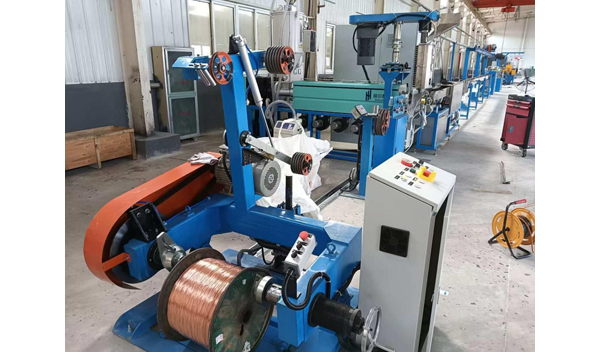
The 70+35 Insulation Extruder Production Line is a wire and cable extrusion system built around a 70+35 extruder configuration. The number in the model name identifies the equipment configuration, while the complete production line includes the related processing and handling equipment required for continuous extrusion.
In simple terms, the job of the line is to apply an insulation layer around a conductor or cable core in a controlled and continuous way. Raw insulation material is fed into the extrusion system, heated and processed inside the extruder, then formed around the cable through the extrusion tooling. After that, the insulated product passes through cooling and other line sections before being collected by the take-up system.
The exact configuration is not necessarily identical for every customer. A photovoltaic cable, an automotive wire, an electronic wire, and a charging pile cable can have very different production requirements. Even when two customers use similar materials, their product sizes, line speed requirements, factory layout, and production goals may be different.
That is why I prefer to confirm the product first and select the line configuration second.
Conductor or cable structure
Required insulation material
Finished cable dimensions
Production capacity requirements
Continuous production requirements
Required line configuration
Factory installation conditions
Take-up and unwinding requirements
Control and automation requirements
Packaging and transportation conditions
This approach helps avoid a common purchasing mistake: choosing an extrusion machine based only on the model number or appearance without considering the complete production process.
A two-extruder configuration can be useful when the production process requires coordinated extrusion operations or different material processing stages. The actual application depends on the cable structure and the customer's production process.
For this reason, I do not recommend assuming that every 70+35 extrusion line is suitable for exactly the same products. The better approach is to provide us with the product drawing, material information, conductor structure, target production requirements, and other available technical details. We can then evaluate the proper configuration.
Source: Wuxi Shuochuan Electromechanical Equipment Manufacturing Co., Ltd. product information and configuration principles provided for this product page.
The extrusion process may look complicated when you see the whole production line, but the basic idea is quite straightforward. Material enters the extruder, is processed under controlled conditions, and is then formed around the wire or cable core.
I normally explain the process in several basic stages.
The process starts with the insulation material. Depending on the customer's product, the material may have different processing characteristics. Stable feeding is important because uneven material supply can make extrusion control more difficult.
Our goal is to keep material feeding steady and coordinated with the rest of the production line. This is one reason why the feeding section should not be treated as an unimportant accessory.
The material enters the extruder and moves through the processing section. Inside the machine, controlled heating and mechanical movement prepare the material for extrusion.
This stage involves several technical terms such as plasticization, melt flow, extrusion pressure, and temperature control. The simple explanation is that the solid material needs to reach a suitable processing condition before it can be formed evenly around the conductor.
For the 70+35 Insulation Extruder Production Line, the exact process settings depend on the material and product specification. We do not use one fixed setting for every cable because different materials behave differently during extrusion.
After the material reaches the required processing condition, it moves toward the extrusion die. The die and tooling determine how the insulation material is formed around the conductor or cable core.
This is a very important part of the process. If the tooling is not matched properly with the product structure, the finished insulation may not meet the required dimensional or appearance standards.
After forming, the insulated wire or cable needs to be cooled and stabilized. Cooling helps the extruded insulation maintain its shape as the product continues through the line.
The cooling section must work together with the extrusion process and line movement. It is not simply a matter of adding water or reducing temperature. The actual arrangement depends on the product and production process.
At the end of the line, the finished insulated wire or cable is collected by take-up equipment. Stable take-up is important because irregular winding can create handling problems even when the extrusion itself is working correctly.
This is why we also pay attention to the relationship between extrusion, cooling, product movement, and take-up during line configuration.
Raw Material → Feeding → Extrusion → Insulation Forming → Cooling → Product Inspection → Take-Up → Finished Cable
This basic flow can be adjusted according to the actual product and customer requirements.
When I discuss extrusion equipment with customers, I try not to make the conversation unnecessarily complicated. A production line needs to solve real factory problems. It needs to be stable, practical, easy enough for operators to understand, and suitable for the product being manufactured.
The line is designed for continuous wire and cable extrusion. This is important for manufacturers that need a steady production flow rather than a machine that is frequently stopped for manual handling.
Extrusion quality depends heavily on material processing. The equipment is designed to support controlled feeding and extrusion so that the material can be processed consistently during production.
An extrusion line has several working sections. They cannot operate independently. Extrusion, product movement, cooling, and take-up need to be coordinated. We therefore treat the complete system as one production line when configuring and testing the equipment.
Not every customer needs exactly the same equipment arrangement. Product structure, insulation material, cable size, factory conditions, and production targets can all affect the final configuration.
Our company focuses on efficient, energy-saving, and human-machine-friendly automated equipment. In practical terms, this means we pay attention not only to automation functions but also to whether operators can understand and manage the equipment during daily production.
The extrusion equipment can be used in different wire and Cable Production areas, including photovoltaic wires and cables, automotive wires, electronic wires, network communication cables, charging pile cables, and other extrusion-related products, subject to the confirmed material and process requirements.
A reliable extruder is important, but the supporting equipment matters too. Depending on the project, the complete line may include feeding, cooling, take-up, unwinding, control, Auxiliary Equipment, and other components specified in the order.
Source: Wuxi Shuochuan company and product information supplied for this page. Exact configuration is confirmed according to the customer's product and order requirements.
There is no single extrusion line that is automatically suitable for every wire and cable factory. From my experience, choosing the right equipment starts with understanding the production task rather than starting with the machine catalogue.
The insulation material has a direct influence on the extrusion process. Different materials have different processing behavior, temperature requirements, flow characteristics, and cooling needs.
Before confirming the line, I therefore want to know what material the customer plans to use. This information helps us determine whether the selected extrusion configuration is appropriate.
A simple electronic wire and a more complex cable structure may require different tooling and line arrangements. The conductor size, insulation structure, finished diaMeter, and other product details all matter.
If a customer can provide a product drawing or sample information, our technical team can understand the actual requirement much more clearly.
Customers naturally want high Production Efficiency, but production capacity should not be discussed separately from product quality. A production line must balance material processing, insulation forming, cooling, and take-up.
Instead of promising one universal output number, we confirm the actual product and production target first and then work out the suitable configuration.
Automation is useful when it reduces repetitive work and helps operators maintain stable production. It should not make the machine unnecessarily difficult to understand.
Our development direction has always included human-machine-friendly automated equipment. We want operators to have a clear way to monitor and manage the production process.
| Selection Factor | What We Confirm | Why It Matters |
|---|---|---|
| Extruder Configuration | 70+35 configuration and related line arrangement | Determines how the extrusion process is organized |
| Material | Insulation material and processing requirements | Affects extrusion and forming conditions |
| Product | Wire or cable structure and dimensions | Determines tooling and production requirements |
| Production Target | Required capacity and production schedule | Helps establish the practical line configuration |
| Factory Conditions | Available space and installation conditions | Helps arrange the complete line properly |
Source: Wuxi Shuochuan Electromechanical Equipment Manufacturing Co., Ltd. project configuration and customer requirement process.
The biggest advantage of this approach is simple: we do not ask the customer to adapt the entire factory to a machine without first understanding the actual production situation.
The 70+35 Insulation Extruder Production Line can be considered for a range of wire and cable insulation applications. The final suitability depends on the specific material, product structure, dimensions, and process requirements.
Photovoltaic cable production requires stable insulation and reliable continuous processing. Solar cable manufacturers can use extrusion production equipment as part of their manufacturing process for insulated photovoltaic wires and cables.
Automotive wire has its own product requirements, and different wire structures may require different insulation processes. A suitable insulation extrusion line can help manufacturers build a stable and repeatable production process.
Electronic wires often involve smaller product structures and specific insulation requirements. Consistent extrusion forming is important for maintaining the intended product dimensions and appearance.
Communication cable production requires attention to product structure and process stability. Extrusion equipment can form insulation or protective layers according to the confirmed cable design.
As charging infrastructure continues to develop, cable manufacturers need practical equipment for different charging cable structures. Our company provides charging pile Cable Production Line solutions and related extrusion equipment.
Beyond these applications, the line can also be considered for other insulation extrusion projects where the material, product structure, and production requirements match the equipment configuration.
| Application | Typical Production Focus | Key Consideration |
|---|---|---|
| Photovoltaic Cable | Continuous insulation extrusion | Material and cable structure |
| Automotive Wire | Wire insulation processing | Product specification and tooling |
| Electronic Wire | Controlled insulation forming | Wire size and insulation material |
| Communication Cable | Continuous cable extrusion | Cable structure and process control |
| Charging Cable | Cable insulation and production handling | Material, structure, and production target |
Source: Wuxi Shuochuan Electromechanical Equipment Manufacturing Co., Ltd. product application information. Actual application suitability should be confirmed against the customer's material and product specifications.
Buying a complete extrusion production line is different from buying a simple machine. The customer is investing in a production system, so our work does not stop when the machine parts are manufactured.
Before production starts, we confirm the customer's product specifications, material requirements, production capacity, equipment configuration, and delivery schedule.
This stage may sound basic, but it prevents many problems later. A clear understanding of the product gives our technical team a better basis for selecting the equipment arrangement.
After the requirements are confirmed, the production team prepares the relevant equipment and components according to the agreed configuration. For customized projects, the arrangement is adjusted to the confirmed production process.
We manufacture and assemble the equipment according to the agreed requirements. The company integrates R&D, manufacturing, and sales, allowing technical requirements to be connected more directly with the production process.
Before shipment, the complete production line is assembled, tested, and inspected according to the agreed requirements. We pay attention to the relationship between different sections instead of checking every machine as an isolated unit.
Standard delivery generally includes the complete extruder production line, necessary components, technical documents, accessories, and other items specified in the order.
Long-distance transportation can be rough on industrial equipment. Moisture, vibration, loading, unloading, and storage can all create risks. We normally use moisture-resistant materials, protective cushioning, and strong export wooden cases or pallets to protect the equipment during transportation.
Transportation can be arranged by sea, air, or land depending on the destination, equipment size, and delivery schedule. The actual logistics plan is discussed according to the project.
| Project Stage | Our Main Work | Customer Confirmation |
|---|---|---|
| Requirement | Understand product and production needs | Product specifications and materials |
| Configuration | Prepare suitable equipment arrangement | Line configuration and process requirements |
| Manufacturing | Produce and assemble equipment | Agreed technical requirements |
| Testing | Assemble, test, and inspect the complete line | Acceptance according to agreed requirements |
| Packaging | Protect equipment for transportation | Delivery and destination information |
| Shipment | Arrange suitable transportation | Shipping schedule and destination |
Source: Wuxi Shuochuan Electromechanical Equipment Manufacturing Co., Ltd. manufacturing, testing, packaging, payment, and delivery information supplied for this product page.
There are many extrusion equipment suppliers in the market, so I understand why customers want to know what they are actually getting before placing an order.
For us, the answer starts with our manufacturing background. Wuxi Shuochuan Electromechanical Equipment Manufacturing Co., Ltd. is an innovative technology enterprise integrating research and development, manufacturing, and sales. The company has obtained more than ten utility model patent certificates, reflecting its continued investment in equipment development and practical engineering improvements.
Our product range covers high-speed extruders, three-in-one BV extrusion automatic production lines, three-in-one plus one BVVB automated production lines, photovoltaic wire and cable production lines, automotive Wire Production lines, electronic Wire Production Lines, network communication wire production lines, cable production lines, charging pile cable production lines, take-up and unwinding equipment, auxiliary equipment, and related raw materials.
This broader product range is useful because a wire and cable production project rarely involves just one machine. The extrusion section has to work with other parts of the manufacturing process.
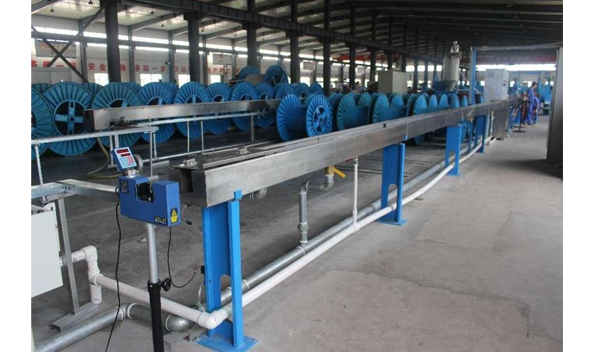
Our technical development focuses on efficient, energy-saving, and human-machine-friendly automated equipment. We try to improve not only machine performance but also the practical experience of operating and maintaining the equipment.
The company states that it has passed ISO 19001 quality management system certification. Because certification details and certificate scope can change over time, customers requiring formal compliance should verify the current certificate and applicable scope with us before placing an order.
We do not only look at the extruder. We consider the complete line, including material feeding, extrusion, forming, cooling, take-up, unwinding, auxiliary equipment, control, packaging, and transportation requirements.
Our corporate spirit is “Quality First, Continuous Improvement, and Honest Service.” I believe the word “honest” is particularly important in industrial equipment. If a specification has not been confirmed, it should not be presented as a guaranteed number. If a configuration depends on the customer's material or product, we should say so clearly.
That is how we approach the 70+35 Insulation Extruder Production Line as well.
It is designed for wire and cable insulation extrusion applications. Depending on the confirmed material and product structure, it can be considered for photovoltaic cables, automotive wires, electronic wires, communication cables, charging pile cables, and other extrusion-related products.
Yes. The final configuration can be adjusted according to product specifications, insulation materials, production capacity requirements, equipment configuration, factory conditions, and other project requirements.
I recommend providing the product name, conductor or cable structure, material, product size, target production capacity, and any available drawings or technical requirements. The more complete the information, the easier it is for our team to recommend a suitable configuration.
Yes. Our product range includes extrusion equipment, wire and cable production lines, photovoltaic wire and cable production lines, automotive wire production lines, electronic wire production lines, communication cable production lines, charging pile cable production lines, take-up and unwinding equipment, and auxiliary equipment.
Not automatically. Material characteristics are an important part of equipment selection. We need to confirm the specific material and processing requirements before determining whether the configuration is suitable.
Production lead time normally depends on the extruder model, complete line configuration, customization requirements, and order quantity. We confirm the expected delivery schedule with the customer before production.
Yes. Before shipment, the complete production line is assembled, tested, and inspected according to the agreed requirements.
We normally use moisture-resistant materials, protective cushioning, and strong export wooden cases or pallets. The packaging method is intended to protect the equipment during loading, handling, storage, and long-distance transportation.
Transportation can be arranged by sea, air, or land according to the destination, equipment size, and delivery schedule.
Payment terms are normally arranged according to the contract. They commonly include a deposit before production and the balance before shipment, although the exact terms depend on the specific order.
Yes. This is one of the important parts of our project service. We can review the customer's product structure, material, production target, equipment requirements, and factory conditions before confirming the configuration.
In my view, a good line is not simply the one with the most functions. It should match the actual product, process, material, production target, and operator requirements. Stable extrusion, suitable tooling, coordinated line operation, practical automation, proper testing, and reliable after-delivery support all matter.
When a manufacturer searches for a 70+35 Insulation Extruder Production Line, it is easy to focus on the model name, machine appearance, or a few technical numbers. Those things are useful, but they are not enough to determine whether the line will work well in a real factory.
I always recommend starting with the product itself.
What wire or cable are you making? What insulation material will you use? What is the product structure? What production capacity do you need? What equipment do you already have? How much space is available? What kind of take-up and unwinding system is required?
Once these questions are clear, the equipment configuration becomes much easier to define.
Our 70+35 Insulation Extruder Production Line is designed around this practical idea. It supports continuous extrusion, controlled material processing, consistent insulation forming, and coordinated production operation. More importantly, the line can be configured according to the actual requirements of different wire and cable projects.
At Wuxi Shuochuan, we combine R&D, manufacturing, and sales so that technical requirements can be followed through the whole project. From initial communication and equipment configuration to manufacturing, complete-line testing, packaging, and delivery, we keep the production process connected.
Our goal is straightforward: build practical extrusion equipment, keep improving it, communicate honestly with customers, and help manufacturers establish a stable production process.
If you are currently evaluating a 70+35 Insulation Extruder Production Line, the most useful first step is to send us your product information and production requirements. We can then discuss the suitable configuration based on your actual wire or cable application rather than simply recommending a standard machine.
Wuxi Shuochuan Electromechanical Equipment Manufacturing Co., Ltd.
Quality First, Continuous Improvement, and Honest Service.
This website uses cookies to ensure you get the best experience on our website.


 Pусский
 中文
中文



 WhatsApp
 Phone
Phone