

Main Specifications
| Item | Specification |
| Cable Types for Manufacture | UL wires, computer cables, power cords, automotive wires, BV, RV, etc. |
| Extrusion Materials | Suitable for PVC, low‑smoke zero‑halogen high‑speed extrusion plastics |
| Finished Coiled Wire Size | Φ0.75mm² ~ Φ10mm² |
| Designed Line Speed | 0‑450 m/min (speed depends on wire diaMeter) |
| Center Height | 1000 mm |
| Power Supply | 380V±10%, 50Hz, 3‑phase 5‑wire system |
| Operation Direction | To be provided by customer |
| Machine Color | Main machine exterior: RAL5015 blue; Electrical cabinet exterior: RAL7035 |
When I look at a wire and Cable Production line, I do not only look at one machine. I look at how the whole line works together. Material feeding, extrusion, wrapping, product movement, cooling, take-up, and control all need to cooperate. This is especially important when the customer needs a continuous and stable Production Process.
Our 70+35 Shaking Plate Wrapping Integrated Production Line is developed for this kind of production requirement. It combines the 70+35 extrusion configuration with a shaking plate wrapping process and related production handling equipment. The exact configuration can be adjusted according to the cable structure, material, product specification, production capacity, and factory conditions.
At Wuxi Shuochuan Electromechanical Equipment Manufacturing Co., Ltd., I prefer to start with the customer's actual product instead of simply recommending a machine model. A cable manufacturer may produce photovoltaic cables, automotive wires, electronic wires, communication cables, charging pile cables, or other products. Each product can have different processing requirements.
That is why I see the 70+35 Shaking Plate Wrapping Integrated Production Line as a complete production solution rather than a simple piece of equipment. The purpose is to make the production process more connected, easier to manage, and more suitable for continuous manufacturing.
In this page, I will explain what this production line does, how the working process is organized, what I consider during configuration, where it can be used, and how we manufacture and test the equipment before shipment.
The 70+35 Shaking Plate Wrapping Integrated Production Line is an integrated wire and cable production system designed around a 70+35 extrusion configuration and a shaking plate wrapping process.
If you are new to cable manufacturing equipment, the name may sound complicated. The basic idea is actually quite simple. The extrusion section processes the selected material, while the wrapping section helps complete the required wrapping operation around the cable or wire structure. Other supporting sections keep the product moving through the production process in a controlled way.
The word integrated is important here. A production line is not just an extruder plus another machine placed beside it. The different sections have to be matched so that material processing, product movement, wrapping, and collection can work as one system.
The “70+35” in the product name identifies the extrusion configuration. It should not be understood as a universal production capacity or fixed product specification. Actual production performance depends on the material, cable structure, tooling, production settings, and complete line configuration.
For this reason, I do not recommend comparing extrusion lines only by numbers printed on a catalogue. Two lines with similar model names can still be configured differently for different products.
Shaking plate wrapping refers to a wrapping process using a shaking plate arrangement as part of the production system. The purpose is to achieve the required wrapping operation in a controlled and continuous way.
The exact wrapping arrangement depends on the customer's cable structure and process requirements. Before production, we confirm these details with the customer so that the line can be configured around the actual product.
Material feeding section
70+35 extrusion section
Extrusion tooling and forming section
Shaking plate wrapping section
Product cooling or related handling section where required
Electrical control system
Take-up equipment
Unwinding equipment where required
Auxiliary Equipment according to the order
The final equipment list is confirmed according to the product and project requirements rather than being fixed for every customer.
Source: Wuxi Shuochuan Electromechanical Equipment Manufacturing Co., Ltd. product information and project configuration requirements supplied for this page.
The complete production process can be understood as a series of connected steps. I usually explain it to customers in plain language because you do not need to be a mechanical engineer to understand how the line works.
Production begins with the selected raw material. The material feeding system sends the material into the extrusion section in a controlled way.
Stable feeding is important. If material feeding changes too much, the extrusion process can become harder to control. That can eventually affect product consistency. For this reason, feeding equipment is considered as part of the complete system rather than a minor accessory.
The material enters the 70+35 extrusion section. Inside the extruder, mechanical movement and controlled heating process the material so it reaches a suitable condition for forming.
Technical terms such as plasticization, melt flow, and extrusion pressure are often used to describe this stage. In simple words, the material needs to be processed evenly before it can be formed properly around the product.
The actual operating conditions depend on the material being used. We therefore confirm the material requirements before determining the final equipment configuration.
After extrusion processing, the material reaches the tooling and forming section. The tooling helps shape the material according to the customer's product structure.
For cable manufacturing, tooling selection is important because the same extrusion machine may be used for products with different structures. The correct die and related components need to match the actual cable specification.
The product then enters the wrapping section where the shaking plate system performs the required wrapping operation.
The wrapping process needs to remain coordinated with product movement. If the product moves too irregularly or the wrapping section is not properly matched to the line, the final product may not meet the intended process requirements.
This is why we test the complete line rather than treating the wrapping equipment as a completely separate machine.
Where the production process requires cooling, the product is stabilized before moving toward the final handling section. Cooling conditions depend on the material and product requirements.
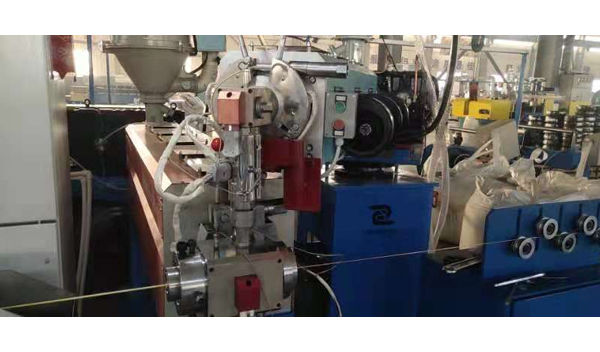
Finally, the finished product is collected by the take-up system. Stable take-up helps keep the finished cable organized and ready for the next manufacturing or packaging stage.
The basic process can therefore be described as:
Material Feeding → 70+35 Extrusion → Product Forming → Shaking Plate Wrapping → Cooling or Stabilization → Take-Up
The actual line arrangement can be changed according to the customer's product and production process.
When customers ask me what makes an integrated production line practical, I usually focus on a few simple points: stability, coordination, product compatibility, operation, and service.
The line is designed around continuous processing. This is useful for manufacturers that need a connected production flow instead of frequent manual transfer between individual machines.
The combination of extrusion and shaking plate wrapping brings multiple production stages into one coordinated system. This can make the overall production arrangement more organized.
Stable material feeding is one of the foundations of stable extrusion. The feeding section is therefore considered during complete line configuration.
The extrusion and tooling sections are designed to support consistent product forming. Actual results depend on the material, product specification, tooling, and operating conditions.
The extrusion section, wrapping section, cooling section, and take-up equipment need to work together. The line is therefore treated as one system during assembly and testing.
Automation should make production easier, not make operators feel like they are fighting the machine. Our development work focuses on efficient, energy-saving, and human-machine-friendly automated equipment.
Different products require different equipment arrangements. We can discuss the configuration according to cable structure, material, product dimensions, production requirements, and factory conditions.
Our product range also includes take-up and unwinding equipment, auxiliary equipment, high-speed extruders, and complete wire and Cable Production Lines. This makes it easier to build a complete solution around the customer's actual process.
Source: Wuxi Shuochuan company and product information supplied for this product page. Exact equipment configuration is confirmed according to individual project requirements.
There is a simple rule I follow when selecting extrusion equipment: start with the product, not the machine.
It is tempting to ask, “What can this 70+35 machine produce?” But the more useful question is, “What exactly do you need to produce?” Once we know the answer, we can work backward and determine the suitable line configuration.
Different insulation and wrapping materials have different processing characteristics. Some materials require careful temperature management, while others have different flow or cooling behavior.
We therefore need the material information before finalizing the configuration. This prevents customers from buying equipment that looks suitable on paper but does not fit their actual process.
A cable may have one insulation layer, several layers, a wrapping layer, or other structural requirements. The product drawing is one of the most useful documents we can receive from a customer.
With a clear drawing, our technical team can better understand the relationship between the conductor, insulation, wrapping, and finished product.
Production capacity should always be considered together with product quality. Simply increasing production speed is not a useful goal if the extrusion or wrapping process becomes unstable.
We confirm the customer's target production capacity and then evaluate the suitable equipment configuration.
A complete production line occupies real factory space. The equipment needs to fit the customer's available area and production flow.
Before manufacturing, it is helpful to discuss equipment arrangement, product entry and exit directions, operator positions, and supporting facilities.
| Factor | What We Check | Effect on Line Configuration |
|---|---|---|
| Product Structure | Wire or cable design and wrapping requirements | Affects tooling and wrapping arrangement |
| Material | Extrusion and wrapping material characteristics | Affects processing conditions |
| Production Target | Required production capacity | Helps determine suitable line configuration |
| Factory Space | Available installation area | Affects equipment layout |
| Take-Up | Finished product collection requirements | Affects final line section |
| Automation | Required control and operation functions | Affects electrical and control configuration |
Source: Wuxi Shuochuan Electromechanical Equipment Manufacturing Co., Ltd. project requirement and equipment configuration process.
In short, the best extrusion line is the one that fits the actual production job. A longer specification sheet does not automatically mean a better machine.
Our equipment is used across several wire and cable production areas. The suitability of the 70+35 Shaking Plate Wrapping Integrated Production Line depends on the actual material, cable structure, wrapping process, and production requirements.
Photovoltaic cables need a stable production process because the finished product is expected to maintain consistent insulation and structural quality. An integrated extrusion and wrapping system can support continuous production when the equipment configuration matches the cable design.
Automotive Wire Production covers many different product types. Wire structure and material requirements can vary from one application to another. A properly configured extrusion and wrapping line can support the required manufacturing process.
Electronic wires may involve relatively small product structures and detailed insulation requirements. Consistent material processing and product forming are important during production.
Communication cable manufacturing requires attention to cable structure and process stability. The production line can be configured according to the actual product design.
Charging cables are another important application area in modern wire and cable manufacturing. Different charging cable structures may require different processing and wrapping arrangements, so the final configuration should be confirmed according to the customer's product.
Beyond the applications listed above, our extrusion equipment can also be considered for other extrusion-related products where the material, product structure, and process requirements are compatible with the equipment.
| Industry | Possible Production Requirement | Configuration Focus |
|---|---|---|
| Photovoltaic | Wire and cable insulation and wrapping | Material, cable structure, continuous processing |
| Automotive | Automotive wire processing | Product size, material, tooling |
| Electronics | Electronic wire insulation | Small product structures and forming control |
| Communication | Network communication cable processing | Cable structure and production stability |
| Charging Infrastructure | Charging pile cable production | Material, structure, wrapping requirements |
Source: Wuxi Shuochuan Electromechanical Equipment Manufacturing Co., Ltd. product application information. Actual suitability should be confirmed according to the customer's specific product and process.
For a complete production line, the manufacturing process matters just as much as the final machine. A customer may operate the equipment for years, so we need to think about assembly, testing, transportation, installation, and daily operation from the beginning.
Before production, we confirm the customer's product specifications, material requirements, production capacity, equipment configuration, and delivery schedule.
This step gives both sides a clear understanding of what is being built. It also gives our production team the information needed to prepare the equipment correctly.
After the requirements are confirmed, we prepare the equipment according to the agreed configuration. For customized projects, the line arrangement is adjusted according to the customer's actual product and production process.
The production line is manufactured and assembled according to the confirmed requirements. Because Shuochuan integrates R&D, manufacturing, and sales, technical information can be followed through the different stages of the project.
Before shipment, we assemble, test, and inspect the complete production line according to the agreed requirements.
I consider this step particularly important. Checking one machine separately is not the same as checking the complete production line. The different sections must be able to work together as intended.
Industrial equipment can travel a long way before it reaches the customer's factory. During this period, vibration, moisture, loading, unloading, and storage can all create risks.
We normally use moisture-resistant materials, protective cushioning, and strong export wooden cases or pallets. The goal is to reduce transportation-related risks and keep the equipment protected during handling and storage.
Transportation can be arranged by sea, air, or land depending on the destination, equipment size, and delivery schedule.
| Stage | Main Activity | Customer Input |
|---|---|---|
| 1. Requirement | Review product and production requirements | Product specifications and material information |
| 2. Configuration | Confirm extrusion and wrapping arrangement | Production targets and process requirements |
| 3. Manufacturing | Build and assemble equipment | Approved technical requirements |
| 4. Testing | Test and inspect complete production line | Agreed acceptance requirements |
| 5. Packaging | Protect equipment for transportation | Destination and shipping requirements |
| 6. Delivery | Arrange transportation | Delivery schedule |
Source: Wuxi Shuochuan Electromechanical Equipment Manufacturing Co., Ltd. manufacturing, testing, packaging, and delivery information supplied for this page.
Choosing a production line is a long-term decision. The equipment may become part of the customer's factory for many years, so the supplier's engineering ability, communication, manufacturing process, and service approach all deserve attention.
Wuxi Shuochuan Electromechanical Equipment Manufacturing Co., Ltd. is an innovative technology enterprise integrating R&D, manufacturing, and sales. The company has obtained more than ten utility model patent certificates, showing continued activity in equipment development and technical improvement.
Our product range covers many areas of wire and cable manufacturing, including high-speed extruders, BV extrusion automatic production lines, BVVB automated production lines, photovoltaic wire and cable production lines, automotive Wire Production Lines, electronic wire production lines, network communication wire production lines, cable production lines, charging pile cable production lines, take-up and unwinding equipment, auxiliary equipment, and related raw materials.
This product coverage gives us a broader view of the production process. We understand that an extrusion machine is only one part of a complete wire and cable manufacturing system.
Our equipment development focuses on efficient, energy-saving, and human-machine-friendly automation. In daily factory production, an automated system should not simply contain more functions. It should help operators work more easily and maintain a more stable production process.
The company states that it has passed ISO 19001 quality management system certification. Customers who require formal certification for a specific project should verify the current certificate, validity, and applicable scope directly with us before ordering.
Our work covers requirement confirmation, configuration, manufacturing, assembly, testing, packaging, and delivery. We also discuss payment and transportation arrangements according to the specific contract.
Production lead time normally depends on the extruder model, line configuration, customization requirements, and order quantity. We confirm the delivery schedule before production starts.
Our corporate spirit is “Quality First, Continuous Improvement, and Honest Service.” I believe this is especially important when selling industrial equipment internationally.
If a technical paraMeter depends on the customer's material, I would rather say that clearly than give a number that sounds impressive but does not apply to the actual product. Good equipment selection should be based on real production requirements.
Payment terms are usually arranged according to the contract, commonly including a deposit before production and the balance before shipment. Transportation can be arranged by sea, air, or land according to the destination, equipment size, and delivery schedule.
Standard delivery generally includes the complete production line, necessary components, technical documents, accessories, and other items specified in the order.
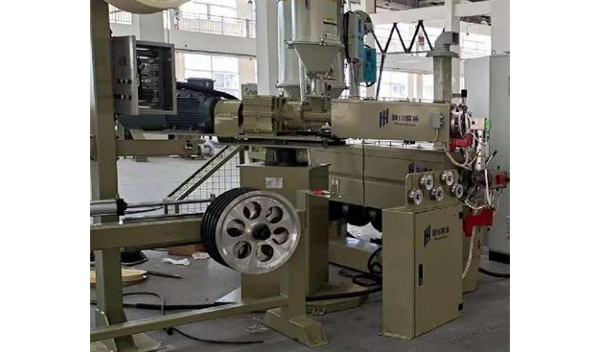
It is designed for integrated wire and cable extrusion and wrapping applications. The exact application depends on the cable structure, material, product specification, and confirmed production process.
“70+35” identifies the extrusion configuration used in the production line. It should not be treated as a universal production speed, output, or finished cable specification.
The shaking plate wrapping section is used as part of the cable wrapping process. Its exact arrangement depends on the customer's product structure and wrapping requirements.
Yes. We can discuss the configuration according to product specifications, material requirements, production capacity, equipment arrangement, factory conditions, and other technical requirements.
I recommend sending the product name, product drawing, cable structure, material information, finished product dimensions, target production capacity, and any special process requirements you already have.
It can be considered for photovoltaic cable production when the cable structure, material, wrapping requirements, and other process conditions match the equipment configuration. We recommend confirming the product details before ordering.
Yes, automotive wire production is one of the application areas covered by our wire and cable production equipment. The specific line configuration should be determined according to the automotive wire specification and material.
Lead time normally depends on the extruder model, line configuration, customization requirements, and order quantity. We confirm the expected delivery schedule before production.
Yes. Before shipment, the complete production line is assembled, tested, and inspected according to the agreed requirements.
We normally use moisture-resistant materials, protective cushioning, and strong export wooden cases or pallets to help protect the equipment during loading, handling, storage, and long-distance transportation.
Transportation can be arranged by sea, air, or land according to the destination, equipment size, and delivery schedule.
Standard delivery generally includes the complete extrusion and wrapping production line, necessary components, technical documents, accessories, and other items specified in the order.
Yes. Various take-up and unwinding series are included in our product range and can be considered when configuring a complete wire and cable production line.
The best way is to provide your product and production information. We can review the cable structure, material, dimensions, wrapping requirements, production target, and factory conditions before confirming the equipment configuration.
For me, a good 70+35 Shaking Plate Wrapping Integrated Production Line is not defined by a single machine specification. It is defined by how well the complete system matches the customer's actual production requirements.
The extrusion section needs to process the selected material properly. The forming section needs suitable tooling. The shaking plate wrapping section needs to work in coordination with product movement. Cooling and handling need to fit the process. The take-up system needs to collect the finished product in a practical way. All of these details matter.
That is why we start our projects by understanding the product first. We confirm the product specifications, materials, production capacity, equipment configuration, and delivery requirements before manufacturing begins.
At Wuxi Shuochuan Electromechanical Equipment Manufacturing Co., Ltd., we combine R&D, manufacturing, and sales to develop practical automated equipment for wire and cable production. Our product range covers extrusion machines, photovoltaic cable lines, automotive wire lines, electronic wire lines, communication cable lines, charging pile cable lines, take-up and unwinding systems, and other supporting equipment.
Our approach is simple: quality comes first, improvement never stops, and communication with customers should be honest and clear.
If you are looking for a 70+35 Shaking Plate Wrapping Integrated Production Line, I recommend sending us your product drawing, material information, cable structure, production target, and factory requirements. With those details, we can discuss the suitable configuration based on your real production process.
Wuxi Shuochuan Electromechanical Equipment Manufacturing Co., Ltd.
Quality First, Continuous Improvement, and Honest Service.
This website uses cookies to ensure you get the best experience on our website.


 Pусский
 中文
中文



 WhatsApp
 Phone
Phone