


 Pусский
 中文
中文

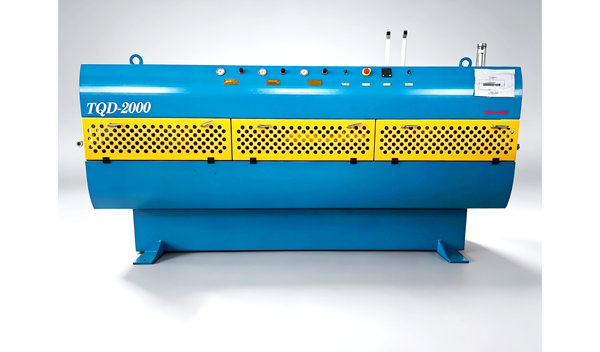
When agricultural transportation becomes difficult because of soft ground, uneven fields, long working distances, or changing outdoor conditions, the right tractor can make a real difference. Our TQD-2000 Tractor for Agricultural Transportation is designed for this type of work. We focus on practical operation, stable movement, strong traction, and dependable use in agricultural and outdoor environments.
Unlike a conventional Wheeled Tractor, a Tracked Tractor uses a track system instead of standard wheels. The track has a larger contact area with the ground, which helps distribute the machine's weight over a wider area. This design can be useful when the working surface is soft, uneven, or difficult for ordinary wheeled equipment.
We do not treat the tractor as just a machine with an engine and a track system. Before production, we look at the actual job the tractor needs to perform. What type of ground will it work on? What materials need to be moved? How often will it operate? What kind of transportation method will be used after production? These questions affect the final configuration.
Our TQD-2000 Tractor can be used for agricultural transportation, field preparation, crop cultivation, landscaping, forestry-related outdoor work, municipal maintenance, and other suitable applications. The exact configuration is confirmed with the customer before production, so the machine can be prepared around the real working conditions rather than a generic assumption.
In this product page, I will explain how we approach the TQD-2000 Tractor, how tracked traction works, where the machine can be used, how we manufacture and inspect it, and what buyers should check before placing an order.
1. What Is the TQD-2000 Tractor for Agricultural Transportation?
The TQD-2000 Tractor for Agricultural Transportation is a tracked tractor designed for agricultural and outdoor transportation work. Its main job is to provide controlled movement and reliable traction when moving equipment, materials, agricultural goods, or other suitable loads across working areas.
The name “TQD-2000” is the product/model designation we use for this tractor. It should not be treated as a confirmed engine power rating, load capacity, track width, or another technical specification unless those values are included in the final technical documentation.
This point is important when comparing agricultural tractors. A number in a model name does not always tell the complete technical story. For a real purchasing decision, we recommend checking the confirmed configuration, operating conditions, dimensions, power system, traction requirements, transportation method, and other technical details in the quotation and technical agreement.
Why Use a Tracked Design?
The basic idea behind a tracked tractor is simple. Instead of putting the machine's weight onto a small number of wheel contact points, the track system creates a longer contact area with the ground.
This can be useful on soft or uneven surfaces. The tractor can maintain more stable ground contact while moving through suitable agricultural areas. That is one reason tracked machinery is commonly considered for challenging outdoor work.
For example, imagine moving agricultural materials after rain. A smooth and firm road may not be a problem, but a soft field can be very different. A machine designed only around road-like conditions may not be the right choice. Ground conditions need to be part of the equipment decision from the beginning.
We therefore recommend evaluating the actual working environment before selecting a tractor. FAO notes that agricultural mechanization should consider local conditions and the practical needs of end users rather than simply increasing the amount of machinery used.
2. How Does a Tracked Tractor Work?
The working principle of the TQD-2000 Tractor is easier to understand if we divide it into several basic parts: power, transmission, traction, track movement, steering, and the working load.
Power System
The power system provides the energy required for tractor movement. Depending on the final configuration, the power system works together with the transmission and drive mechanism to deliver usable power to the track system.
We do not publish an assumed engine power figure here because the exact technical specification was not provided for the TQD-2000 model. Instead, the final power configuration should be confirmed according to the customer's operating requirements.
Transmission and Drive
The transmission system transfers power from the power source to the driving mechanism. In simple terms, it helps turn available engine power into controlled tractor movement.
During transportation work, the tractor does not always need to move at the same speed. Starting, stopping, turning, climbing, and moving across different surfaces can place different demands on the drivetrain. That is why the complete system needs to be considered rather than looking at engine power alone.
Track System
The track system is the most visible difference between the TQD-2000 and a typical wheeled tractor.
The track provides continuous ground contact along a larger area. This helps the tractor work on suitable soft or uneven surfaces where stable traction is important. It can also help reduce the concentration of ground pressure compared with a similar machine using smaller wheel contact areas, although actual ground impact depends on the full machine design and operating conditions.
Traction and Movement
Traction is the ability of the tractor to transfer useful driving force to the ground. It is especially important when the machine is transporting materials or working on surfaces where grip can change.
OECD tractor testing provides a useful example of how tractor performance can be evaluated. Its Code 2 includes drawbar power and fuel consumption testing, while tracklaying tractor tests can include drawbar pull, track slip, travel speed, power, and fuel consumption measurements. These standardized tests are useful for comparing properly tested tractors, although they should not be confused with the specific performance specifications of our TQD-2000 unless the relevant tests have been carried out for that model.
| Working Element | Main Purpose | Why It Matters in Transportation |
|---|---|---|
| Power system | Provides operating energy | Supports movement and working tasks |
| Transmission | Transfers and controls power | Helps match movement to working conditions |
| Track system | Creates continuous ground contact | Supports traction on suitable soft or uneven ground |
| Drive mechanism | Moves the tracks | Converts available power into forward or reverse movement |
| Steering system | Controls direction | Helps the operator manage movement in working areas |
Source basis: general tractor performance principles and OECD tractor testing procedures. Actual TQD-2000 specifications depend on the confirmed configuration.
3. Main Features of Our TQD-2000 Tractor
When we design or prepare a tracked tractor for agricultural transportation, we pay attention to practical details rather than only appearance. A tractor may look strong, but what matters to the user is whether it can perform the required work in a reliable and manageable way.
Tracked Structure for Challenging Ground
The tracked structure is suitable for working environments where ground conditions can change. Agricultural fields, landscaping areas, forestry environments, and outdoor maintenance locations may include soft soil, uneven surfaces, loose ground, or areas without a finished road.
We therefore position the TQD-2000 as a practical tracked transportation machine rather than a road-only vehicle.
Stable Ground Contact
A track system provides a relatively long contact area with the ground. This can help the machine maintain stable contact when operating on suitable terrain.
However, no tractor should be treated as suitable for every ground condition. Extremely wet soil, steep slopes, deep mud, unstable surfaces, and other difficult conditions require a separate technical assessment. The operator must also follow the applicable safety instructions and operating limits.
Suitable for Agricultural Transportation
Agricultural transportation is not limited to moving crops from one point to another. Depending on the farm and application, transportation work may include moving tools, materials, equipment, harvested products, supplies, and other items.
FAO describes transportation as an important part of agricultural and rural supply chains. Farm products may need to move between fields, storage areas, processing locations, households, markets, and other destinations.
Flexible Outdoor Applications
Although agricultural transportation is the main application described on this page, the TQD-2000 Tractor can also be considered for other suitable outdoor operations. These include field preparation, crop cultivation, landscaping, forestry-related work, municipal maintenance, and material movement.
The important word here is “suitable.” We do not recommend using one machine configuration for every possible job. We prefer to confirm the working conditions first and then finalize the tractor configuration.
Practical Maintenance Considerations
For agricultural machinery, maintenance is part of normal ownership. Track condition, drive components, lubrication points, fasteners, power system condition, and other service items should be checked according to the manufacturer's maintenance instructions.
FAO also emphasizes that proper maintenance helps agricultural machines remain available, safe, and efficient during their working life.
4. Technical Advantages and Application Industries
The TQD-2000 Tractor is mainly intended for users who need dependable traction and stable movement in agricultural and outdoor environments. Its value becomes clearer when we look at the type of work rather than simply the machine name.
Agriculture and Crop Cultivation
Farms often involve more than planting and harvesting. Materials need to move around the working area. Tools and equipment may need to be transported. Crops and supplies may need to be moved between different locations.
A tracked tractor can be considered when these transportation tasks take place on field surfaces where ground conditions are not always firm.
Field Preparation
Before crops are planted, agricultural fields may require different preparation operations. The exact attachment or working equipment depends on the application, but the tractor itself provides the basic mobile power platform.
FAO identifies land preparation, planting, weed control, harvesting, storage, transportation, and marketing among the areas where agricultural mechanization can support farm operations.
Agricultural Transportation
This is the core application of our TQD-2000 product page.
When agricultural products, tools, supplies, or equipment need to be moved around a farm, the transportation route may not always be a smooth paved road. The route may pass through fields or outdoor working areas.
In this situation, the tractor's traction and ground contact become important selection factors. The TQD-2000 can be configured for the customer's confirmed transportation requirements.
Landscaping
Landscaping work can involve soil, plants, tools, materials, and equipment. Many landscaping sites also have temporary roads or unfinished surfaces.
A tracked machine can be useful for suitable landscaping transportation and support tasks where stable ground contact is needed.
Forestry and Outdoor Maintenance
Forestry-related environments can be difficult because terrain and surface conditions can change quickly. Municipal maintenance areas can have a similar problem.
We recommend evaluating slope, surface condition, route width, operating space, required attachments, and transportation needs before choosing the final configuration.
| Application | Typical Transportation Need | Important Considerations |
|---|---|---|
| Agriculture | Farm materials and equipment | Soil condition, route, operating frequency |
| Crop cultivation | Tools, supplies and related materials | Field condition and access space |
| Field preparation | Equipment and working materials | Ground condition and machine configuration |
| Landscaping | Soil, plants, tools and materials | Terrain, route width and site conditions |
| Forestry-related work | Outdoor materials and equipment | Terrain, slope and operating safety |
| Municipal maintenance | Maintenance tools and materials | Site access and local operating requirements |
Source basis: FAO information on agricultural mechanization and transportation. Application suitability depends on the actual TQD-2000 configuration and site conditions.
5. Manufacturing, Inspection and Delivery
For a tractor manufacturer, building the machine is only one part of the job. The other part is making sure the machine leaving the factory matches the agreed requirements.
Step 1: Confirm Technical Requirements
Before production starts, we confirm the customer's application, working environment, configuration, transportation requirements, order details, and other technical information.
This step sounds simple, but it prevents many problems later. For example, a tractor intended mainly for soft agricultural soil may have different requirements from one intended for a firm outdoor work area.
Step 2: Production Preparation
After the technical details are confirmed, we arrange production according to the agreed configuration. Components are prepared and assembled according to the production requirements.
Our company integrates R&D, manufacturing, and sales. We also have more than ten utility model patent certificates and operate under our stated quality management system certification framework.
Step 3: Mechanical Assembly
The tractor is assembled as a complete working machine. Key systems need to work together rather than being treated as separate parts.
The track system, drive components, power system, control components, structural parts, and other relevant assemblies all affect the final operating condition.
Step 4: Inspection and Testing
Before delivery, we assemble, inspect, and test each tractor according to the agreed technical requirements. We check basic operation and the overall condition of the machine.
We believe this step should be practical. A checklist is useful, but the machine also needs to be checked as a complete system.
Step 5: Packaging and Shipment
Once inspection is completed, we prepare the tractor for transportation. Depending on the machine structure and shipping conditions, we can use protective film, steel frames, wooden cases, or other suitable packaging materials.
The purpose is straightforward: reduce the risk of moisture, dust, impact, and unwanted movement during transportation.
Production and Delivery Schedule
Our normal production and delivery preparation cycle is approximately 30–90 days after the technical specifications, configuration, and order details are confirmed.
The actual schedule can change according to configuration, production workload, inspection requirements, and other order conditions. For this reason, we confirm the delivery schedule with the customer before production.
| Stage | Main Work | Customer Information Needed |
|---|---|---|
| Requirement confirmation | Review application and working conditions | Application, destination, operating environment |
| Technical confirmation | Confirm tractor configuration | Required functions and technical requirements |
| Production | Manufacturing and assembly | Approved technical agreement |
| Inspection | Assembly, inspection and basic testing | Agreed inspection requirements |
| Packaging | Protection for transportation | Shipping method and destination |
| Delivery | Shipment arrangement | Final shipping information |
Production time shown above is based on our normal company arrangement. It is not an industry-wide standard and may vary by order.
6. Safety, Standards and Practical Technical Considerations
Tractor safety should never be treated as an afterthought. A machine may be mechanically strong, but safe operation also depends on the machine design, operator training, working environment, maintenance, and correct use.
Tractor Safety Requirements
ISO 26322-1 specifies general safety requirements and verification for standard agricultural and forestry tractors, including certain tractors using tracks instead of wheels. The standard also addresses information about safe working practices and residual risks. The current published version was confirmed in 2024.
For smaller or narrow-track tractor categories, ISO 26322-2 provides corresponding safety requirements and verification provisions. Applicability depends on the actual tractor category and dimensions.
There are also specific standards covering other tractor-related areas. For example, ISO 500-1 addresses rear-mounted power take-off requirements for applicable agricultural tractors, including safety requirements and clearance zones.
These standards are useful references, but a product should not be described as “ISO compliant” simply because an ISO standard exists. Compliance needs to be assessed against the applicable requirements and the actual machine.
Operator Safety
Operators should understand the tractor controls, working limits, maintenance requirements, and site conditions before operating the machine.
Particular care should be taken when working on slopes, near obstacles, on unstable ground, or in areas with people and other vehicles. The operator should follow the machine manual and applicable local safety rules.
Ground Conditions Matter
A tracked tractor is not a magic solution for every difficult surface.
Soft ground can have very different conditions depending on moisture, soil type, slope, depth, and recent weather. A machine that works well in one field may need a different configuration or operating method in another.
This is why we prefer to ask customers about actual working conditions before finalizing the machine.
7. Why Choose Shuochuan for the TQD-2000 Tractor?
Our company, Wuxi Shuochuan Electromechanical Equipment Manufacturing Co., Ltd., is an innovative technology enterprise integrating research and development, manufacturing, and sales.
Although our product portfolio also covers high-speed extruders, wire and Cable Production lines, take-up and unwinding equipment, Auxiliary Equipment, and related automation products, our manufacturing experience is built around practical equipment development and production.
We have obtained more than ten utility model patent certificates. We also operate under the quality management system certification information provided by our company. These experiences encourage us to approach equipment development from a practical engineering perspective.
We Start with the Application
When a customer asks about a tractor, we do not believe that the first question should always be “What is the price?”
A better starting point is: “What will the tractor actually do?”
We need to understand the working environment, transportation task, route, ground condition, expected operating frequency, and other relevant requirements. After that, we can discuss the suitable configuration.
We Confirm Details Before Production
We understand that agricultural equipment is usually purchased for real work, not for display. A small misunderstanding in dimensions, transportation conditions, or configuration can become a large problem after delivery.
That is why we confirm technical specifications and order details before arranging production.
We Test Before Shipment
Before delivery, each tractor is assembled, inspected, and tested according to the agreed technical requirements. We check the basic operating condition and overall machine condition before shipment.
We Support Practical Export Arrangements
For international customers, transportation can be arranged by sea, rail, or another suitable method depending on the destination, tractor dimensions, and shipping requirements.
Payment terms can be arranged according to the contract. A common arrangement is a deposit followed by the balance before shipment, but other mutually agreed terms can also be discussed.
Our goal is simple: Quality First, Continuous Improvement, and Honest Service. We want the equipment, documentation, Production Process, and communication to match what the customer actually needs.
8. TQD-2000 Tractor FAQ
What is the TQD-2000 Tractor used for?
The TQD-2000 Tractor is designed for agricultural transportation and suitable outdoor operations. It can be considered for farm transportation, crop cultivation, field preparation, landscaping, forestry-related work, municipal maintenance, and other suitable applications.
Is TQD-2000 the engine power?
Not necessarily. “TQD-2000” is the product/model designation provided for this machine. We do not treat the number as confirmed engine power, load capacity, track width, or another technical paraMeter unless it is clearly defined in the final technical documentation.
Why choose a tracked tractor instead of a wheeled tractor?
The main reason is the working environment. A tracked tractor provides a larger ground contact area and can be suitable for soft soil, uneven fields, farmland, landscaping areas, and other challenging outdoor conditions. A wheeled tractor may be more appropriate for other applications. The correct choice depends on the actual job and ground conditions.
Can the TQD-2000 be used for agricultural transportation?
Yes. Agricultural transportation is one of the main applications described for the TQD-2000. It can be used for suitable transportation tasks involving agricultural materials, equipment, supplies, and other items according to the confirmed configuration.
Can the tractor be customized?
The final configuration can be discussed according to the application, working environment, technical requirements, and order details. We recommend confirming all important requirements before production.
How long does production take?
Our normal production and delivery preparation cycle is approximately 30–90 days after the technical specifications, configuration, and order details are confirmed. The exact schedule depends on the specific order.
How do you inspect the tractor before delivery?
Before shipment, we assemble, inspect, and test the tractor according to the agreed technical requirements. We check basic operation and overall condition before delivery.
How can the TQD-2000 be transported?
Depending on the destination, machine dimensions, and shipping requirements, transportation can be arranged by sea, rail, or another suitable method.
How is the tractor packaged?
Depending on the tractor structure and transportation conditions, we can use protective film, steel frames, wooden cases, or other suitable packaging materials. The aim is to reduce exposure to moisture, dust, impact, and unwanted movement during transportation.
What payment terms are available?
Payment terms can be arranged according to the contract. A common arrangement is a deposit and balance before shipment, while other mutually agreed terms may also be considered.
What information should I provide before asking for a quotation?
For a more useful quotation, we recommend providing the intended application, working environment, transportation requirements, destination, expected operating conditions, required configuration, and any known technical requirements.
The more clearly we understand the actual job, the easier it is for us to discuss the right machine configuration with you.
Conclusion: A Practical Tracked Tractor for Agricultural Transportation
The TQD-2000 Tractor for Agricultural Transportation is built around a simple idea: provide dependable traction and controlled movement for agricultural and outdoor work where a tracked design makes sense.
Its tracked structure gives it a larger ground contact area than a conventional wheel-based design, which can make it suitable for soft soil, uneven fields, farmland, landscaping areas, and other challenging working conditions. At the same time, the tractor still needs to be selected according to the real job, ground condition, route, and technical requirements.
We do not believe in choosing agricultural machinery from a product name alone. The right machine starts with the application.
For the TQD-2000 Tractor, we normally confirm the technical specifications, configuration, order details, and delivery requirements before production. Our normal production cycle is 30–90 days after confirmation. Before shipment, we assemble, inspect, and test the tractor according to the agreed requirements. We can also arrange suitable packaging and transportation based on the destination and machine dimensions.
For buyers looking for a tracked tractor for agricultural transportation, TQD-2000 tracked tractor, agricultural transportation tractor, or tracked agricultural tractor, the most useful next step is to define the working conditions first.
Tell us where the tractor will work, what needs to be transported, what the ground is like, and what configuration you require. We can then discuss the TQD-2000 Tractor according to the actual application rather than making assumptions from the model name.
Technical References
Food and Agriculture Organization of the United Nations (FAO), Sustainable Agricultural Mechanization resources and agricultural transportation guidance.
Organisation for Economic Co-operation and Development (OECD), Standard Codes for the Official Testing of Agricultural and Forestry Tractors.
ISO 26322-1:2008, Tractors for agriculture and forestry — Safety — Part 1: Standard tractors.
ISO 26322-2:2010, Tractors for agriculture and forestry — Safety — Part 2: Narrow-track and small tractors.
ISO 500-1:2014, Agricultural tractors — Rear-mounted power take-off requirements.



 WhatsApp
 Phone
Phone