


 Pусский
 中文
中文

When farm work moves beyond smooth roads and flat ground, tractor selection becomes a practical question. The machine needs to move steadily, maintain traction, and handle the working environment without making the operator fight the equipment all day. Our TQD-2500 Tractor for Agricultural Applications is designed around this idea.
We developed this Tracked Tractor for agricultural and outdoor applications where stable movement and dependable traction are important. Compared with a conventional Wheeled Tractor, the tracked structure provides a larger area of contact with the ground. This makes the machine suitable for many working conditions involving soft soil, uneven fields, farmland, landscaping areas, and other outdoor environments.
We know that a tractor is not purchased simply because it looks powerful. It is purchased because somebody needs to get real work done. A farmer may need to move materials around a field. A landscaping company may need to transport equipment across an unfinished site. A forestry-related operation may need machinery that can work away from paved roads. A municipal maintenance team may need a practical machine for outdoor work.
That is why we look at the application first.
Our TQD-2500 Tractor can be considered for agricultural work, crop cultivation, field preparation, agricultural transportation, landscaping, forestry-related operations, municipal maintenance, and other suitable outdoor applications. The final configuration should always be confirmed according to the actual working environment and technical requirements.
In this page, I will explain how we understand the TQD-2500, how its tracked system works, where it can be used, what buyers should check before ordering, and how we handle production, inspection, packaging, and delivery.
1. What Is the TQD-2500 Tractor?
The TQD-2500 Tractor for Agricultural Applications is a tracked tractor designed for agricultural and outdoor work. Its main purpose is to provide a stable mobile platform with dependable traction for suitable working conditions.
The word “tracked” is important here. Instead of relying on conventional pneumatic tires as the main ground-contact system, the tractor uses tracks. The track extends the contact area along the ground, which can help the machine maintain stable contact on suitable soft or uneven surfaces.
Our product can be used in a number of agricultural situations, but we do not treat every field or farm as identical. Soil type, moisture, slope, route width, working frequency, transportation requirements, and other factors can all affect the final equipment choice.
What Does “TQD-2500” Mean?
“TQD-2500” is the product/model designation provided for this tractor. We do not automatically interpret the number 2500 as engine power, rated load capacity, track width, vehicle weight, or another specific technical paraMeter.
This is important when comparing different tractors online. Model numbers are not always standardized across manufacturers. A number in one product series may have a completely different meaning in another.
For this reason, when we prepare a quotation, we confirm the actual technical configuration separately. This gives buyers a much clearer basis for comparison.
Why We Use a Tracked Design
A tracked tractor makes sense when ground contact matters.
Imagine a machine traveling over a firm concrete road. A conventional wheel-based system may work very well. Now move the same machine onto soft agricultural soil after rain. The situation changes. The ground may deform, the tires may lose traction, and the machine may become harder to control.
A track spreads contact over a longer area. It does not make the tractor suitable for every surface, but it can be a useful design for certain agricultural and outdoor conditions.
FAO explains that sustainable agricultural mechanization should match equipment and power sources to the work being performed and to local conditions. Mechanization can support land preparation, planting, harvesting, transport, and other parts of the agricultural value chain.
2. How Does the TQD-2500 Tracked Tractor Work?
The basic working principle is not complicated. The tractor uses a power source, transmission system, drive mechanism, track system, and steering or control system to turn available power into controlled movement.
Power Goes Into the Drive System
The power system provides the energy required for movement. The transmission then transfers that power to the drive mechanism in a controlled way.
We are deliberately not publishing an assumed engine power figure here. The exact power configuration of a particular TQD-2500 order should be confirmed in the technical documentation.
This approach is more useful for B2B purchasing because engine power alone does not tell the whole story. Drawbar performance, track design, transmission, machine weight, ground conditions, and operating requirements can all affect actual tractor performance.
The Track Transfers Force to the Ground
After power reaches the drive mechanism, the track moves around the tractor's undercarriage system. The moving track creates the contact needed to push the tractor forward or backward.
This is where traction becomes important.
Traction means the ability of the machine to transfer useful driving force to the ground. If the surface is loose or soft, maintaining useful traction can be more difficult than on a firm surface.
OECD tractor testing provides a good example of why tractor performance should be measured through several factors rather than one simple number. Its tractor testing system includes drawbar power and fuel consumption, and tracklaying tractor testing can include drawbar pull, track slip, travel speed, power, and fuel consumption.
Steering and Direction Control
The operator needs to control the direction of the tractor according to the machine design. During agricultural transportation, steering becomes especially important when the tractor needs to move through narrow working areas, turn at the end of a field, or travel around obstacles.
The actual turning method depends on the final tractor design and control system. For this reason, we do not describe a specific steering mechanism unless it has been confirmed for the customer's configuration.
| System | Basic Function | Importance During Agricultural Work |
|---|---|---|
| Power system | Provides operating power | Supports tractor movement and working functions |
| Transmission system | Transfers and controls power | Helps match movement to operating conditions |
| Track system | Maintains ground contact | Supports traction on suitable soft or uneven ground |
| Drive mechanism | Moves the tracks | Converts available power into machine movement |
| Control system | Manages movement and operation | Helps the operator control the machine |
Source basis: general tractor engineering principles and OECD tractor testing methodology. The table does not represent specific TQD-2500 technical specifications.
3. Main Features of the TQD-2500 Tractor
When we talk about the TQD-2500 Tractor, we prefer to focus on things that matter during actual work. A tractor can have a long specification sheet, but the operator usually cares about a few simple questions: Can it move properly? Can it maintain traction? Can it handle the working area? Is it practical to maintain? Can it be transported safely?
Tracked Structure for Soft and Uneven Ground
The main feature of the TQD-2500 is its tracked structure.
A tracked system provides a larger continuous contact area than many conventional wheel arrangements. This can make the tractor suitable for working conditions where ground contact and traction are important.
Examples include agricultural fields, soft soil, uneven farmland, landscaping sites, and selected outdoor work areas.
Of course, “tracked” does not mean “works anywhere.” Very wet soil, deep mud, steep slopes, unstable ground, and other difficult environments still need careful evaluation.
Stable Movement
For agricultural operations, stable movement is often more useful than simply moving quickly.
A tractor may need to carry out repeated movements between different points. It may travel through fields, move materials, return to a loading area, and repeat the same route several times.
For this kind of work, predictable movement can help the operator work more comfortably and safely.
Suitable for Different Outdoor Tasks
The TQD-2500 is not limited to one agricultural activity. Depending on the final configuration, it can be considered for crop cultivation, field preparation, transportation, landscaping, forestry-related operations, and municipal outdoor maintenance.
The key is matching the machine to the job.
Practical Transportation Support
Agricultural transportation can involve many different materials. These may include farming supplies, tools, equipment, harvested products, or other materials used around the farm.
FAO recognizes transport as part of the agricultural mechanization chain, alongside production, post-harvest handling, processing, and marketing.
This means that transportation should not be treated as an unrelated activity. It is part of getting agricultural work completed on time.
Configuration Based on the Application
We prefer to confirm the customer's requirements before production rather than assume that every buyer needs the same machine.
For example, the tractor may be intended for a farm with soft soil, an outdoor landscaping project, or a transportation task involving a different route and working frequency. These differences can affect the final technical discussion.
4. Technical Advantages and Suitable Industries
The technical value of a tracked tractor becomes easier to understand when we look at the environments where it works.
Agriculture
Agriculture is the primary application area.
Farms can contain many different surfaces. Some areas may be firm and dry, while others may be soft or uneven. A tracked tractor can be considered for suitable agricultural areas where stable ground contact is important.
It can support transportation, field preparation, crop-related operations, and other outdoor work according to the machine configuration.
Crop Cultivation
Crop cultivation includes much more than planting seeds. Materials, tools, supplies, and equipment need to reach the right place at the right time.
Mechanization can help reduce difficult manual work and improve the timing of farm operations. FAO notes that appropriate mechanization can improve productivity and help farmers complete operations at the right time.
Field Preparation
Before planting, fields may require preparation and transportation work. The tractor can provide a mobile platform for suitable operations, depending on the final configuration and attachments.
We always recommend checking the exact job before deciding whether a particular tractor configuration is suitable.
Landscaping
Landscaping projects can involve moving soil, plants, tools, equipment, and other materials around outdoor sites.
Many sites are unfinished during construction. Roads may not yet be paved, and ground conditions can change after rain.
A tracked machine may be useful in suitable situations where stable movement across uneven outdoor surfaces is required.
Forestry-Related Work
Forestry environments can involve uneven terrain, changing ground conditions, and limited road access.
For forestry-related applications, however, we recommend a detailed assessment of slope, route width, obstacles, operator safety, and the exact work to be performed.
Municipal Maintenance
Municipal outdoor work can include maintenance of green areas, outdoor facilities, roadsides, parks, and other public spaces.
The TQD-2500 can be considered for suitable material transportation and outdoor support tasks where its configuration and operating limits match the site requirements.
| Application | Possible Work | Key Selection Point |
|---|---|---|
| Agriculture | Farm transportation and field operations | Soil and ground conditions |
| Crop cultivation | Movement of tools and agricultural supplies | Field access and operating route |
| Field preparation | Transportation and support work | Ground condition and required equipment |
| Landscaping | Moving materials and tools | Terrain and site access |
| Forestry-related work | Outdoor transportation and support | Slope, obstacles, and safety |
| Municipal maintenance | Outdoor material movement | Site conditions and route width |
Source basis: FAO guidance on agricultural mechanization and machinery supply chains. Application suitability must be confirmed against the actual TQD-2500 configuration.
5. Tracked Tractor vs. Wheeled Tractor: Which One Makes Sense?
Customers often ask us a simple question: “Why should I choose a tracked tractor instead of a wheeled tractor?”
There is no single answer.
Both designs have their place. The right choice depends on where the tractor will work, how it will move, what surface it will travel on, and what the customer needs from the machine.
| Consideration | Tracked Tractor | Wheeled Tractor |
|---|---|---|
| Ground contact | Longer continuous track contact area | Separate wheel contact points |
| Soft ground | Can be suitable for selected soft-soil applications | Can be suitable when ground conditions support wheel operation |
| Uneven fields | Useful where stable track contact is required | Useful where wheel operation is suitable |
| Road-oriented work | Requires consideration of track and transport conditions | Often practical for suitable road and farm-road applications |
| Site selection | Best evaluated according to terrain and operating conditions | Best evaluated according to terrain and operating conditions |
Source basis: general tractor engineering principles and FAO guidance emphasizing selection of machinery according to local conditions and the work to be performed. This is not a test comparison of specific tractor models.
For us, this comparison is not about saying that tracks are always better. That would be too simple.
If the customer mainly works on firm roads and prepared surfaces, a wheeled tractor may be more appropriate. If the customer regularly works on suitable soft or uneven ground, the tracked design may make more sense.
That is why we ask about the application before finalizing the TQD-2500 configuration.
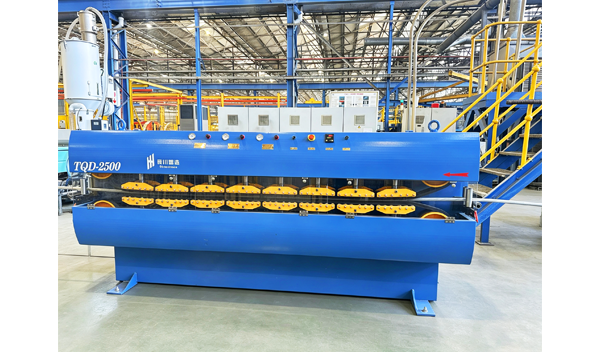
6. Manufacturing, Inspection, Packaging and Delivery
For industrial equipment, production is not finished when the machine is assembled. We also need to make sure that the delivered machine matches the agreed requirements.
Technical Requirement Confirmation
We begin by discussing the customer's application.
We need to understand where the TQD-2500 will work, what type of agricultural operation is planned, what the transportation task involves, what the ground conditions are like, and what configuration is required.
This information becomes the basis for production preparation.
Production Preparation
After the technical specifications, configuration, and order details are confirmed, we arrange production according to the agreed requirements.
Our company integrates R&D, manufacturing, and sales. We have obtained more than ten utility model patent certificates, reflecting our continued investment in equipment development and technical improvement.
Our product portfolio also includes high-speed extruders, BV extrusion automatic Production Lines, BVVB automated production lines, photovoltaic wire and Cable Production lines, automotive Wire Production lines, electronic Wire Production Lines, network communication wire production lines, Cable Production Lines, charging pile cable production lines, take-up and unwinding equipment, Auxiliary Equipment, and related products.
This manufacturing background gives us experience in developing and producing practical mechanical equipment rather than focusing only on product appearance.
Assembly
The tractor is assembled as a complete machine. The power system, transmission components, track system, structural components, controls, and other relevant parts need to work together.
We pay attention to the relationship between these systems because a tractor is not a collection of independent parts. Its working condition depends on how those parts operate as one machine.
Inspection and Testing
Before delivery, we assemble, inspect, and test each tractor according to the agreed technical requirements.
We check basic operation and overall condition before shipment. If the customer has agreed inspection requirements, those requirements are used as part of the pre-delivery process.
For tractor safety, internationally recognized standards can provide useful technical references. ISO 26322-1, for example, specifies general safety requirements and verification for certain agricultural and forestry tractors, including applicable tractors using tracks instead of wheels. The standard was reviewed and confirmed in 2024.
However, we do not claim that a particular tractor is certified to an international standard simply because that standard exists. Actual compliance depends on the applicable requirements and the specific machine.
Production Schedule
Our normal production cycle is approximately 30–90 days after the technical specifications, configuration, and order details have been confirmed.
This is our normal production arrangement, not a universal industry standard. The actual schedule can change depending on configuration, production workload, inspection requirements, and order details.
Packaging
After inspection, we prepare the tractor for shipment.
Depending on the tractor structure and transportation method, we can use protective film, steel frames, wooden cases, or other suitable materials.
The purpose is straightforward: reduce the risk of moisture, dust, impact, and unwanted movement during transportation.
Transportation
For export orders, transportation can be arranged by sea, rail, or another suitable method according to the destination, machine dimensions, and shipping requirements.
We discuss transportation requirements before shipment because the packaging and loading plan should match the actual logistics route.
7. Why Work with Us for the TQD-2500 Tractor?
Buying agricultural equipment from overseas involves more than comparing product names and prices. Buyers also need to consider communication, technical confirmation, production timing, inspection, packaging, transportation, and after-sales communication.
We understand this because our company works in industrial equipment manufacturing.
We Focus on the Actual Application
We do not want customers to buy a tractor simply because the model name sounds suitable.
We prefer to understand the work first.
If the machine will operate on soft agricultural soil, we need to know that. If it will mainly transport materials around a farm, that matters. If it will work in landscaping or forestry-related environments, we need to understand the site.
These details help us discuss the configuration more accurately.
We Confirm the Details Before Production
We normally arrange production after the technical specifications, configuration, and order details are confirmed.
This reduces the chance of misunderstanding between quotation and final production.
For B2B equipment, clear communication at this stage is important. It is much easier to solve a technical question before production than after the machine has already been shipped across borders.
We Inspect Before Shipment
Before delivery, each tractor is assembled, inspected, and tested according to the agreed technical requirements.
Our goal is simple. The machine leaving our facility should be checked as a complete unit rather than treated as a box of parts.
We Support Export Transportation
We can discuss sea, rail, or other suitable transportation methods depending on the destination and tractor dimensions.
Packaging can also be arranged according to the actual shipping conditions. Protective film, steel frames, wooden cases, and other suitable materials may be used when appropriate.
Our Manufacturing Philosophy
Our corporate spirit is “Quality First, Continuous Improvement, and Honest Service.”
We believe this matters especially for industrial machinery. Equipment is used for real production and real work. If communication is unclear or technical details are skipped, the problem can become expensive later.
Our goal is to create practical equipment and maintain clear communication with customers from technical discussion through production and delivery.
8. TQD-2500 Tractor FAQ
What is the TQD-2500 Tractor designed for?
The TQD-2500 Tractor is designed for agricultural and outdoor applications requiring stable movement, reliable traction, and practical operation. Suitable uses may include agriculture, crop cultivation, field preparation, agricultural transportation, landscaping, forestry-related work, and municipal maintenance.
Is the TQD-2500 a tracked tractor?
Yes. The product information provided for this machine identifies it as a tracked tractor. Its tracked structure provides a larger ground contact area compared with conventional wheeled designs and can be suitable for soft soil, uneven fields, farmland, landscaping, and other appropriate outdoor conditions.
Does “2500” mean the tractor has 2500 kg of load capacity?
We do not make that assumption. TQD-2500 is the product/model designation. Unless the final technical documentation specifically defines 2500 as a load rating or another parameter, it should not be interpreted that way.
What industries can use the TQD-2500 Tractor?
The main application area is agriculture. Depending on configuration and working conditions, it can also be considered for crop cultivation, field preparation, agricultural transportation, landscaping, forestry-related operations, municipal maintenance, and other outdoor applications.
Why choose a tracked tractor for agricultural applications?
A tracked tractor can be useful when stable ground contact and traction are important. The track provides a larger contact area with the ground, making the design suitable for selected soft-soil and uneven-ground applications.
However, the best tractor depends on the actual working environment. We do not recommend choosing between tracked and wheeled designs without considering the site conditions.
Can the TQD-2500 be used for agricultural transportation?
Yes. Agricultural transportation is a suitable application area for the tractor. It can support the movement of agricultural materials, equipment, supplies, and other suitable items according to the final configuration and operating conditions.
How long does it take to manufacture the TQD-2500?
Our normal production and delivery preparation cycle is approximately 30–90 days after the technical specifications, configuration, and order details are confirmed.
The actual schedule depends on the specific order and production requirements.
How do you inspect the tractor before shipment?
Before delivery, we assemble, inspect, and test each tractor according to the agreed technical requirements. We check basic operation and the overall condition before shipment.
How can the tractor be shipped internationally?
Transportation can be arranged by sea, rail, or another suitable method depending on the destination, tractor dimensions, and shipping requirements.
How is the TQD-2500 packaged?
Depending on the tractor structure and shipping conditions, we can use protective film, steel frames, wooden cases, or other suitable packaging materials. These materials help protect the tractor against moisture, dust, impact, and unwanted movement during transportation.
What are the payment terms?
Payment terms can be arranged according to the contract. A common arrangement is a deposit followed by the balance before shipment. Other mutually agreed terms can also be discussed.
What information should I provide when asking for a quotation?
We recommend providing the intended application, working environment, ground conditions, transportation requirements, destination, expected operating frequency, and any known technical requirements.
If you have drawings, photographs of the working site, equipment requirements, or transportation details, those can also help us understand the application more clearly.
Conclusion: A Practical Tracked Tractor for Agricultural Applications
Our TQD-2500 Tractor for Agricultural Applications is designed around a practical need: reliable tractor movement in agricultural and outdoor working environments where a tracked structure can provide useful ground contact and traction.
We see the TQD-2500 as more than a product name. The real value comes from matching the tractor to the job.
If the machine will work on soft agricultural soil, uneven fields, farmland, landscaping sites, or other outdoor areas, the tracked design may offer useful advantages. If the machine will mainly work on firm roads or prepared surfaces, another tractor configuration may be more suitable.
That is why we recommend starting with the application rather than starting with a specification sheet.
Our normal production cycle is approximately 30–90 days after the technical specifications, configuration, and order details are confirmed. Before delivery, we assemble, inspect, and test the tractor according to the agreed requirements. For export orders, we can arrange sea, rail, or other suitable transportation methods, with packaging selected according to the machine and shipping conditions.
For buyers searching for a TQD-2500 Tractor, TQD-2500 Tracked Tractor, tractor for agricultural applications, tracked tractor for farming, or Agricultural Tracked Tractor, the next step is to confirm the actual working conditions.
Tell us where the tractor will work, what tasks it needs to perform, what type of ground it will travel on, and what configuration you require. We can then discuss the TQD-2500 based on the real application and the technical requirements agreed before production.
Technical References
Food and Agriculture Organization of the United Nations (FAO), Sustainable Agricultural Mechanization.
FAO, Mechanization Strategies and Machinery Supply Chain.
Organisation for Economic Co-operation and Development (OECD), Standard Codes for the Official Testing of Agricultural and Forestry Tractors.
ISO 26322-1:2008, Tractors for agriculture and forestry — Safety — Part 1: Standard tractors.



 WhatsApp
 Phone
Phone